Maharashtra has emerged as the leading state in implementing the National Education Policy (NEP) 2020, with reforms ranging from multidisciplinary education and mother-tongue instruction to mandatory internships and student welfare measures, Higher and Technical Education Minister Chandrakant Patil told the Legislative Assembly on Thursday.
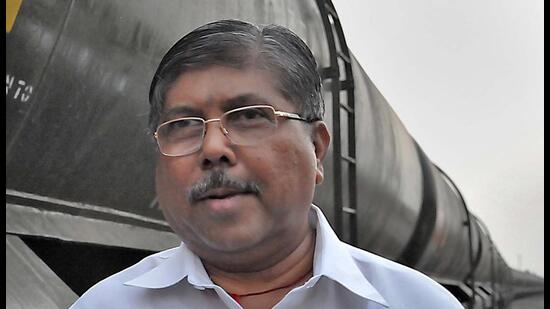
Replying to a discussion under Rule 293, Patil said the policy’s implementation gathered pace after 2022 following Covid-19 disruptions and claimed Maharashtra is now at the forefront of rolling out the NEP.
“Greater emphasis is being placed on education in the mother tongue as learning in one’s native language enhances conceptual understanding and promotes research aptitude,” Patil said, adding that Marathi textbooks have been prepared for polytechnics, Industrial Training Institutes (ITIs) and science courses.
He said the state adopted a 60:40 multidisciplinary curriculum. Under this, core subjects will account for 50-60% of the syllabus while the remaining portion will focus on skill development, Indian knowledge systems, value education and field projects. A nine-member task force headed by former Savitribai Phule Pune University vice-chancellor Prof Nitin Karmalkar has been formed to oversee implementation.
The minister further said that the last six months of undergraduate courses now require compulsory internships and industrial training, with dedicated internship cells established in universities and colleges.
{{/usCountry}}The minister further said that the last six months of undergraduate courses now require compulsory internships and industrial training, with dedicated internship cells established in universities and colleges.
{{/usCountry}}According to Patil, the NEP has been implemented in 151 autonomous colleges and 1,200 postgraduate institutions, while all affiliated colleges will adopt it from the upcoming academic year. He added that the number of NAAC-accredited institutions in Maharashtra has doubled from 1,100 to 2,200.
He added that nearly two crore students have received Automated Permanent Academic Account Registry (APAR) IDs, while the Academic Bank of Credits (ABC) has uploaded the academic credits of 39.67 lakh students.
Patil reiterated that the government remains committed to improving the quality of higher education and ensuring effective implementation of the National Education Policy across the state.