Balgandharva Rangamandir, one of Pune’s iconic cultural institutions, is facing severe water shortage and issues related to its maintenance and upkeep for the past one year. With the taps almost always running dry, the cleanliness of the auditorium leaves much to be desired despite three to four tankers being ordered daily to fulfil its water requirements. It all started with the Pune Municipal Corporation (PMC) extending water supply from the main water pipeline - which supplies water to Balgandharva Rangamandir - to Pune Metro and the nearby chowkis despite opposition from the former manager of the auditorium. The manager had opposed the allocation of new water connections citing that it would reduce the speed of water supply to the institution but his pleas fell on deaf ears.
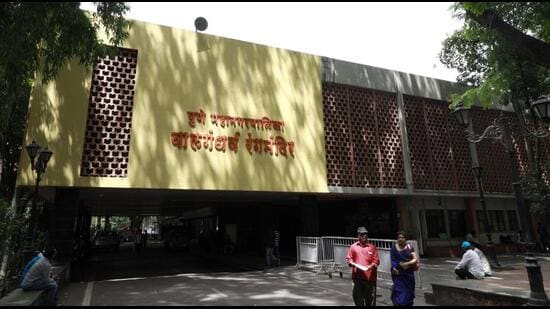
The auditorium currently has a water storage capacity of 80,000 litres which is equivalent to about six water tankers. With little to no water supply, the auditorium daily orders about three water tankers but the water proves insufficient to fulfil its requirements. According to the administration, the cleaning- and conservancy- staff require large quantities of water every day and theatre lovers have had to face days when the taps ran dry due to non-availability of water tankers on time. Owing to an increase in footfalls on Sundays, the water situation typically goes from bad to worse.
Current auditorium manager, Vijay Shinde, said, “We are facing a shortage of water supply and whatever water is being supplied, flows at a very slow clip. Currently, we get between three to four water tankers for our water needs but that too is insufficient. We are closely following up the matter with the authorities.”
Head of the PMC water supply department, Aniruddha Pawaskar, said, “Alternate water supply arrangements like digging a borewell are the solution. We cannot increase the water supply any further. Since the area gets the last extension of water supply lines, it will be difficult to provide water at a faster pace and additional water pipelines, too, cannot be given. The water issue is due to the increase in population in the area.”
{{/usCountry}}Head of the PMC water supply department, Aniruddha Pawaskar, said, “Alternate water supply arrangements like digging a borewell are the solution. We cannot increase the water supply any further. Since the area gets the last extension of water supply lines, it will be difficult to provide water at a faster pace and additional water pipelines, too, cannot be given. The water issue is due to the increase in population in the area.”
{{/usCountry}}As if the water woes aren’t enough, the auditorium is facing attendant maintenance issues such as dysfunctional air-conditioners, mosquitoes, foul-smelling toilets and faulty bulbs according to theatre lovers. Manjusha Gosavi, a regular at the auditorium, said, “Currently, the water crisis is very serious but no efforts are being taken to increase the water supply. At the same time, the maintenance of such an important cultural institution has been neglected over the years in the name of redevelopment.”
While the cultural and sports department is responsible for the overall management of the auditorium, repairs and other fixes are carried out by the building department, air-conditioning and electrification by the electrical department, and solid waste management by the garbage lifting and cleaning department. The lack of coordination between these departments has worsened the situation, theatre lovers alleged. In April 2022, prominent playwright Atul Pethe had taken a swipe at the auditorium authorities on social media, pointing to the presence of rats and mosquitoes on stage.