The Jharkhand Janadhikar Mahasabha (JJM) concluded its two-day state-level conference at the historic Lugu Buru Ghantabari Dhorom Garh in Bokaro on Tuesday, issuing a clarion call to safeguard the spirit of ‘Jharkhandiyat’ against rising communal forces and corporate land grabs.
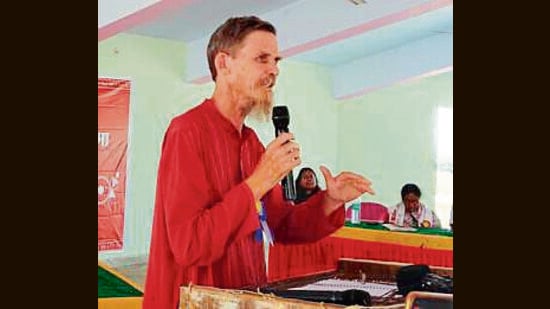
The conference, held on April 13–14, brought together hundreds of social activists, economists, and grassroots leaders from across the state to deliberate on the ‘systemic marginalisation’ of Adivasi, Dalit, and labour communities.
Prominent Adivasi activist Dayamani Barla accused the government of bypassing gram sabhas to hand over ancestral lands to corporate giants via ’land banks.’ She urged the masses to intensify the struggle to protect the CNT/SPT Acts and the Fifth Schedule.
“The situation is dire; silence is no longer an option,” Barla asserted, calling for the restoration of MGNREGA and a unified front to protect Jal, Jangal, aur Zameen (water, forest, and land).
Noted economist Jean Drèze emphasised that democracy extended far beyond the ballot box. He questioned the widening chasm of inequality and the tightening grip of corporations on public resources, noting that Adivasi communities had practised a superior, decentralised form of democracy for centuries.
“Adivasis have been democratic for centuries and have consistently struggled to protect their land, rights, and freedom,” Dreze said.
{{/usCountry}}“Adivasis have been democratic for centuries and have consistently struggled to protect their land, rights, and freedom,” Dreze said.
{{/usCountry}}A central theme of the summit was the perceived “cultural assault” by Hindutva forces. JJM leaders said holding the conference at Lugu Buru—a site traditionally kept free of formal temples to preserve its Santhali identity—was a symbolic act of resistance.
Committee president Babli Soren appealed for the inclusion of a ‘Sarna Religious Code’ in the upcoming census to ensure the distinct identity of Adivasis is officially recognised. Meanwhile, activist Nitisha Khalkho raised alarms over the New Education Policy, alleging it promoted a “Manuvadi” ideology. She argued that prioritising classical texts like the Manusmriti in curricula pushed Adivasi history and regional languages like Santhali and Ho to the margins.
The second day coincided with Ambedkar Jayanti, beginning with a collective recitation of the Preamble to the Constitution. Speakers, including former MLA Vinod Singh and activist Manoj Bhuiyan, highlighted the ongoing repression of activists and the lack of basic rights for Dalits, such as overdue scholarships and the absence of a Scheduled Castes Commission.
“Mere slogans of ‘Jai Bhim’ and ‘Jai Jaipal’ are not enough. These ideals must be translated into grassroots action,” the Mahasabha declared in its closing statement.
The conference concluded with a pledge to strengthen organisational capacity across Jharkhand, framing the struggle for social justice and economic equality as the only way to counter the “communal and corporate” challenges.