New Delhi: The Delhi government on Wednesday began tracing the contacts of a 57-year-old vegetable vendor at Azadpur Mandi who died of Covid-19 on Tuesday, sparking worries among the traders and authorities about a major spread in what is considered the food supply lifeline of the national capital.
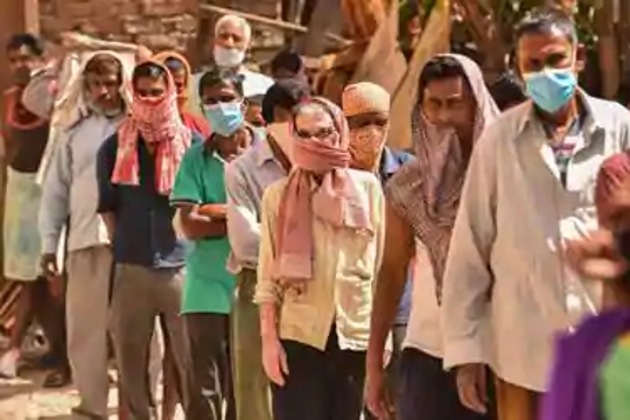
There are 2,800 registered traders at Azadpur Mandi who employ 12,000-odd people as labourers, loaders-unloaders (palledars), porters, accountants, etc, according to Adil Khan, chairman of the Agriculture Produce Marketing Committee, which runs the mandi.
A government official said the business partner of the dead trader and 15 of his employees are in home quarantine. All of them will be tested for the contagious disease, even as mandi traders demanded stricter surveillance and scaling up of testing in the market, which is one of north India’s biggest food trading hubs.
Though some of them said they were open to the idea of temporarily shifting parts of the market, which is spread over an area of more than 100 acres, to some other location in the vicinity, government officials said no such proposal was under consideration as yet.
The case emergedafter the Delhi government announced on Monday that the market would be open round the clock to augment supplies after the experiment to run parts of the market in an odd-even formula to ensure social distancing had hit supplies to the city, which is under a lockdown.
{{/usCountry}}The case emergedafter the Delhi government announced on Monday that the market would be open round the clock to augment supplies after the experiment to run parts of the market in an odd-even formula to ensure social distancing had hit supplies to the city, which is under a lockdown.
{{/usCountry}}Under the guidelines issued by the central government, fruits and vegetables are essential commodities that can be sold and purchased during the national lockdown, which runs until May 3. Though some economic activity has been allowed in the second phase of the lockdown from April 20, the Delhi government has chosen to stick with strict curbs as the number of cases in the city continue to rise.
By Wednesday evening, Delhi had 2,248 positive cases and 48 deaths.
Delhi cabinet minister Gopal Rai’s office on Wednesday said that there was going to be no immediate change in the schedule to run the market, adding that 900 civil defence volunteers and 600 sanitation workers would be deployed at the mandi to ensure social distancing and safety.
The dead trader’s shop is located in the D-Block of the market premises. On Tuesday night, the district administration sealed the lane in which the shop is located, which led to the closure of six more fruit and vegetable wholesale shops, said a government official.
The person complained of flu-like symptoms, following which he was admitted to hospital on April 15. His samples were collected for testing on April 17. He tested positive on April 19, and, he died in the hospital on April 21, the official added.
Concerns among traders amplified as Tuesday’s incident uncovered two more Covid-19 cases in the market.
A tomato dealer who lives in Shalimar Bagh, and who tested positive under the jurisdiction of the north-west Delhi revenue district, turned out to be someone who frequented the Azadpur mandi. Similarly, a cauliflower seller from Uttar Pradesh’s Gonda district, a regular at the market, also tested positive. Both are admitted in isolation wards, said an official in the state health department.
Senior officials said that, so far, they have come across no mutual contacts to suggest that the cases were interlinked. But they refrained from dismissing the possibility.
Deepak Shinde, district magistrate (north), said the people employed by the Covid-19 victim have been put under strict watch. “If they test positive, they will be sent to an isolation ward as per protocol. We are now tracing contacts of the person. He used to reside at Majlis Park,” Shinde said.
Shinde did not comment on the other two cases of traders associated with the market who have tested positive.
Another senior government official said that the dead trader’s wife and children had gone to West Bengal for a wedding and could not return to Delhi because of the lockdown. His nephew is believed to be a close contact, with whose help the officials are trying to trace others.
Fear and uncertainty
The market continues to operate round the clock but there is fear among the traders. “He moved around and had transactions with hundreds of other traders and customers over the last many days. They all are at risk now and at least all shop owners in the block should be tested first, quarantined and more area should be sealed, if needed,” said Anil Malhotra, a trader and elected member of the market committee.
Several other traders demanded strict measures and an assessment to check if parts of the market could be temporarily moved to other locations in vicinity.
The Delhi administration did such relocation experiments earlier this month at vegetable and grain wholesale markets in Najafgarh and Mehrauli – but those markets are much smaller in size, a government official said.
Azadpur, on the other hand, was subjected to an odd-even rule, allowing traders settled in odd- and even-numbered sheds to open their shops on alternate days. The arrangement led to a supply crisis in Delhi and within days, retail prices of several fruits and vegetables witnessed jump between 30% and 100%, several traders said.
Supply has improved by 30% compared to the average of the previous week, said Adil Khan.
“The concerns have been conveyed to chief minister Arvind Kejriwal. Today, traders in the market were asked not to panic. They were explained how rapid tests are not operational now and RT-PCR tests in such large scale is impractical. So, they should protect themselves through hygiene measures, masks, social distancing and isolating themselves if they feel and flu-like symptoms. These are tough times,” said Khan.
He added that any disruption at Azadpur could throw supplies and trade in food commodities off balance across north India. “Not just Delhi, but for the whole of north India, this is the biggest wholesale agriculture market. A large number of traders from almost all states come here to trade their goods. It is also a major transit point for imported fruits and vegetables,” said Khan.
Why Azadpur is important
To put in perspective the scale of operation in the market, on March 25, the first day of the ongoing nationwide lockdown, amid restrictions on movement of trucks, the market recorded arrival of around 350 tonne of tomatoes, 302 tonne of potatoes, 350 tonne of onions, 82 tonne of cauliflower and cabbage, 70 tonne of orange and 313 tonne of apple.
At least 3,000 trucks of fruits and vegetables arrive at Azadpur every day, said Khan. The second largest wholesale mandi in terms of arrivals is in Ghazipur, which witnesses around one-tenth the quantity in terms of arrivals (300 trucks) as compared to Azadpur. Ghazipur is more popular as the chicken and meat lifeline of Delhi. Third biggest fruits and vegetables market in Delhi is in Oklha, which receives around half the quantum of arrivals (150 trucks) compared to Ghazipur, and 5% compared to Azadpur.
Stay updated with all top Cities including, Bengaluru, Delhi, Mumbai and more across India. Stay informed on the latest happenings in World News along with Delhi Election 2025 and Delhi Election Result 2025 Live, New Delhi Election Result Live, Kalkaji Election Result Live at Hindustan Times.
Stay updated with all top Cities including, Bengaluru, Delhi, Mumbai and more across India. Stay informed on the latest happenings in World News along with Delhi Election 2025 and Delhi Election Result 2025 Live, New Delhi Election Result Live, Kalkaji Election Result Live at Hindustan Times.