When India’s loud, impossible-to-ignore and pugnacious MeToo movement erupted on social media two years ago this month, an important voice, regrettably, went unheard.
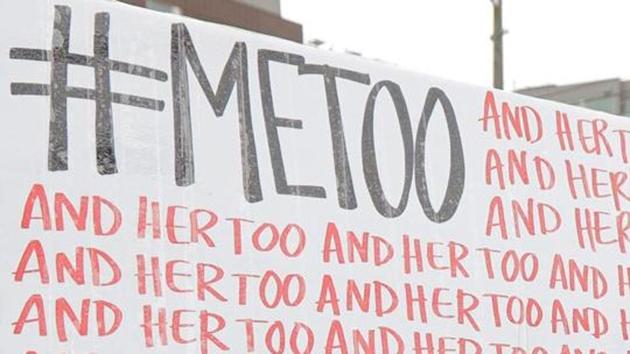
It was the voice of 195 million women in the informal sector. Ninety-five per cent of all of India’s employed women work in factories, farms, brick kilns, construction sites, households, and even as volunteers who power India’s health and nutrition missions as accredited social health activists (ASHAs), midwives and anganwadi workers.
As the media published the more salacious accounts or those involving high-profile perpetrators, those left out of the movement “were women who had almost no access to social media, didn’t speak English and came from poorer households and, so, were far more afraid of speaking out because of the consequences,” says Jayshree Bajoria, author of a newly-released report by Human Rights Watch (HRW), No #MeToo For Women Like Us.
On paper, the workplace Prevention of Sexual Harassment (POSH) is supposed to protect all employed women. But, as Nandita Bhatt of the Martha Farrell Foundation (MFF), says, “How is a domestic worker even going to prove that she is employed?”
MFF had invited me to attend a workshop to make domestic workers aware of their legal rights. One woman spoke about how her male employer would watch pornography in her presence. Another’s male boss would walk out of his bath naked, asking her to pass him a towel. And a third told me about the dadaji who would grab and grope her at every opportunity. So what did you do, I asked her? “What could I do? In the end, when it became too much, I just found another job and quit.”
Many women employed in the informal sector have normalised sexual harassment as one of the many workplace hazards. Like their counterparts in the formal sector, they don’t speak up because they are either unaware of their legal rights, scared of repercussions from powerful bosses, loathe to lose jobs or, even, reluctant to complain for fear that their families might prohibit them from going back to work. Many of these fears, says Bajoria, have been exacerbated by the pandemic where job loss and unemployment are rife. On paper, we have a law that entitles women in the informal sector to file complaints with a local complaints committee (LCC) that every district in the country is supposed to have. This rarely happens. During the lockdown, none of Delhi’s 11 LCCs were available even on the phone. Even now, three have listed incorrect numbers, according to MFF. HRW says POSH isn’t working. The government needs to ensure more meaningful implementation of the law through awareness campaigns and training. It needs to make data publicly available.
{{/usCountry}}Many women employed in the informal sector have normalised sexual harassment as one of the many workplace hazards. Like their counterparts in the formal sector, they don’t speak up because they are either unaware of their legal rights, scared of repercussions from powerful bosses, loathe to lose jobs or, even, reluctant to complain for fear that their families might prohibit them from going back to work. Many of these fears, says Bajoria, have been exacerbated by the pandemic where job loss and unemployment are rife. On paper, we have a law that entitles women in the informal sector to file complaints with a local complaints committee (LCC) that every district in the country is supposed to have. This rarely happens. During the lockdown, none of Delhi’s 11 LCCs were available even on the phone. Even now, three have listed incorrect numbers, according to MFF. HRW says POSH isn’t working. The government needs to ensure more meaningful implementation of the law through awareness campaigns and training. It needs to make data publicly available.
{{/usCountry}}But, most important, it needs to figure out how to build faith and convince women that their complaints will be heard, that redressal is possible and that justice will be delivered to all, even those in the informal sector.
Namita Bhandare writes on gender
The views expressed are personal