Just over a month ago would you have imagined thousands, men as well as women, marching in protest against rape? Just over a month ago would you have imagined that an online petition could cancel a New Year concert by a hugely popular rapper who sings of his rape fantasies? Just over a month ago would you have imagined policemen in Noida getting suspended after refusing to take complaints of a missing woman seriously?
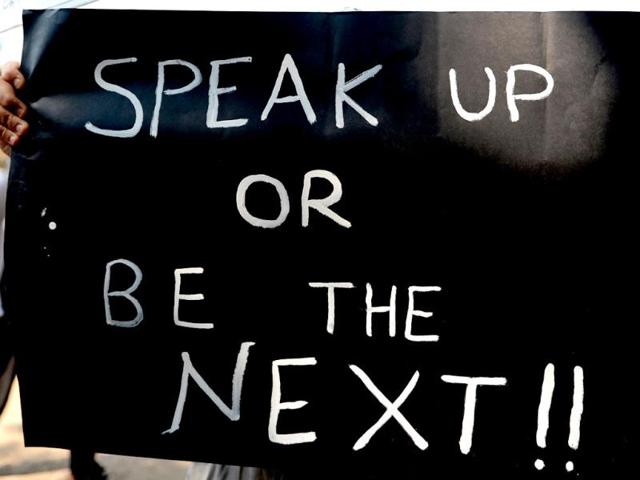
To those who say nothing has changed in just over a month since the 23-year-old medical student was gang-raped, tortured and thrown off a moving bus, consider this: perhaps finally the glass is half full.
To those who say that people in public life, including politicians and dodgy godmen, continue to make outrageous statements, consider this: there is less tolerance for this kind of idiocy.
To those who say but rapes are going on - four reported in 48 hours in Delhi, three in various moving buses in Punjab, Assam and West Bengal, consider this: increased reporting could also signal increased confidence in the legal system.
Just over a month ago would you have imagined that a national meeting of the Congress would discuss women's empowerment? In Karnataka, chief minister Jagadish Shettar has promised fast-track courts to try cases of crimes against women. In Goa, the NCP is talking about tougher laws to protect women. In Maharashtra, home minister RR Patil wants death for all convicted rapists.
But in the midst of this rash of competitive populism is the worry of ill-conceived, hastily passed legislation that could reinforce the underlying patriarchy surrounding sexual violence. To see a rape survivor as a 'zinda laash', to demand death for rape (because what can be worse than to be so 'dishonoured'?) to refuse to recognise marital rape or rape within families by fathers and brothers, to insist that rape is an Indian, not Bharatiya, problem provoked by women who step out of line by the way they dress or work or mingle with men is to reinforce that patriarchy not move away from it.
{{/usCountry}}But in the midst of this rash of competitive populism is the worry of ill-conceived, hastily passed legislation that could reinforce the underlying patriarchy surrounding sexual violence. To see a rape survivor as a 'zinda laash', to demand death for rape (because what can be worse than to be so 'dishonoured'?) to refuse to recognise marital rape or rape within families by fathers and brothers, to insist that rape is an Indian, not Bharatiya, problem provoked by women who step out of line by the way they dress or work or mingle with men is to reinforce that patriarchy not move away from it.
{{/usCountry}}The setting up of fast-track courts is a welcome step. Even as the trial of the five adult accused in last months' horrific gang-rape begins, another court has handed down a death sentence to a 56-year-old man who raped and killed a three-year-old child.
Yet, behind the rhetoric and undeniable need for speedier trials and justice lie two questions. The first, do we wish to sacrifice due process of law? And the second is a larger question of judicial reform. The Centre has sanctioned R80 crore to appoint an additional 2,000 judges for fast-track courts. Yet, in 2010, when the law ministry allowed the setting up of morning and evening courts to dispose pending cases, particularly those of sexual assault, the scheme failed to take off with few states - the notable exception being Bihar - opting for it. There are over 3.2 crore pending cases in our courts. Where and how are we to get more judges, particularly judges who are sensitive to the issue of gender and violence? How do we begin to plug the holes?
For decades women have borne the brunt of social agitations from Chipko to the ongoing protests at the nuclear plant in Kudankulam. Now for the first time, issues of safety, crime and misogyny are part of mainstream discussion. With the 2014 general elections in sight, political parties seem to be waking up to the raw potential of the woman voter. Will 364 million women voters add a new ingredient to the old caste-region-ethnic mix?
But beyond the expedience of winning votes, women's legislation deserves serious soul-searching, not giving in to general bloodlust that wants quick-fix action.
After being wrapped in layers of stigma, 2013 has begun as a year when women finally began to recognise that the dishonour and shame was not on them but on those who had abused them. Survivors not victims is the new mantra. Who would have imagined this just over a month ago?
Namita Bhandare is a Delhi-based writer
Twitter: @namitabhandare
The views expressed by the author are personal