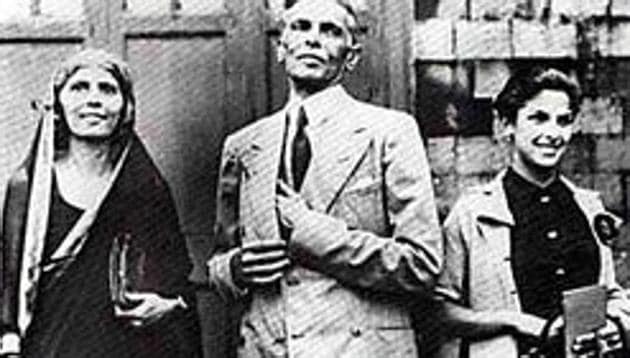
Dina Wadia was among the ones that got away. I won’t pretend to know the daughter of Pakistan’s founder Mohammed Ali Jinnah, but eight years ago as the legal wrangling over Jinnah House in Mumbai took another labyrinthine lunge, I reached out to the then 90-year-old for an interview. She was then a fellow Manhattanite, and picked up her landline. She was adamant about refusing an interview – not just because her property claim was sub judice, but also she just did not speak to the media. At least not on the record, for after the preliminary refusal, she was willing to converse courteously for a fair while. At the end of the call, I left my number with her in case she decided to speak out but never heard back. Despite my request being nixed, the impression that lasts is one of genteel charm limned with civility.
I had a similar experience last year, and again the subject was an elderly lady, in this case, Sylvia Nanavati, who was at the centre of the sensational Nanavati trial of the 1950s, the tabloid treasure trove of its times. In this case, she was a fellow Toronto-area resident, and she too was polite in steadfastly refusing to revisit that lurid past. Once again, as with Wadia, the manner in which she turned down my entreaty made it seem more like an act of kindness.
Both ladies were obviously products of an age that far preceded our current era of instant and shrill communication and commentary. That interaction can be pleasant even if it’s over a point of difference appears to have turned into an historical artefact as communication has broken down into 140 (or now 280) characters of disagreeability.
The ruling tsar of Twitter in that sense is certainly American President Donald Trump, a man who wields words as gently as his North Korean counterpart brandishes his missiles. One year since he was elected to occupy the Oval Office, he is leaving a lasting legacy of taking tact and grace out of the vocabulary of governance, as if the art of making a deal cannot be articulated without snide asides. Indian interlocutors will be well aware of this of vicious circling back, as with his critical remarks while withdrawing from the Paris climate agreement or announcing a South Asia policy. Working with Washington means watching his words since he appears loath to do so himself.
{{/usCountry}}The ruling tsar of Twitter in that sense is certainly American President Donald Trump, a man who wields words as gently as his North Korean counterpart brandishes his missiles. One year since he was elected to occupy the Oval Office, he is leaving a lasting legacy of taking tact and grace out of the vocabulary of governance, as if the art of making a deal cannot be articulated without snide asides. Indian interlocutors will be well aware of this of vicious circling back, as with his critical remarks while withdrawing from the Paris climate agreement or announcing a South Asia policy. Working with Washington means watching his words since he appears loath to do so himself.
{{/usCountry}}In attempting to emulate the US as a global power, official Chinese media and spokespersons also seem to be aping it in being obnoxious, as the recent Doklam standoff showed.
That’s part of a pattern of Twitterised trash talk that is the parlance of this decade. It has given fresh meaning to the phrase digital divide. Retorts are delivered with spin and snark rather than substance.
Just as Wadia passed away last week, the art of courteous conversation too seems to be on life support.
Anirudh Bhattacharyya is a Toronto-based commentator on American affairs
The views expressed are personal