


 Live Score
 Cricket Teams
 Cricket Players
Better late than never: India warms up to the Decision Referral System
The Indian cricket establishment, it seems, has finally woken up to the need of accepting the Umpire Decision Referral System (DRS).

 Prefer HTon Google


The Indian cricket establishment, it seems, has finally woken up to the need of accepting the Umpire Decision Referral System (DRS).
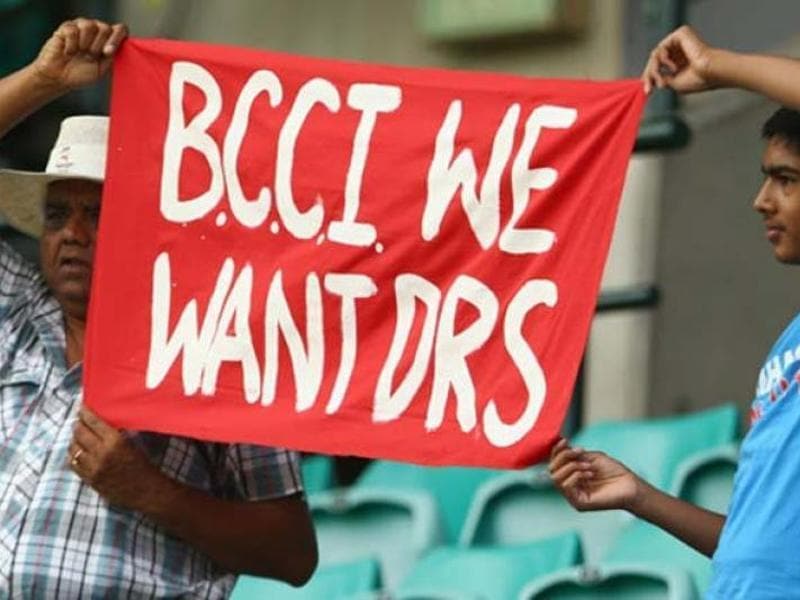
Going by media reports, the Board is now realizing that there is some merit in using the referral system, which may not be foolproof, but does eliminate elementary mistakes umpires tend to commit.
India has had a history of being stubborn and going against the majority, who despite having doubts of it being 100 per cent foolproof, accepted the system. India’s first experience with the DRS was in Sri Lanka, way back in 2008, where they failed to get the favour of majority of the referrals they made. The team felt that the system had major flaws, especially the ball tracking device, and decided not to accept its implementation. India is now the only country in the world which plays a bilateral series without the DRS being operational.
What made India’s stand hard to understand was its repeated complaints against the decisions of umpires, which they felt were wrong and changed the course of a match. India has had a history of its commentators like Sunil Gavaskar and Ravi Shastri, making a few umpiring decisions the focal point of a discussion and slamming the umpires for their incompetence.
Who can forget the 2008 India-Australia Test series where India were so miffed with some of the decisions made by umpire Steve Bucknor, that they used their clout in the ICC and got him changed for the next Test.
The Indian television audiences were fed with repeated images of a few contentious decisions going against them, with television commentators adding fuel to the fire that almost created war like atmosphere between India and Australia.
In the India-England series of 2011, Shastri and the former England captain, Nasser Hussain, got into an ugly spat on live television over DRS. Shastri, for obvious reasons, defended India’s stand, while Hussain slammed the Indian Board for being unnecessarily mulish.
Since the world had accepted the new system, India’s stand was increasingly becoming untenable. What made their stand strange was they would contest a decision based on the evidence of the same television images they were claiming could not be relied upon by the third umpire when a decision was referred to him.
While there may have been some merit in India’s argument that the system is not 100 per cent foolproof, it does eliminate basic howlers, like finding out whether the ball has hit the bat before hitting the pad or for judging bat-pad catches close to the wicket.
In Indian conditions, where the ball is spinning so much and the umpires come under tremendous pressure from the fielders for lbw and bat-pad catch decisions, it is silly not to take the help of the DRS.
In the recently concluded India-New Zealand Test series, it was evident that both teams were unhappy with some decisions and the DRS would have been of help. The best of umpires are human and can make mistakes. That is why even they don’t mind taking the help of technology as in the end it only helps in making a correct decision.
It is a welcome sign that India is now veering around to accepting the merits of DRS and is willing to do a rethink and hopefully it will be implemented when they play England in a five-match Test series from next month.


