


 Live Score
 Cricket Teams
 Cricket Players
Explained: Why Ravindra Jadeja was retained in BCCI's highest pay bracket, but Axar Patel remains in Grade C
Ravindra Jadeja was among just three cricketers in Grade A, while Axar Patel stayed in Grade C: Decoding the logic behind BCCI's new contract split.

 Prefer HTon Google


The moment the BCCI’s 2025-26 central contracts dropped, it quietly drew a new line around what India now treats as top tier. Only three names made Grade A - and that scarcity matters more than the label itself. In that reshuffle, the most revealing story isn’t that Rohit Sharma and Virat Kohli sit in Grade B. It is that Ravindra Jadeja stays in the highest bracket despite not being able to fire in one of the two formats he plays for India in Why, you ask? Simple. His value is not only reputation, but rather a team-structure play.
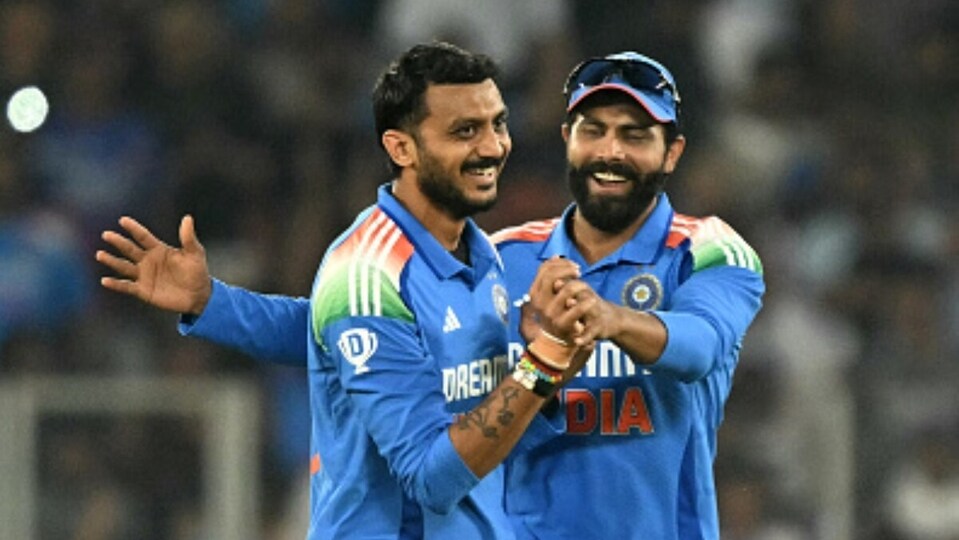
Why Jadeja fits Grade A better than almost anyone
Let us start with the list, because it is the clearest signal. The official retainership has Grade A as Ravindra Jadeja, Shubman Gill and Jasprit Bumrah – the only three in the top tier, while Rohit and Kohli are placed in Grade B. Notably, this split is not about who is the bigger name; it is about what the board is paying for.
1. Format value, not fame value
The top bracket is aligned with multi-format relevance and workload, not just star power. Jadeja’s edge is that he still reshapes selection in more than one format. He stepped away from T20Is after the 2024 World Cup, but remained available for Test and ODIs. And that is where India’s most serious team-building math still happens. In simple terms: a player can lose a format but still keep Grade A if he remains central to how India win their big-format cricket.
2. He gives you two skillsets every time you pick him
If you are building an XI, Jadeja is one of the rare players who doesn’t just fit roles, he solves problems.
- Need control through the middle over? He gives it.
- Need a left-handed batter who can absorb a wobble or punch late? He gives it.
- Need an elite fielder who turns singles into dots and half-chances into wickets? He gives it.
That three-dimensional value is what contract tiers are meant to reward, because it reduces dependence on conditions and match-ups. A specialist batter can win you a match, an all-phase all-rounder can stabilise your entire plan.
3. Recent proof of his importance in the team
Contracts aren’t awarded for vibes; they are a bet on what a player still does under stress. In late 2025, in the Test against South Africa at Guwahati, Jadeja was the only batter to stand tall when the rest of the batting crumbled around him, after making a strong impact with the ball earlier in the same match.
That is the case for retaining him in Grade A: even when the top order collapses or fails, or the script flips, Jadeja's game still travels.
4. Why Rohit and Kohli in Grade B don’t contradict Jadeja in Grade B
Rohit and Kohli moving to Grade B reads less like a snub and more like the BCCI simplifying the top tier into a core load-bearing club, especially after removing the A+ category. Jadeja survives that squeeze because his selection value is harder to replace. If you drop a pure batter, you can often cover it with another batter. If you drop Jadeja, you are suddenly shopping for spin control + lower order batting + world-class fielding in one package – which usually means changing your team balance, not just swapping a player.
That is why this list is less a ranking of greatness and more a snapshot of utility of players: Ravindra Jadeja is still an all-weather solution, and Grade A is where the board has now parked its non-negotiables.
5. Why is Axar Patel in Grade C?
With Jadeja getting a Grade A contract, an obvious question mark rises over another player with similar USPs, Axar Patel. Notably, Axar Patel is in grade C, and with both players being similar types of all-rounders, a question might arise: Why this differentiation?
BCCI hasn’t provided a formal grading formula, so the clearest read is through the squad-building signals in the list itself. In 2025-26, Grade C is packed with players who are either emerging regulars or format-specific/rotation options, while top tiers skew toward automatic starters who shape team balance across formats.
That is where Axar gets squeezed. Even though he is an all-rounder, he hasn’t been treated as a non-negotiable across formats the way Jadeja has. Axar’s recent footprint shows he is still in the mix, but not the first name inked into every XI: his last ODI is in October 2025 and his last Test in November 2025, suggesting selective usage rather than a permanent lock-in.


