


 Live Score
 Cricket Teams
 Cricket Players
Former PCB chief Najam Sethi accuses BCCI of ‘bullying people’, isolating Pakistan: ‘N Srivinasan came to me and said…’
Ex-PCB chief Najam Sethi narrated a story claiming the BCCI takes the rest of the cricketing world for granted, asserting this would lead to big changes soon.

 Prefer HTon Google


The dynamic between the Board of Control for Cricket in India (BCCI) and the rest of the cricketing world has become the centrepiece of attention in the lead-up to this year's T20 World Cup. While the Bangladesh and Pakistan Cricket Boards have instigated forms of protest by either withdrawing from the tournament or boycotting their match against India, respectively, the ICC has been asked to consider the power the BCCI wields in the modern cricket landscape.
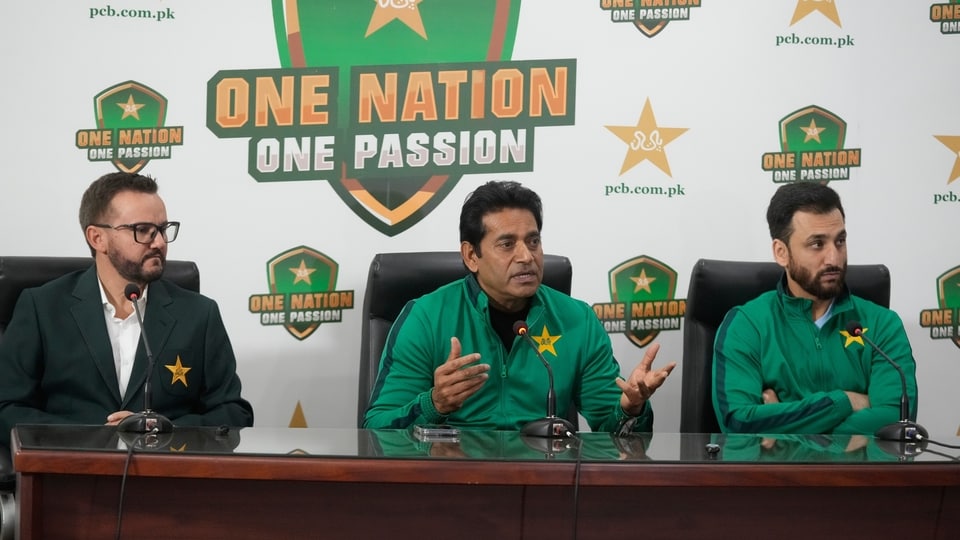
Former PCB chief Najam Sethi had his theory on why the PCB and BCB pulled out in different ways – and warned the BCCI that this was a sign of shifting winds, something they must consider seriously.
Also Read: Pakistan PM Shehbaz Sharif breaks silence on boycotting T20 World Cup clash against India: ‘We are with Bangladesh’
Speaking to India Today, Sethi explained that the strained relations had been in place for many years and were only exacerbated by the feeling that the BCCI used its stature as the richest cricket board to ‘bully’ the rest of the ICC.
“I’m not a spokesman for the PCB, I’m giving you my view. The PCB consulted the government, and they made this decision. There are 10-15 days to go before that match. My sense is that there are negotiations that are taking place, and my hope is that those negotiations will bear fruit,” Sethi started off by saying.
‘Mr Srinivasan came to me and said…’
“It’s the attitude of the BCCI, that’s the problem. At every stage, they’ve been bullying people. Pakistan used to be isolated; it was one amongst ten at the time, and then everybody used to side with India. There was no point in standing out. I negotiated the final entry to the Big Three; we were the final ones, and we said no, we don’t want to be part of the Big Three,” he explained, referencing the ‘Big Three’ of India, Australia, and England, who receive the large majority of the ICC’s revenue.
Sethi further explained that the PCB had an issue with the nature of the revenue-sharing format and required some protest to have it distributed more evenly. Part of this was negotiating a series between India and Pakistan during Srinivasan's tenure as BCCI chair.
“Nine members signed on, and Mr Srinivasan came to me and said, ‘Why do you want to be left alone, blah blah blah, you will be isolated,’ and the rest of it. We had decided to stand aside and be okay with it, because it was an inherently inequitable principle. They said okay, we will revise it, we will increase the shares of other members, including ours, and they agreed to play a series with us to make up for the previous losses we had incurred,” explained Sethi.
‘Can you think of a bigger insult?’
However, things didn’t go to plan as the BCCI pulled out of negotiations without warning – something Sethi described as the ‘biggest insult’.
“The contract was fine, but a year later, on the eve of the series, the BCCI, without a word, pulls out. I went to Mumbai in October of that year to sign on the dotted line and get everything sorted out, and they wouldn’t even see us at the hotel. Can you think of a bigger insult?” asked Sethi.
“The chairman and I went to Mumbai, sat in the hotel, and the BCCI sent a message saying sorry, we can’t meet you. And we’d been invited to come to Mumbai.”
Returning to the current conflict on the subcontinent, Sethi explained that he believed a coalition of Pakistan and Bangladesh could turn the tide in a sport that has grown increasingly dominated by India. He admitted that the short-term consequences could prove to be quite severe, but would be worth the brief pain at the end.
“They’ve been treating us very badly. Now that Bangladesh have been snubbed in a sense, we feel there are 400 million people on one side. We can all stand up. The philosophy behind the thinking in Bangladesh and Pakistan now is that it’s time to stand up,” explained Sethi.
“The inequitable policy positions the ICC takes just because the BCCI is running the ICC… There may be temporary losses, but at the end of the day, we will get a better, reformed ICC.”


