


 Live Score
 Cricket Teams
 Cricket Players
His action became a World Cup symbol; he took 10 wickets in an innings, yet his Test career ended after two games
He took four wickets on Test debut, starred at the 1999 World Cup and claimed all 10 in a Duleep innings, yet his India career ended just after 47 matches.

 Prefer HTon Google


He had nine wickets on first-class debut. He had four wickets on Test debut. He once took all 10 wickets in a Duleep Trophy innings against a batting line-up featuring Rahul Dravid and VVS Laxman. At the 1999 World Cup, only one Indian bowler finished with more wickets than him. His distinctive bowling action was even reportedly used as the inspiration for the bowler depicted on that tournament’s official logo. Yet, by the time his international career was over, he had played only two Tests and 45 ODIs.
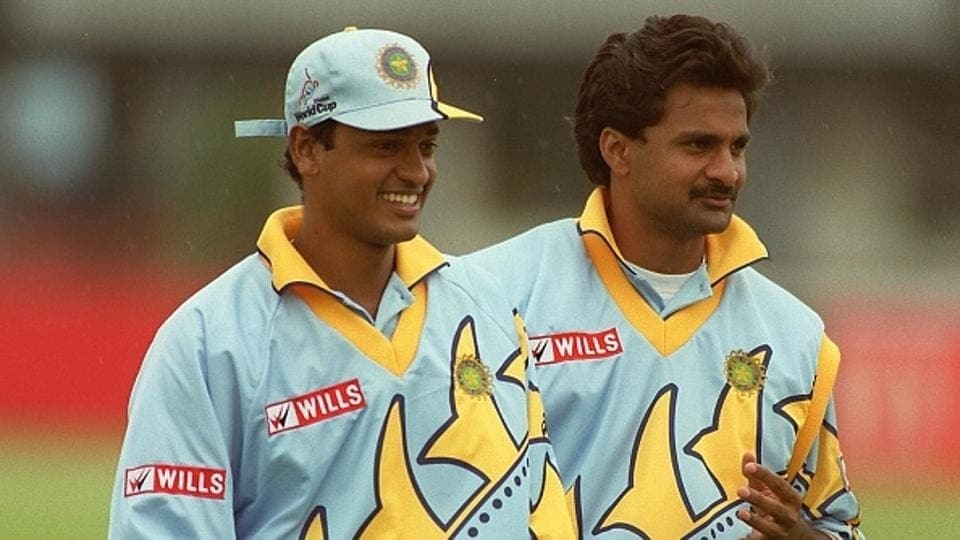
He had barely been around first-class cricket when India came calling. At Eden Gardens in November 1996, the young fast bowler from Orissa began his career with 5/52 against Bengal and finished his maiden first-class match with nine wickets. Within months, he had gone from being a newcomer in domestic cricket to touring Sri Lanka with the Indian Test side. He had played only a handful of first-class matches before making his Test debut at the SSC in Colombo in August 1997. His first wicket was Sanath Jayasuriya. Roshan Mahanama, Arjuna Ranatunga and Aravinda de Silva followed as the debutant returned 4/78 against one of the strongest batting line-ups in international cricket.
Those four wickets, remarkably, would also be the last four wickets of his Test career. The bowler was Debashish Mohanty, the first cricketer from Orissa to represent India in Test cricket and the owner of a career in which the individual achievements often looked completely out of proportion with the opportunities he received at the highest level.
Deep Dive

Mohanty played his second Test against Sri Lanka at Mohali later in 1997. He went wicketless and was never picked in the format again. His final Test record therefore read two matches and four wickets at 59.75, a tiny international sample for a bowler who would eventually take more than 400 wickets in first-class cricket. His ODI career lasted longer and produced an almost immediate impact. Mohanty made his debut against Pakistan in Toronto in September 1997. One day later, in only his second international appearance, he took 3/15 from seven overs as Pakistan were dismissed for 116.
The wickets were hardly anonymous ones. Shahid Afridi was dismissed for a duck, Saeed Anwar for 12 and Ijaz Ahmed for four. Mohanty's ability to swing the new ball, combined with his unusual open-chested action, made him difficult to handle when conditions offered even a little assistance. That skill would eventually bring him back into the Indian side for the tournament with which his career remains most closely associated.
The World Cup that revived his India career
Mohanty was not an automatic selection for the 1999 World Cup in England. He had barely featured for India in the period leading into the tournament, but English conditions made a swing bowler particularly valuable. India took the gamble, and Mohanty justified it. He played six matches and took 10 wickets at an average of 26.00 and a strike rate of 31.2. Only Javagal Srinath, who took 12 wickets from eight matches, finished with more wickets for India. Venkatesh Prasad took nine and Anil Kumble eight.
Mohanty's best ODI figures came during that World Cup when he took 4/56 against Kenya. Against England at Edgbaston, he produced one of his most important spells. India needed victory to qualify for the Super Six stage, and Mohanty struck twice almost immediately. England captain Alec Stewart was dismissed for two. Graeme Hick followed from the very next delivery, leaving England 13/2. India eventually won the match by 63 runs and progressed.
Against Australia in the Super Six, Mohanty dismissed Steve Waugh, caught by Kumble. It was a wicket he would later remember as one of the most significant of his career. Then there was the logo.
The bowler shown in the official logo of the 1999 World Cup has widely been described as having been modelled on Mohanty's distinctive bowling action. For a player whose international career would last only a few more years, it produced one of cricket's more unusual pieces of trivia: the silhouette associated visually with an entire World Cup belonged to a bowler who would finish with fewer than 50 international appearances. The tournament formed part of the finest year of his international career. In 1999, Mohanty took 29 wickets in 17 ODIs at an average of 22.06. More than half of the 57 ODI wickets he would eventually take came in that one calendar year.
But his most extraordinary bowling performance was still to come, and it did not happen for India. In January 2001, East Zone faced South Zone in the Duleep Trophy at Agartala. The South Zone batting line-up included Dravid, who was captaining the side, and Laxman. There were also experienced domestic and international players throughout the order. Mohanty bowled 19 overs unchanged. He took all 10 wickets. His final figures were 19-5-46-10.
Dravid was dismissed for a 15-ball duck. Laxman was bowled for 20. Mohanty also accounted for Sridharan Sriram, Vijay Bharadwaj, Sunil Joshi, Javagal Srinath and Venkatesh Prasad as South Zone were bowled out for 113. It remains the only 10-wicket innings in Duleep Trophy history.
Mohanty was not finished. He took another four wickets in South Zone's second innings to complete match figures of 14/91, which also remain the best match bowling figures in the history of the competition. East Zone won by four wickets. The timing makes what happened next particularly striking. Mohanty took 10/46 in January 2001. By July, he had played his final ODI for India.
There would be no comeback despite his domestic career continuing for years. Mohanty eventually finished with 417 wickets from 117 first-class matches at an average of 21.05. He took 19 five-wicket hauls and three 10-wicket match hauls. His List A career brought another 160 wickets from 129 appearances.
For India, however, everything stopped at 47 international matches. His final numbers were four Test wickets and 57 ODI wickets, giving him 61 wickets for India. Those figures sit strangely beside the 417 first-class wickets, the World Cup success and a Duleep Trophy bowling record that still stands decades later.
Mohanty's association with cricket continued after retirement. He moved into coaching and guided East Zone to their maiden Duleep Trophy title in 2012, a fitting connection with the tournament in which he had produced his greatest individual performance. He later became a national selector, joining the BCCI junior selection committee in 2018 before moving to the senior men's selection panel in 2020. But it is his playing career that leaves behind the stranger story.
He had a five-wicket haul in his first first-class innings. He had four wickets in his first Test. He had 10 wickets at a World Cup and 10 wickets in a single Duleep Trophy innings. He had 417 first-class wickets at just over 21 apiece. What he never had was a third Test.


