


 Live Score
 Cricket Teams
 Cricket Players
Inclusion of women's cricket at CWG shows its commercial viability
Women's cricket finds itself in the strange but significant position of being the only sport at Birmingham that has its men's component missing, writes Snehal Pradhan.

 Prefer HTon Google


The Tokyo 2020 Olympic Games had almost 49% female athletes. This number is the best ever in Olympic history. But the Commonwealth Games in Birmingham has one number that’s even better. There are 134 medals to be won in men’s events, but 136 in women’s events, a first for a major multi-sport event. That’s because of the inclusion of two sports played only by women at the international level – netball and T20 cricket.
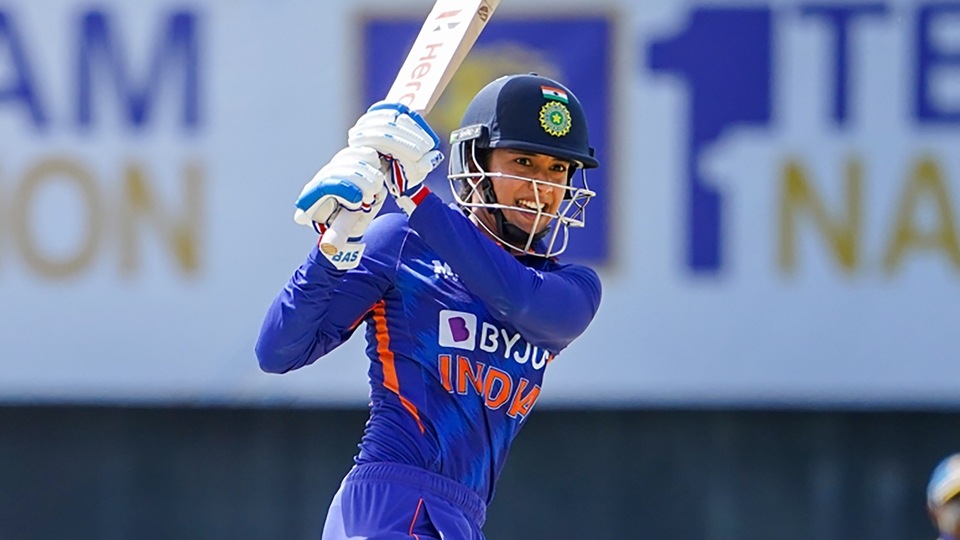
Wait, what? That’s not an actual sentence, of course. Netball is predominantly a women’s only sport, but T20 cricket is a global game played by men and women internationally. And yet, women’s cricket finds itself in the strange but significant position of being the only sport at Birmingham that has its men’s component missing.
This contradiction is especially stark given the direction of the Olympic movement over the last few years. The Tokyo 2020 Games saw a host of structural changes that had gender parity at their core. Every country had at least one male and female athlete for the first time ever. There were 18 mixed events, as compared to eight at London 2012. Even imbalances in the scheduling (and therefore broadcast) on marquee days were corrected: on the final day of the Olympic Games at Rio 2016 there were 27 hours of competition for the men but just two hours for the women. Tokyo saw 17 hours for women and 13 for men.
The Olympic motto itself changed at those Games: Faster, Higher, Stronger, Together. However, the same desire for things to move ‘Together’ almost killed cricket’s inclusion in these Commonwealth Games. In 2017, cricket was almost dropped from the event, since major member boards would not commit their men’s teams to the multi-sport event, citing clashes with more lucrative bilateral and franchise cricket. This, even as packed calendars for men (the effects of which we’re now seeing, with Ben Stokes’s premature ODI retirement) sat next to empty spaces in the schedule for women. But since the boards were hesitant, it jeopardised the involvement of the women’s teams, on the grounds of gender parity. The Olympic movement is in general bullish on sports that are for everyone, not just one gender.
Fortunately, common sense has prevailed, and in 2019 a successful push was made for women’s cricket to participate as a standalone event in the T20 format. The move has since been vindicated. The 2020 T20 World Cup final nearly filled the Melbourne Cricket Ground, with 86,174 people attending. And since then, the success of the 2022 Women’s Cricket World Cup has now prompted the ICC to sell men’s and women’s commercial rights separately in the next broadcast cycle.
In short, women’s cricket is commercially viable and valuable as a standalone property, and so it made complete sense for Birmingham to make the exception. Edgbaston has already been sold out for the semi-finals and medal matches, and the India-Pakistan group game is likely to draw a full house as well.
Personally, I have no complaints. I remember clearly the anger I felt during my playing career when the powers that were would not send Indian cricket teams to the Asian Games because their men’s team was too busy, in the process denying us, the women’s team (and as the strongest team in Asia, passing up on a likely gold medal). We sat at home in envy as Pakistan women won consecutive Asian Games gold medals in 2010 and 2014.
But this time around, tribalism needs to take a back seat. Every member of the global cricket community should be cheering the cricketers at Birmingham. The return of cricket, after a 24-year gap, marks a node moment in cricket’s pursuit of its Olympic dream. And once these athletes do their thing at Birmingham, all eyes will move to 2028, where cricket hopes to make an Olympic debut. And we all know what participation in the Olympics could mean for the growth of the game outside of the traditional markets, something cricket keeps talking about but seems too busy with its Future Tours Programme to do anything about.
Had women’s cricket not been at Birmingham, we would have been a lot farther off in the Olympic conversation. The exception at Birmingham will be corrected at Los Angeles, with men’s cricket a central part of that bid. As with inventing overarm bowling, playing the first ODI World Cup and the first international T20, the women at Birmingham are paving the way, ahead of the men.


