


 Live Score
 Cricket Teams
 Cricket Players
Is KL Rahul really a bad wicketkeeper? India star risks becoming a scapegoat again after unfair demotion
Rahul has been the quintessential team player, willingly adapting to every role – whether opening the innings, batting in the middle order, or keeping wickets.

 Prefer HTon Google


KL Rahul has once again found himself at the centre of criticism after a disappointing performance behind the stumps against New Zealand in the Champions Trophy. Frustrated fans are calling for Gautam Gambhir and Rohit Sharma to make a tough decision – bench Rahul and give Rishabh Pant a chance, as he has been sidelined since the England ODIs. But is dropping Rahul truly justified, or is he being made a scapegoat once again?
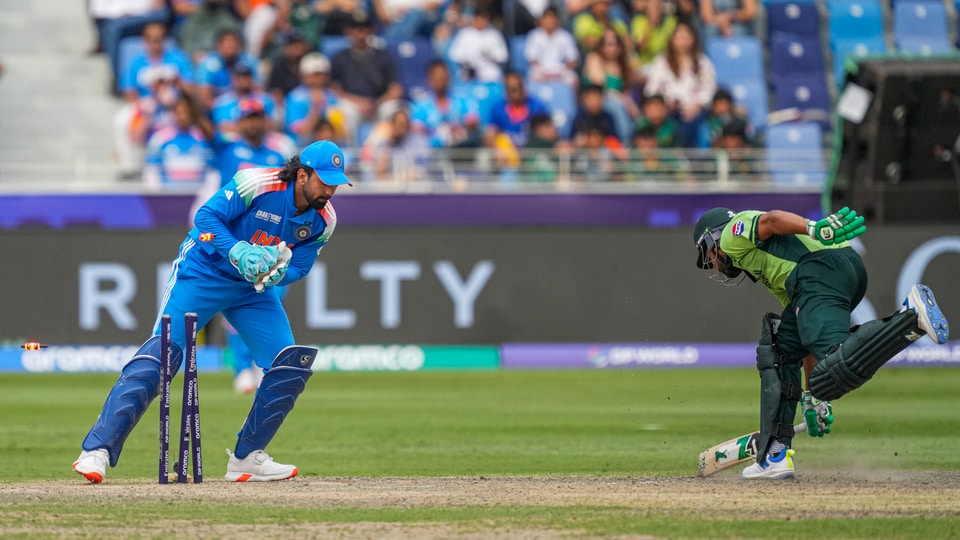
This isn’t the first time he has faced the axe prematurely, often losing his place without being given an extended run. Rahul, 32, has been the quintessential team player, willingly adapting to every role – whether opening the innings, batting in the middle order, or donning the gloves across formats. Yet, despite his versatility, he has often been dropped from the XI after just a few failures.
During last year’s home Test season, he was axed after the first Test against New Zealand. Even though he scored a half-century in the second Test against Bangladesh, it was overlooked as India struggled with their senior batters underperforming. Ultimately, it was Rahul who bore the brunt, while established names like Virat Kohli and Rohit Sharma were given a longer rope,
Considering Rahul's wicketkeeping performances in the Champions Trophy and the preceding England ODIs is enough to end the misconception that he's a bad keeper. If anything, Rahul has had mixed outings behind the stumps. Thus far, he has dropped four catches, including two in the recent match against New Zealand and in the game against Bangladesh, where he was named Fielder of the Match for taking three catches, despite missing a stumping opportunity against Jaker Ali. The numbers below present a better picture.
India vs England ODIs
1st ODI: Catch taken -2, Stumping - 1, Catch Drop - 0
2nd ODI: Catch taken -0, Stumping - 0, Catch Drop - 1
3rd ODI: Catch taken -1, Stumping - 1, Catch Drop - 1
Champions Trophy
vs BAN: Catch taken - 3, Stumping - 0, Catch Drop - 0
vs PAK: Catch taken - 1, Stumping - 0, Catch Drop - 0
vs NZ: Catch taken - 0, Stumping - 1, Catch Drop - 2
Here's an eye-opener: Rahul currently leads the charts for most dismissals by a wicketkeeper in the ongoing Champions Trophy, with four catches and a stumping, averaging 1.666 dismissals per innings. Although his batting numbers are far from impressive, largely due to limited opportunities. The Indian management has surprisingly demoted him to No. 6, below Axar Patel – a puzzling decision for a player who started his career as an opener. He played a crucial unbeaten 41 against Bangladesh but didn't get to bat against Pakistan and his most recent outing against New Zealand was underwhelming, managing just 23 runs.
Dropping a player after just one failure, especially after pushing him down the batting order, would set the wrong precedent. Rahul has stepped up for India in critical situations before. During the Border-Gavaskar Trophy, when Rohit Sharma missed the first Test, Rahul displayed solid technique on Perth’s bouncy surface and guided young Yashasvi Jaiswal in the second innings to help India secure a win. However, once Rohit returned, Rahul was pushed back to the middle order, disrupting his momentum. When Rohit struggled, Rahul was reinstated as an opener, but the inconsistency in his role led to an underwhelming end to a promising start to the series.
Once touted as the next big thing in Indian cricket and a potential successor to Virat Kohli, Rahul has yet to fulfil his true potential. While his inconsistency with the bat has been a concern, the team management has also failed to bring out the best in him, often treating him as a makeshift player rather than a key asset.


