


 Live Score
 Cricket Teams
 Cricket Players
Ishan Kishan at No.4 ahead of KL Rahul was baffling: India overestimated some players and underestimated others
Thanks to their extraordinary success in much easier conditions earlier, India got ahead of themselves and paid a huge price on the tour of the United Kingdom.

 Prefer HTon Google


Prior to the tour of the United Kingdom, India had extraordinary success in white-ball cricket. But in batting-friendly conditions. That did two things: first, we ended up overestimating some players. Second, the exact opposite: we ended up underestimating some others.
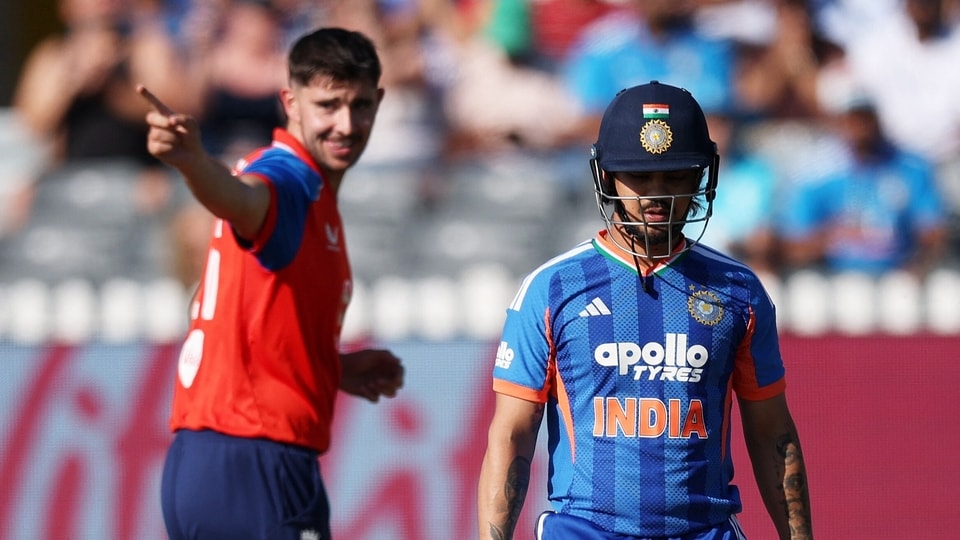
Like, there was no reason for India to bat KL Rahul at No.6 in the two matches he played. Indian batsmen have historically struggled in the swinging, seaming conditions of England and KL Rahul, in light of his batting prowess, should have batted where Ishan Kishan batted in the decider at Lord's on Sunday: at No.4. Rahul is an out-and-out batsman and is a Test regular and opens with Yashasvi Jaiswal. Needless to say, his batting technique has to be and is better than that of Kishan. Besides, Rahul has done well in England in the past and has four Test centuries to his name there. He should have batted up the order, no two ways about it.
But because Ishan Kishan had a wonderful T20 Asia Cup last year and then the T20 World Cup earlier this year, the team management decided to play him at No.4, totally turning a blind eye to the fact that Kishan lacked the right technique in pace-friendly conditions. The Asia Cup was played in the UAE. The T20 World Cup was played at home, except for one game against Pakistan in Colombo. Kishan was wonderful that day against the arch-rivals and was chosen Man of the Match for his blistering innings of 77 off 40 balls.
Success often makes one forget or ignore their shortcomings. That’s exactly what happened. Kishan got those runs in batting-friendly conditions, and it was taken for granted that he would perform in England too. After missing the first game, he batted at No.4 in the second — Rahul missed this one on account of illness — and third games and contributed 1 and 14. In the first game, Shreyas Iyer batted at No.4. Rahul should have been the No.4 even in that match for the same reasons as mentioned above. Even in the preceding T20Is in the UK, Kishan struggled but the team trusted him to a fault.
Shivam Dube came a cropper too
India also put too much faith in Shivam Dube. When Nitish Kumar Reddy got injured, and Dube was called into the squad as a replacement, India had made a big mistake. It should have been Jaiswal. The Rajasthan Royals batsman is anyway considered a replacement for Rohit Sharma once the latter retires, so it would have been the right thing to have him in the squad for nurturing purposes. And even though he is an out-and-out opener, in crises, he can be asked to play at other positions. In short, he should have been with the ODI team. Dube got exposed so badly that the team decided to drop him for the third game. He disappointed everyone with both his batting and bowling.
India also overestimated Gurnoor Brar. Last month, he made his debut in ODIs against Afghanistan. His height and pace made many go gaga over him. But in England, his performance has not been in line with the raised expectations. In the last game, Brar returned 0/97, the second-most-expensive bowling figures for India after Bhuvneshwar Kumar's 1/106 in 2015.
The same can also be said about Prince Yadav. In the only ODI on Sunday and four T20Is before, including one against Ireland, he didn’t look like the bowler who promised big in the Indian Premier League just a couple of months ago.
Yes, injuries to several players, notably to Jasprit Bumrah ahead of the final one-dayer, also played their part in the defeats but largely it was the team management’s lack of awareness and failure to think things through that did for the visitors in ODIs as well as T20Is.


