


 Live Score
 Cricket Teams
 Cricket Players
Ishan Kishan seals T20 WC opening spot with quickfire half-century vs South Africa: Sanju Samson's dreams close to over
Ishan Kishan's impressive performance as an opener in a practice match indicates he is a strong candidate for India's starting XI.


India won’t spell it out in a press release, but the message from that practice match was loud enough to rattle the dressing room: Ishan Kishan is being actively trialled as an opener, and that squeezes Sanju Samson from the top-order conversation.
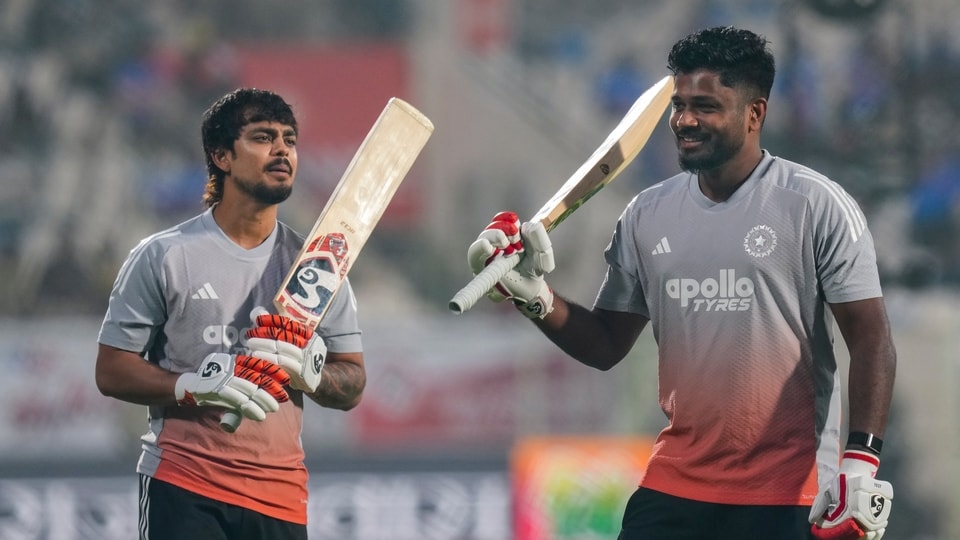
Kishan’s 53 off 20 — and the decision to retire him out to give others time in the middle — wasn’t about the scorecard. It was about intent. India used the warm-up exactly the way teams do when they’re close to finalising their XI: test combinations, set roles, and see who fits the game plan without forcing the puzzle pieces.
And the combination they chose first was telling: Kishan opened with Abhishek Sharma.
Why this is a big moment for Samson
Sanju Samson’s recent opening run against New Zealand was, bluntly, an audition. India didn’t experiment for fun. They moved him up because they wanted to see if he could be a top-order solution under pressure, against international attacks, with World Cup tempo.
That audition didn’t go his way.
Samson failed to make the opening spot his own in that series — early dismissals, lack of meaningful starts, and no innings that screamed “lock me in”. In T20 cricket, especially when you’re opening, you don’t need a hundred every other game — but you do need one or two innings that settle the debate. Samson didn’t produce those.
Now put that beside what Kishan did in the same window.
Ishan Kishan didn’t just score — he offered India flexibility
While Samson was trying to hold the opening slot, Kishan’s value grew in a different way: he looked comfortable at No. 3 and gave India the kind of flexibility selectors love before a tournament.
That matters because India’s top three isn’t just about who bats where — it’s about how the side covers multiple scenarios:
- If the openers explode, No. 3 becomes a stabiliser who can still strike.
- If the openers fall early, No. 3 becomes the second powerplay batter.
- If match-ups demand it, the left-right combination becomes a weapon.
Kishan checks several of those boxes. He’s a left-hander, he has powerplay intent, and he can shift gears quickly — whether he starts the innings or walks in during chaos.
So when India then uses him as an opener in a warm-up and he immediately delivers a 53 off 20, the subtext becomes obvious: Kishan is not competing only for a backup role. He’s in the starting XI frame.
What the “retired out” detail actually signals
People love to treat a retired out in a warm-up like it’s some quirky footnote. It isn’t.
When a batter is retired out after doing damage, it usually means the team has seen enough from him in that specific role — and wants to use the remaining overs to test others: middle-order hitters, finishers, or players still fighting for a spot.
In other words: Kishan’s job in that match looked less like “prove yourself” and more like “show the template and move aside.”
That’s a subtle but important distinction — and it’s the part that should worry Samson fans the most.
Does this mean Samson’s World Cup dreams are over?
Not automatically. But it does mean the easiest route — opening in the playing XI — is getting blocked.
Here’s the realistic read:
- If India believe Abhishek Sharma is locked as an opener, the second opening slot becomes a straight fight.
- Kishan has now been tried there in a warm-up and produced a high-impact cameo.
- Samson’s last serious opening run ended with him struggling to convert opportunity into output.
So the question shifts from “Is Samson in the XI?” to “What role can Samson realistically fill that India can’t cover better with someone else?”
And that’s where things get tricky.
Because Kishan is also wicketkeeper cover, and hence, Samson’s advantage as a keeper-batter becomes less decisive. If India want a second keeper in the squad, Samson can still be in the conversation — but as far as the first-choice XI opener goes, the warm-up selection leans away from him.
What Samson would need to flip the script
If Samson wants to pull himself back into the XI discussion, it likely requires one clear thing: a defining innings in a top-order role in one of the early group stage games — not a 15-ball tease, but a knock that sets the tone and answers the biggest doubt: reliability.
Until that happens, India’s current movement suggests this: Samson’s opening opportunity may already have passed, while Kishan’s is opening up at the perfect time.
And in World Cup selection, timing is half the battle — the other half is making sure your audition doesn’t end with the team looking for someone else the very next game.


