


 Live Score
 Cricket Teams
 Cricket Players
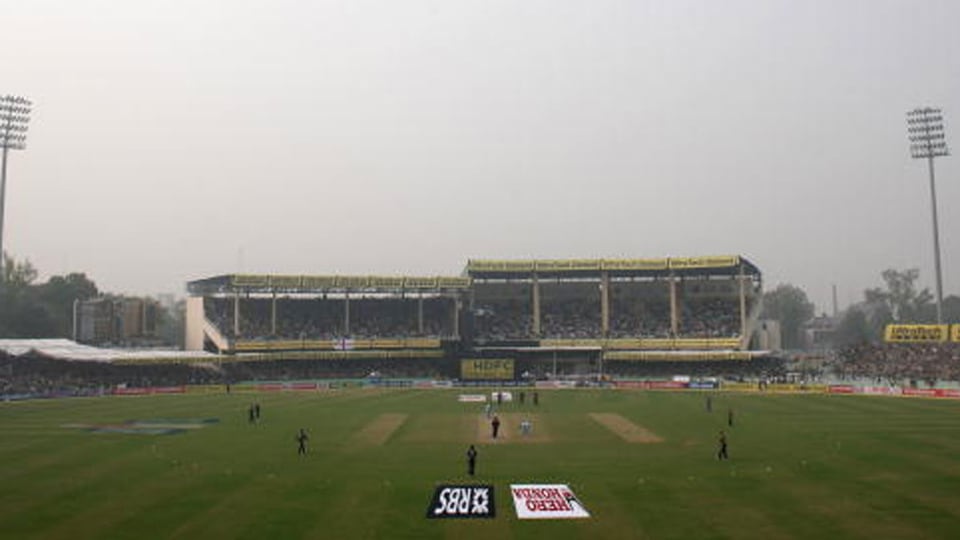
Kanpur’s Green Park looks to live up to its name
A venue steeped in cricket history but criticised for poor pitch quality will provide great conditions when it hosts the New Zealand Test in November, says groundsman Shiv Kumar.

 Prefer HTon Google


When Kanpur’s Green Park stadium became a Test venue in 1952, only four other cities in India had staged cricket’s prized competition at that time. The venue has also witnessed some great moments in the game.
It is where GR Viswanath, one of India’s most popular batsmen, hit a century on debut. Mohammad Azharuddin’s historic third successive century on Test debut came there in 1984. Off-spin great Jasu Patel’s 9/69 - he took a match haul of 14/124 in the 1959 win over Australia - at the venue was the best innings haul by an Indian bowler for 40 years until Anil Kumble captured 10/74.
Yet, Green Park has faced criticism from time to time, for poor, underprepared pitches, lack of facilities at a venue under the administration of the Uttar Pradesh sports department while many modern venues came up elsewhere or old ones were renovated.
The pitch, influenced by the Ganga that flows a few hundred metres away from the ground, has come under the most scrutiny. The Green Park track came under the ICC scanner after the third Test against South Africa in 2008 - MS Dhoni’s first Test as captain - when 32 wickets fell by day three and India levelled the series 1-1.
Proteas coach Mickey Arthur slammed the track as one of the most under-prepared ever and ICC Match Referee Roshan Mahanama rated it “poor”.
The pitch fiasco was a lesson for curator Shiv Kumar, who was assisting BCCI’s chief curator Daljit Singh. The stadium being so close to the Ganga was also blamed for the pitch being slow with low bounce, giving little chance for a result.
From 1960 to 1979 all seven Tests in Kanpur were drawn. Five more games from November 1979 to November 2004 ended in draws. Off the 22 Tests played at Green Park, India have won seven, lost three with 12 draws.
Since 2008 things have improved at a venue that had for decades enjoyed BCCI’s stamp as one of India’s permanent Test venues. Two Tests - against Sri Lanka in 2009 and against New Zealand in 2016 - produced results, India winning both.
“Before the last two Tests, I prepared a wicket for a Ranji Trophy match adjacent to the centre strip and it produced amazing results. The ball was zooming past the batsmen with good bounce,” said Kumar. “The Bermuda grass did the trick and helped bowlers produce good results. It also allowed the batsmen to play their shots with perfection as the ball was coming on to the bat at a good height.”
The task for Kumar now is to produce a quality pitch for the India-New Zealand Test from November 25-29, the first game there since 2016.
“Better quality grass of the Bermuda family is being planted for the game. Both sides will really enjoy it… the pitch will last all five days,” said Kumar. He along with his groundstaff used the lockdown period to work on all the nine pitches on the square.
“Most of the members of my team and I are living within the stadium premises. So, we spent all our lockdown time maintaining the ground and pitch. We changed the soil in the pitch after the 2008 Test and since then the result has been wonderful.”
With the construction of a new pavilion, the seating capacity has gone up to around 25,000, which should add to the ambience if the pitch plays well.


