


 Live Score
 Cricket Teams
 Cricket Players
Like a physio, having a mind skills trainer equally important: S Badrinath
In a chat with Hindustan Times, former India and Tamil Nadu cricketer Subramaniam Badrinath opens up on a range of topics – including the importance of mind skills, the need to have a specific trainer for it and how he and his team aim at reducing the number of mental health cases in sports. Following is the Excerpt

 Prefer HTon Google


He may not have had the greatest of runs with the Indian cricket team, but Subramaniam Badrinath is really hitting it out of the park in his latest innings. Last month, Badrinath and his team launched MFORE, a non-profit initiative that aims at providing mind-conditioning programs to achieve peak performance in sports. And in about a month’s time, the response has been terrific, with his show Mind Masters churning up some great viewership and helping MFORE take its first step towards one of the many targets it wishes to achieve – grabbing people’s attention.
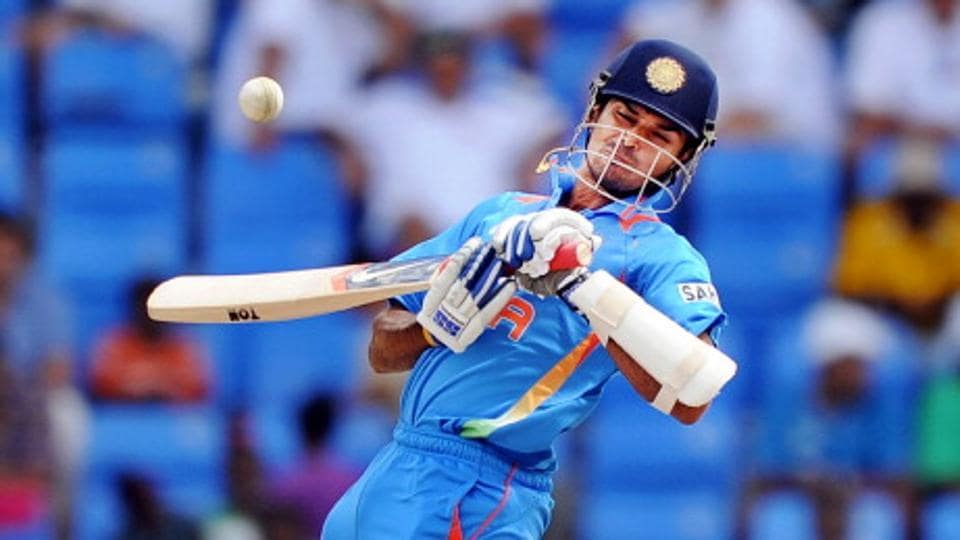
In a chat with Hindustan Times, the former India and Tamil Nadu cricketer opens up on a range of topics – including the importance of mind skills, the need to have a specific trainer for it and how he and his team aim at reducing the number of mental health cases in sports. Following is the Excerpt.
How did you come up with the MFORE initiative? Is it something you always had in mind?
It was something I always believed in. The mind being such an important and integral part of sport is something I’ve always believed in. I’ve experienced it in my career as well. I’ve had good years; I’ve had bad years. I’ve had times when I wanted to quit cricket. So it’s been there throughout my career. The thought came to my mind at a golf course; me and my partner were discussing the mental aspect of the game and suddenly we thought that it’s such an important thing. People keep talking that everything is 80 percent, 90 percent mind but there is no entity that actually deals with it. There is no place where we can go and train. So we thought why not start a proper structure, a proper entity that will deal with the mental side of sport.
Can you throw light on how mind skills training can help overcome mental health issues?
There is a fine line between mental health issues between mind skills. General psychology is more like a reactive psychology. For example, someone is going through depression or somebody is not even willing to go out and play, it means that the mind is already injured. He’s gone to a place where he doesn’t even want to play cricket. We try to be more proactive. Sports’ is a more positive psychology. When players are playing well, but are not able to make it to the next level. Like a club player is not able to make it to a Ranji Trophy team or a Ranji player is not able to make it to the national team. If you keep working with the mental coach on a more regular basis, you can be more proactive. If you want to break that barrier, we can help you.
How important is it to embrace the idea of mental struggles and be open about it?
If you work with a mental coach for a while, you won’t become injured. Like Glenn Maxwell or the rest of the players, because he has not worked on his mind. The mind is just like the body. If there is a slight pain and you keep playing, you’ll over-exaggerate it and will end up needing help. One of our main visions is to break the taboo. Our agenda is that we’ll tell people that we’re working with you. When you’re working with the mind coach, you should be proud about it. That’s the culture we want to spread. Players should be encouraged to come out and say that they’re working with a mind coach.
On that note, do you think having a mind coach should be made mandatory?
We feel that it is mandatory. Every team has a physical trainer who deals with injuries. There’s a bowling coach, fielding coach, then why not a mind coach? A part of our motive is to create an awareness. The challenge for us are the taboos, which we face so much, even from some associations as well. The people who are involved: the players, the administrators, the coaches; we need to create an awareness which states that the culture of mind skills training should be embraced. It’s not like you do one session a year and you’re done. It should be on an everyday basis. The beauty about mind skills training is that you need to spend only 10 percent of your energy but you can gain 90 percent results.
You’ve had guys like Vijay Shankar, L Balaji, Dinesh Karthik discussing the importance of mind skills training. Muralitharan is up next. How much has having all these legends on your show made an impact to MFORE?
They’re all champions. They’re all mind masters in their own right. And one you see these icons talking about the importance of mind and its roles in sport. It is happening, we get more than 500 plus questions. On our site people are asking for help, many associations have approached us, many club teams have approached us. Federations. This is creating awareness and people are starting to recognise its importance. Once sports resume, I have a feeling we’ll become busier.
(- Watch S Badrinath host ‘Mind Masters by MFORE’ with special guests Muttiah Muralitharan, Russell Arnold and Laxmipathy Balaji in the final episode on Sunday, 14th June at 7pm exclusively on Star Sports 1 Tamil)


