


 Live Score
 Cricket Teams
 Cricket Players
MS Dhoni started India’s fitness revolution, Virat Kohli took it to next level: English coach Peter Wellings
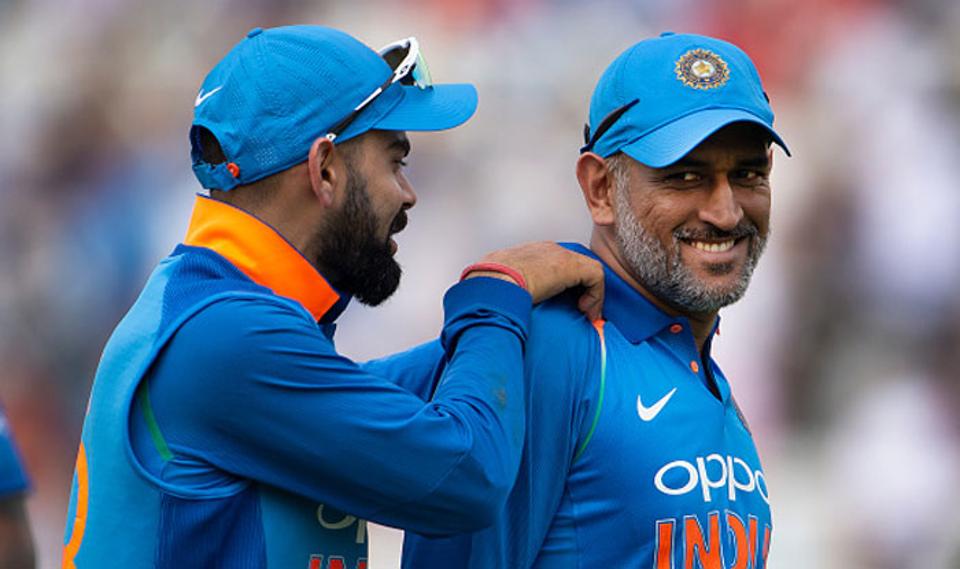
For the paradigm shift in Indian cricketers’ fitness, Wellings reckons, two of Indian cricket’s finest athletes – MS Dhoni and Virat Kohli – deserve a whole lot of credit.

 Prefer HTon Google


The name Peter Wellings may not ring a bell immediately, but when it comes to defining new-age sports coaching and how little things like attention-to-detail matter, the Englishman is right at the forefront of it.
Wellings, a former Middlesex cricketer, played not more than six First-Class matches, scoring 378 runs at an average of 47.25, before finding his calling in the field of coaching. Opting to end his time as an active cricketer, he completed his ECB Level-3 certification, alongside Tom Moody and John Bracewell. And today, Wellings has a coaching experience of almost three decades, having taught all round the world, in over 12 different countries including India, USA, France, South Africa, Australia, Uganda, Rwanda, Canada and of course, his home, the UK.
Roughly seven months ago, Wellings was in India as a star attraction for the Push Academy of Excellence, a cricket academy in the interiors of Gurgaon. During the five-day long camp, Wellings struck such a wonderful chord with the kids, that on their persistence, the 50-year-old extended his association with the academy for a second stint.
Also Read | Come and tell me you have 1 year: Irfan ready to come out of retirement
To be honest, it wasn’t hard to understand why. Wellings was pleasantly surprised, seeing the burning desire of the kids; their energy level even for an age as tender as six. And at that moment, he realised how cricket as a whole, in India, has transformed, thanks to the kind of role models these kids look up to today. Factors such as paying attention to athleticism, bio-motor skills, fitness, agility, fitness, speed, which wasn’t as common in Indian cricket in the past, has led to impressive results, especially in fielding.
And for this paradigm shift, Wellings reckons, two of Indian cricket’s finest athletes – MS Dhoni and Virat Kohli – deserve a whole lot of credit.
“MS Dhoni and Virat Kohli changed the landscape of Indian fielding,” Wellings says in an exclusive chat. MS started the fielding revolution in Indian cricket, especially after England won a Test series 2-1 in India in 2012. England were much better in the field and Dhoni was really crossed because guys were stopping the ball with their feet and stuff. So he said ‘right, we’re going to change the culture.’
Also Read | The best you’ve ever faced Kohli?: ECB asks India captain with video tweet
“Virat has taken it to the next level and he’s simply put forward a message, ‘We’re going to be fit. I’ll go first. I’ll lead by example and if you want to be in my team, you’re going to have to be strong in the field. He’s changed that mentality and all of a sudden, India’s got 10 guys who can bowl at 90 miles per hour and buzz the ball into the keeper’s gloves.
“And now just look how strong India have become. They’ve got the best white-ball batsman in the world; they have the best white-ball bowler in the world. And arguably, you’ve got the best fielder in the world in Ravindra Jadeja. Him and Stokes are probably the two best in the world right now.”
Wellings admits to have witnessed cricket change drastically from the time he was playing in 1996-97. But more than the rapid rising popularity of T20 cricket and what it’s done to the sport, Wellings’ focus is more towards the effect it’s had on players. In an era, where Twitter is filled with youngsters trying to ape Jasprit Bumrah or bat in a Steve Smith-like stance, Wellings warned against the Copy-Paste approach, and stressed on the importance of players finding their own way.
“No two people in the world are the same, so we can’t expect batsmen to bat the same. There are hundreds of millions of cricketers in the world and nobody bats or bowls the same way. If you are naturally an unorthodox player, and you’re successful like a Steve Smith or a Jasprit Bumrah - they are the best in the world at what they do - then go ahead. In my view, Bumrah is the best bowler in the world and in Test cricket, Smith is the standout player, perhaps second to Don Bradman,” he added.
As fond as Wellings is of Bumrah and Smith, another cricketer the coach holds in high regards is England’s wicketkeeper batsman Jos Buttler. Arguably England’s first global T20 cricketer, Buttler’s ability to kill the opposition with softness makes him a rare breed. But while Buttler is a talent in his own rights, he possibly couldn’t have reached where he has, had a certain Kevin Pietersen not broken the barriers of unorthodoxy during the 2005 Ashes series.
“Jos Buttler is a maverick player and I would say before him Kevin Pietersen changed English mentality. The way he played the Australians - slog-sweeping Warne and coming down the wicket to Glenn McGrath, I would preach a willingness to accept unorthodoxy and not try and make everyone bat the same way,” Wellings says.
Another player he sees potential in is the man responsible for England’s turnaround at last year’s World Cup, Jason Roy. With England losing back-to-back games to Australia and Sri Lanka, they suddenly weren’t the favourites, but when Roy returned having recovered from a shoulder injury, his scores of 66, 60 and 85 against India, New Zealand and Australia turned things around for the hosts. He finished the tournament with 443 runs at an average of 63.28, and with the Ashes approaching, it was obvious England would hand Roy his Test debut. But from the high of the World Cup, Roy plummeted to the depth of a forgettable Ashes as he managed just 110 runs from eight innings.
“I think Jason Roy is right up there, perhaps one of the best white-ball batters in the world talent wise. His ball-striking is just amazing. I’m sure the selectors must have looked at him and thought absolutely. We’ve tried all these different guys and he’s got more natural ability, so why not give him a go?,” Wellings pointed out.
“England have always lacked, since Marcus Trescothick, an aggressive opening batsman, someone who puts the pressure back on the opposition, like Sehwag did for India. However, the wickets now are doing more than they used to. So in my mind, I feel the top three now just need to do your Jonathan Trott, Alastair Cook or Cheteshwar Pujara kind of stuff and see off the new ball. Then the greater depth of batting - which England are really good at - when the bowlers are tiring, can really be used to advantage.”
So what advice would Wellings be willing to share with Roy?
“The one thing I would want Jason to do is probably play the ball a little bit late, and also in terms of driving in Test cricket, I would advise any player to drive within their eyeline. What top bowlers want you to do is drive towards covers early on. Look at James Vince; he’s a sensational talent, but he’s got himself out driving outside off a heck of a lot.”


