


 Live Score
 Cricket Teams
 Cricket Players
Shashank Singh left red-faced after another dropped catch against SRH: ‘It has been a bit of a virus’
Punjab Kings' catching issues were highlighted in their IPL 2026 match against Sunrisers Hyderabad, particularly Shashank Singh's latest dropped catch.

 Prefer HTon Google


Punjab Kings’ catching problems became impossible to ignore during their IPL 2026 match against Sunrisers Hyderabad, with Shashank Singh’s latest dropped chance adding another damaging entry to his already poor fielding record this season.
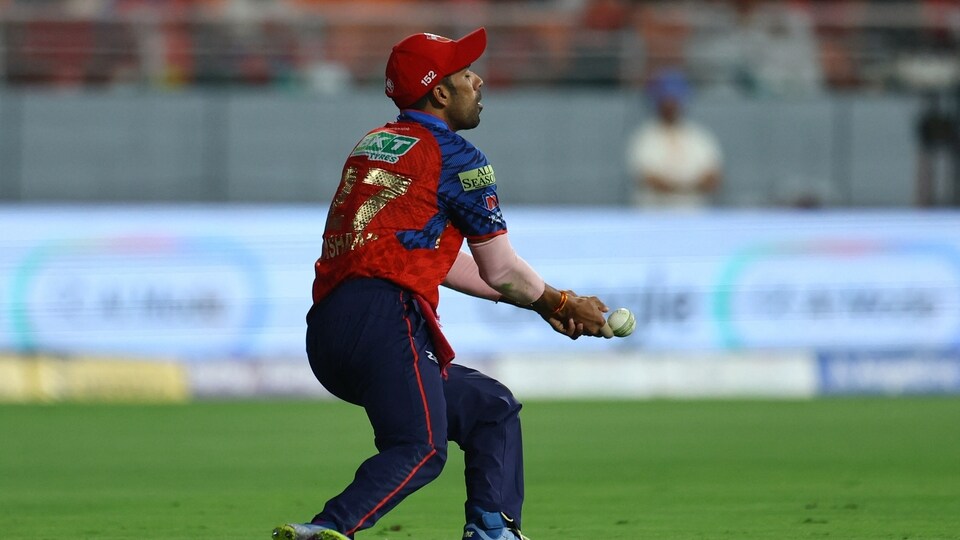
The latest error came against Heinrich Klaasen in the 8.4 over of SRH’s innings. Yuzvendra Chahal tossed one full on the leg-stump line, Klaasen mistimed the sweep, and the ball went straight to Shashank at deep backward square. He settled under it, got both hands to the ball, but spilled a regulation chance. The mistake also cost PBKS four runs.
PBKS suffer catching collapse against SRH
Punjab’s fielding collapse was not limited to Shashank. Cooper Connolly dropped Ishan Kishan in the 7.1 over off Lockie Ferguson at deep backward square.
The issue continued in the 11th over when Ferguson dropped Kishan again, this time off Chahal at deep midwicket. Chahal was visibly frustrated as another chance went down off his bowling.
That wider collapse gives the Shashank drop important context. PBKS were poor as a fielding unit against SRH, but Shashank’s case stands apart because it continued a season-long pattern. Others had a bad night. Shashank added to an existing data trend.
Before the SRH match, Shashank was already the weakest catcher in the IPL 2026 among players with a serious sample. He had taken three catches and dropped four from seven chances. That left him with a catching efficiency of 42.86%.
Shashank's previous drops
The worst damage came in Match 29, where two dropped catches alone produced a heavy negative fielding impact. That was not a one-match accounting quirk. It showed that his catching was already costing measurable value across the season.
The Klaasen drop will push that record further down once the SRH match is added. If counted as another drop, Shashank would move to three catches and five drops from eight chances. His catching efficiency would fall from 42.86% to 37.5%.
The quality of the chance makes the error more damaging. This was not a difficult running catch near the rope. It was a top-edge that went straight to him. He had time to settle. He got both hands to the ball.
The batter also mattered. Klaasen is one of SRH’s most dangerous middle-order hitters and a player who can convert one life into a decisive acceleration phase. Dropping him off Chahal was especially damaging because PBKS needed wickets in the middle overs to control SRH’s scoring rate.
The immediate cost was clear. PBKS did not only miss the wicket. They also conceded four runs from the same error. A dropped catch that becomes a boundary carries double damage in T20 cricket: the fielding side loses the dismissal and the batting side gets a scoring boost.
Shashank’s comparison with other poor catchers also strengthens the case. Naman Dhir had also dropped four catches in the tournament, but he had taken six catches from 10 chances, giving him a catching efficiency of 60%. Shashank’s pre-SRH record of three catches from seven chances was already worse. After the Klaasen drop, the gap becomes sharper.
The sample-size filter is important. Some players may have worse percentages from one or three chances, but that does not carry the same analytical weight. Shashank’s numbers come from a larger set of chances. Among players with at least five catching opportunities, his efficiency was already the lowest before this match.
That is why the SRH drop matters beyond one moment. It converts a table-level weakness into a live-match storyline.
Ponting calls dropped catches a ‘virus’
For PBKS, the concern is not just embarrassment. Dropped catches hurt bowling plans. Chahal created two chances in the middle overs that went down. Ferguson also saw a chance missed. When a bowling attack is already under pressure, poor catching removes the margin for recovery.
For Shashank, the problem is more individual. His batting value and finishing role remain separate parts of his season assessment, but his catching has now become a clear liability. A 42.86% catching efficiency before SRH was already poor. A fall to 37.5% after the Klaasen drop would make the record harder to defend.
The SRH innings gave PBKS a collective fielding problem, but Shashank Singh gave them a repeat-offender problem.
PBKS head coach Ricky Ponting admitted the issue during the match while speaking to the TV broadcaster.
“It has been a bit of a virus,” Ponting said on PBKS’ dropped catches. “Hopefully, it is not too costly. Klaasen is a very dangerous player in T20 format.”
Ponting was also asked whether the lights at the venue had played a role in the catching mistakes.
“I won’t make any excuses,” he said. “We trained here. That is why you train, to have a feel of the venue.”


