


 Live Score
 Cricket Teams
 Cricket Players
Shubman Gill: Human or robot? India's most overworked player needs stricter workload management than Jasprit Bumrah
Workload management in cricket often overlooks the demands on batters like Shubman Gill. Research indicates he needs 48 hours to recover post-match.

 Prefer HTon Google


Since becoming the Test captain of India in May 2025, Shubman Gill’s year has turned into a treadmill. From England through the Asia Cup and the West Indies series, he has accumulated 40 competitive days of cricket. With the Australia tour coming and eight white-ball matches scheduled in it, that figure will hit 48 match-days in 140 calendar days (if he features in every match), one competitive day every 2.9 days.
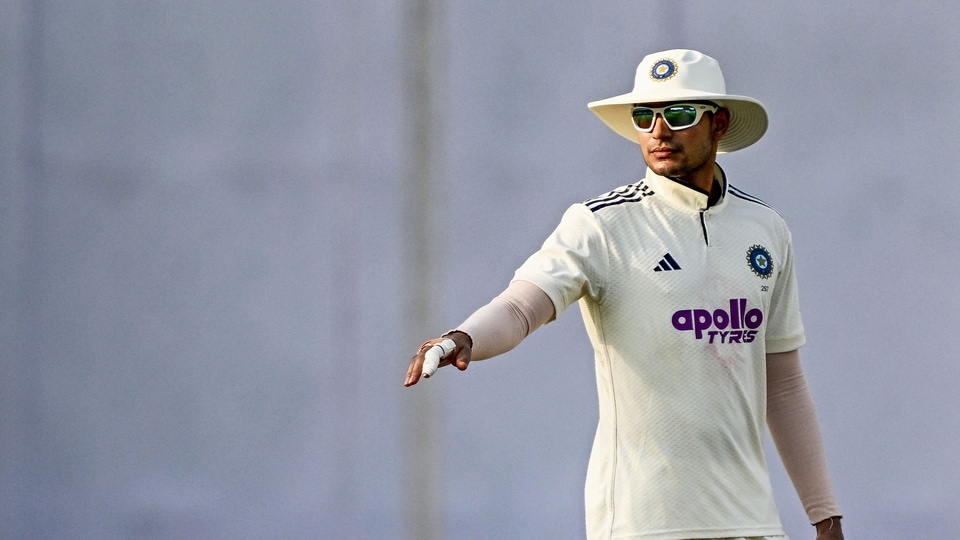
While Jasprit Bumrah and his workload management dominate the headlines mostly, the current schedule suggests that it is Shubman Gill who needs more rest than the ace pacer in the upcoming months.
The concerning story of Gill
Player | England Tests | Asia Cup T20s | West Indies Tests | Total Days |
| Shubman Gill | 25 | 7 | 8 | 40 |
| Ravindra Jadeja | 25 | 0 | 8 | 33 |
| Mohammed Siraj | 25 | 0 | 8 | 33 |
| Yashasvi Jaiswal | 25 | 0 | 8 | 33 |
| Jasprit Bumrah | 15 (3 Tests) | 5 (rested 2) | 8 | 28 |
Match-day-density comparisons:
- Shubman Gill: 0.34 (every 3rd day)
- Ravindra Jadeja/Mohammed Siraj: 0.28
- Jasprit Bumrah: 0.24
Jasprit Bumrah played 3 of the five Tests in England, participated in the Asia Cup, and then played in the two Tests against the West Indies. However, in the Asia Cup, he got rested in a couple of games. On the other hand, Shubman Gill has played all these games.

The batters need rest too
The assumption that only pacers need workload management ignores the basics of sports science. Research on elite cricketers shows countermovement-jump performance, a neuromuscular proxy, remains depressed 24 hours post-match and normalises only after 48 hours.
Muscle glycogen resynthesis requires 24-48 hours even under optimal nutrition. Crossing four time zones between India and Australia would also result in delayed circadian alignment by approximately 48 hours. So, as it stands, at present, Gill on average needs two recovery days for every match day. He has been deprived of this since nearly June.
After the five-day Delhi Test, Gill flies to Perth, then travels through Adelaide, Brisbane, Sydney, and Melbourne. Research on workload management historically focuses on fast bowlers, but fielding and batting also take a tremendous mental and physical toll on a player.
Elite boards now use GPS vests and wearables to monitor thresholds before injuries occur. Yet we see Gill as the ODI captain of India for Australia, and his name is also in the T20I squad. This actually slates him for all eight upcoming games. This just means more workload if he is not rested during the tour.
Post-exercise recovery must restore homeostasis, replenish energy stores, and repair tissue damage; these are processes requiring time, not just willpower. By November, Gill will have spent nearly half the year in the field leading India in multiple formats. If India wants him to continue the same way he has so far, the solution is to trust science - rest him before he picks up an unwanted injury.
Currently, Gill's workload density looks unsustainable, and it is a scientific anomaly. Without intervention, India risk breaking one of their brightest talents.


