


 Live Score
 Cricket Teams
 Cricket Players
Virat Kohli, Abhishek Sharma and the art of saving your World Cup journey on the grandest stage
World Cup finals often defy form, highlighted by Virat Kohli in 2024 and Abhishek Sharma in 2026.

 Prefer HTon Google


In cricket, form is usually treated as a running judgement. A batter is either flowing or failing, either carrying his side or weighing it down. But World Cup finals have a way of shredding that tidy logic. They are not always won by the player who has owned the journey. Sometimes they are taken by the player who has spent weeks looking for one decisive knock.
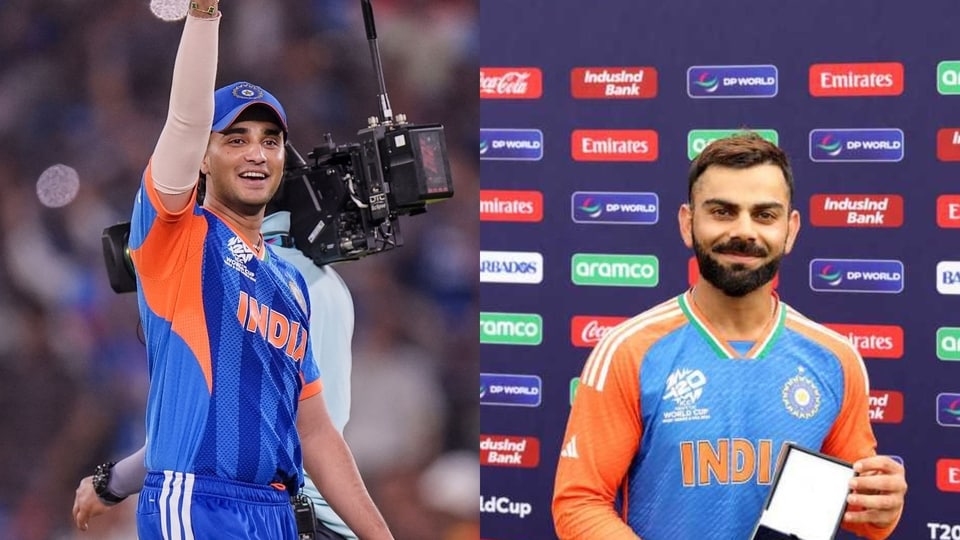
That is what links Virat Kohli’s T20 World Cup 2024 and Abhishek Sharma’s T20 World Cup 2026. Both endured tournaments that, by their own standards or by expectation, had been deeply underwhelming. Both then arrived in the final and changed the campaign's memory. In different ways, each turned the biggest night into a personal correction and a national gain.
When the final rewrote the tournament
Virat Kohli’s 2024 campaign felt jarring because it looked so unlike him. Before the final against South Africa, he had scored only 75 runs in seven innings, a barren run for a player whose T20 World Cup legacy had long been built on command, tempo and big-match assurance. India kept winning, but Kohli’s silence with the bat became one of the tournament’s central subplots. Then, in the final at Barbados, he produced 76 off 59 balls and was named Player of the Match as India recovered from early damage to post a defendable total. It was not a frenzied innings. It was a corrective one, built on nerve, pacing and judgment. He did not simply score runs; he restored shape to the match.
Abhishek Sharma’s 2026 journey had a different texture but a similar emotional weight. He is not Kohli, and his game does not allow him the luxury of looking quietly out of touch. When an attacking opener misfires, the failures feel louder. Before the final against New Zealand, Abhishek had made only 80 runs in six innings, suffered three ducks, and seemed to be carrying the uncertainty that follows a batter whose method depends on immediate conviction. Then came Ahmedabad, and with it a violent reversal. Abhishek smashed 52 off 21 balls, reached his fifty in 18 deliveries, and drove India to 92 in the powerplay, a start that New Zealand captain Mitchell Santner later acknowledged had effectively decided the contest.
Also Read: What made Jasprit Bumrah different from every other bowler in T20 World Cup 2026 final
That contrast is what makes the comparison so rich. Kohli saved a final that needed reconstruction. Abhishek seized a final by blowing it open before New Zealand could settle. Kohli’s innings was an act of control. Abhishek’s was an act of force. One repaired it that evening; the other bent it beyond repair.
Yet the deeper parallel lies in what both performances did to the story around them. Kohli entered the 2024 final under the weight of a rare lean tournament and walked away as the man who steadied India on the grandest stage. Abhishek entered the 2026 final with a trail of low scores and self-doubt, and later admitted that even he had begun questioning himself before being backed by Gautam Gambhir and Suryakumar Yadav. Both emerged not merely as contributors but as central figures in India’s title-clinching night.
That is why these two campaigns belong in the same frame. Not because they were identical, but because they reveal the same truth about finals. A World Cup does not always reward the best body of work across the tournament. Sometimes it asks a more dramatic question: when the journey narrows to one night, who can still become the answer?


