


 Live Score
 Cricket Teams
 Cricket Players
When the Calypsos were crowned kings again
When West Indies ended a 33-year wait to reclaim a World Cup in the 2013 T20 tournament in Sri Lanka


New Delhi: They were the pioneers of limited-overs cricket and the naturals of the format swept to the first two One-day World Cups in some pomp. However, the stunning blow underdogs India delivered in the 1983 final dashed the hat-trick hopes of West Indies and sent them tumbling while rivals rapidly climbed the ladder of success.
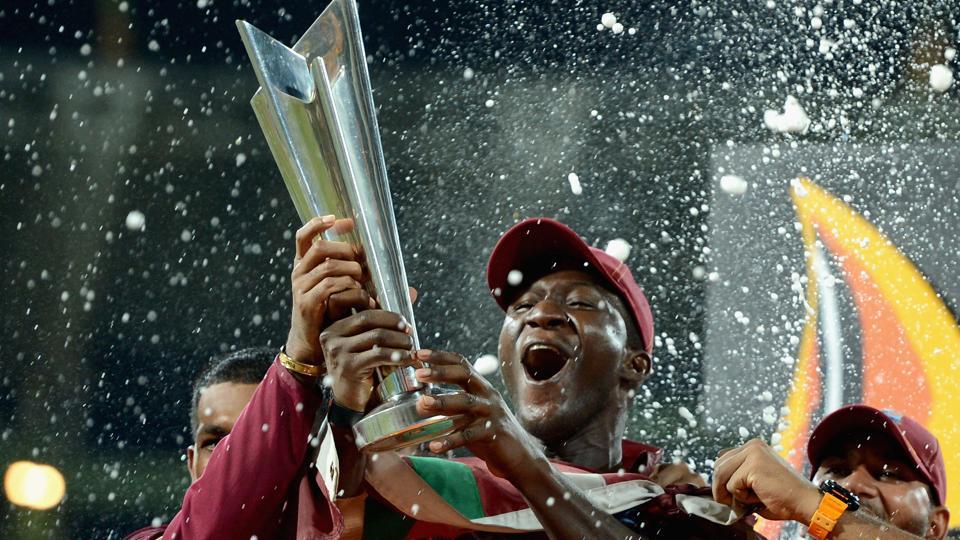
Once hailed as the Calypso Kings, their wait would last 33 years, and 10 more World Cups – 7 ODI and three T20Is – before West Indies would finally regain the crown at the 2012 T20 World Cup in Sri Lanka. It wasn’t a tournament secured by any express fast bowler, rather by a bunch of players who had learnt to find efficiency in the shortest format of the game.
While West Indies didn’t go beyond the semi-finals in any of the post-1983 ODI World Cups, the T20 version too didn’t see them come to the party quickly. A young India won the inaugural edition in 2007, and Pakistan, the beaten finalists, went one better in the 2009 edition held in England. They were left to rue another failure in 2010 despite the third edition, advanced in the ICC calendar, was staged in the Caribbean. It was England who beat Australia for their first World Cup.
There was the impressive 2004 Champions Trophy victory that showcased the talent of West Indies allrounders, but it didn’t give the feel of a World Cup win. Not just for the Caribbean supporters, but for neutral fans around the world too.
West Indies started with a stutter, losing to Australia under the Duckworth/Lewis method following a rain-truncated game. Power weather hit their next game too, this time a no result against Ireland. A narrow win over England followed, but there was enough drama all the way.
The Super 8 defeat to Sri Lanka in a low-scoring affair at Pallekele followed, the hosts winning by nine wickets. It was the next match against New Zealand that took them into the semi-finals. Having been dismissed for 139, they restricted the Kiwis to 139/7 after running out Doug Bracewell going for the winning run. With the game tied, Windies won the one-over eliminator.
There was no liquid pace, and the slow pitches didn’t require that. A variety of slow-medium and the clever spin of Samuel Badree and Sunil Narine served the purpose. In the semis against Australia, West Indies, powered by Chris Gayle’s 41-ball 75 – he got all but 19 runs in fours and sixes – reached the tournament’s only 200-plus total (205/4). Australia, in reply, were rolled over for 131 in 16.4 overs, losing their way after leg-spinner Samuel Badree removed both openers Shane Watson and David Warner cheaply.
Sri Lanka started the final as favourites in slow pitch conditions, but the T20 smarts of West Indies could not be underestimated. And so it proved despite the Windies, after electing to bat, were pegged back to 137/6. Sri Lankan mystery spinner Ajantha Mendis claimed four wickets after trapping Gayle for 3 with a straight delivery. However, Marlon Samuels took over, hitting 78 off 56 balls with six sixes and three fours.
Sri Lanka collapsed to 101 all out in 18.4 overs, Sunil Narine’s 3 for 9 runs the key feature. West Indies got Gayle and even Samuels to bowl, taking any pace that Sri Lanka batters could feed off.
Indian heartbreak
So, what about India? The 2011 ODI World Cup winners were playing in their neighbourhood and were familiar with the slow pitches of Sri Lanka. The MS Dhoni-led side began with two comfortable wins, beating a promising Afghanistan by 23 runs and then a listless England by 90 runs.
But what would really hurt India was their defeat to Australia by nine wickets in their first Super 8 game. Restricted to 140/7 on a slow Premadasa Stadium in Colombo, the Indian bowlers could not put pressure on the Aussie top-order as Shane Watson (73) and David Warner (63) together knocked off the runs with a 133-run opening partnership.
That setback meant despite beating Pakistan by eight wickets in the next Super 8 game, it still left them with an inferior net run rate compared to their rivals. The equation was simple going into the final Super 8 game against South Africa. Win the toss, bowl and chase down the target as required. As luck would have it, the Proteas put India into bat. India made 152/6, which left them needing to dismiss or restrict SA to 121.
However, South Africa eased past that mark, and though India squeezed through to a one-run win, both the teams were eliminated.
Sri Lanka made up for their first heartbreak, winning the next edition.


