Rajaji Tiger Reserve (RTR) authorities have sought the help of Uttarakhand high court after a Survey of India report revealed that 10 hectares of forest land has been encroached upon by a few ashrams in Haridwar.
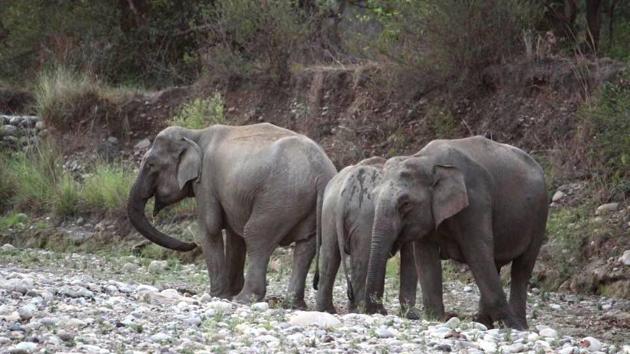
Encroachment in Rajaji is one of the major issues affecting wildlife conservation.
The national park was established in 1983 and in 2015 it was declared a tiger reserve. The reserve is already battling with forest dwellers who have not been rehabilitated even after a decade. Now, encroachment by ashrams and private stakeholders is another cause of worry for the authorities.
A public interest litigation (PIL) was filed against the encroachments following which the high court directed Survey of India (the central agency in charge of mapping and surveying) to conduct a mapping of the reserve and identify the encroachments. The report was submitted to the court in December.
“We have received the report in December and it was our request to the court to order to the erring parties to vacate the reserve land. Most of these ashrams were on lease and aren’t ready to vacate despite several warnings,” Sanatan Sonkar, director RTR said.
According to the survey report, a copy of which is with HT, nearly 60 bighas (over 10 hectares) of land is encroached by the hermitage. These include ashrams of prominent Hindu saints such as Sant Shri Asha Ram ji, Baba Amir Giri Dham, Adinath Singh Lok Ashram and others. Some private parties, too, have held back forest lands such as the Tomar apartments and others.
{{/usCountry}}According to the survey report, a copy of which is with HT, nearly 60 bighas (over 10 hectares) of land is encroached by the hermitage. These include ashrams of prominent Hindu saints such as Sant Shri Asha Ram ji, Baba Amir Giri Dham, Adinath Singh Lok Ashram and others. Some private parties, too, have held back forest lands such as the Tomar apartments and others.
{{/usCountry}}In 2013, member secretary People for Animals (PFA) Gauri Maulekhi had written to the then chief secretary and chief wildlife warden exposing how a private builder was illegally constructing apartments in the protected area.
“The Uttarakhand government has turned a blind eye to these encroachments. Ashrams, temples and private builders have encroached protected areas and the government isn’t doing anything about it. We could only look up to the honourable court to protect the habitat of wild animals,” Maulekhi said.
Most of these encroachments are in Haripur Kala and Dudhiya areas of the reserve.
The management is already planning to translocate a tiger to the reserve. The number of tigers at the reserve has increased in the past few years and the current total is 34. To secure the habitat, activists claim it’s necessary to make the reserve free of human intervention.
“The reserve should be protected. Religion has its own place but the disturbance these ashrams are causing to the wildlife is immense,” Dinesh Pandey, a Haridwar-based activist said.