The Rural Development and Migration Commission, which was formed four months ago by the Uttarakhand government, will soon come up with a model of agriculture to help check forced migration from the hills, which is now a serious concern.
“This model will be based on the growth centres of agriculture that some members of the farming community have developed in the hills by hard work and ingenuity and without any support,” the commission’s vice-chairperson SS Negi said.
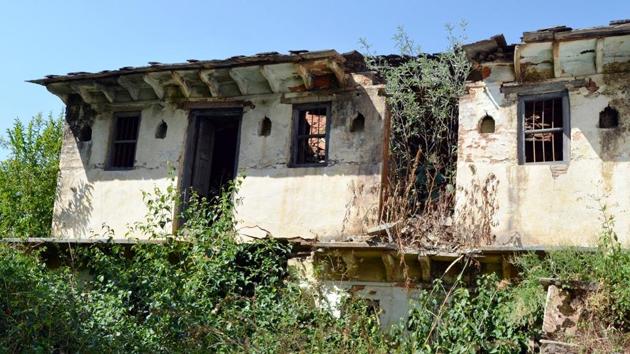
According to the 2011 census, around 968 villages in the state have been emptied out owing to forced migration. “Out of these villages, some 850 are in the 10 hill districts,” Negi clarified.
The commission will help the state government prepare the (agriculture) model based on those growth centres and replicate them in rural areas in the hills and plains.
“The model will be based on a preliminary survey of 7,500 gram panchayats that we completed recently,” Negi, who is also the former director general (DG) of forests in India, said. An exhaustive report based on the survey will be submitted to the state government by April 1.
The proposed report, in which factors behind forced migration will be mentioned in detail, was about the hill agriculture model that the commission “plans” to develop soon.
{{/usCountry}}The proposed report, in which factors behind forced migration will be mentioned in detail, was about the hill agriculture model that the commission “plans” to develop soon.
{{/usCountry}}Negi, however, agreed that distress migration from the hills of Uttarakhand can’t be brought to zero. “It can’t be brought to zero but is manageable by giving a boost to hill farming through hand-holding of peasants,” Negi clarified. He said traditional farming practices in the hills, agriculture dependent on monsoon and climate change were some of the factors behind the low productivity forcing hill farmers to migrate.
“Such problems facing the hill farming can be resolved by replicating the community-based success stories and the experiments carried out by some of the non-governmental organisations,” Negi said. “They have been able to develop successful models as they shifted from the traditional system of agriculture.
“They have, for instance, switched over to horticulture, floriculture and tea cultivation,” he said. “Besides, farmers following that model of agriculture prefer growing off-season vegetables which fetch a good price,” Negi said. The government will give all possible assistance to farmers to grow cash crops.
Elaborating, Negi said that he will also help facilitate farmers’ frequent interactions with experts and officials.
Besides, projects such as the Chardham all-weather road project and Rishikesh-Karnprayag rail line project, “would prove to be a game changer” for the farm sector. Work has already begun on these projects and once completed “they will help farmers easily market their produce”.