
 E-Paper



After 6 days, air improves to very poor
The CPCB, however, directed the stone crushers and hot mix plants to remain closed till November 17, to prevent any further deterioration in air quality.


On Wednesday, Delhi finally took a deep breath and not choke -- thanks to improved wind speeds and a change in the wind direction, carrying pollutants away from the national capital.
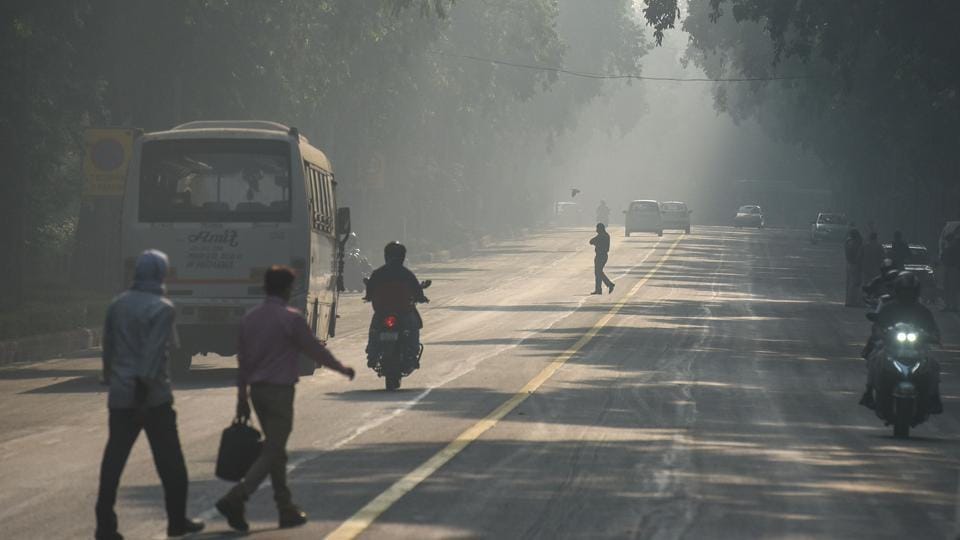
The air quality index (AQI), as recorded by the Central Pollution Control Board (CPCB), on Wednesday rose to the ”very poor” category with a reading of 344, after a staying put in the “severe” zone for six days. On a scale of 0 to 500, any reading between 300 and 400 is deemed very poor, while those above 400 are considered severe.
The AQI had touched 476 on Tuesday, in the upper reaches of severe zone.
The CPCB, however, directed the stone crushers and hot mix plants to remain closed till November 17, to prevent any further deterioration in air quality.
Scientists from the India Meteorological Department (IMD) credited the improvement in air quality to change in wind direction and improved speed.
Kuldeep Srivastava, head of IMD’s regional weather forecasting centre, said from Tuesday afternoon, the wind direction over Delhi changed from north-westerly -- blows from the agrarian states of Punjab and Haryana bringing in smoke from farm fires -- to easterly.
“Because of the wind direction change, we did not have stubble burning smoke adding to the local sources and deteriorating the air quality on Wednesday. The average wind speed was 12kmph, which was enough to disperse the accumulated pollutants,” Srivastava said.
He said on Thursday, too, the wind direction will remain easterly and there is a possibility of the AQI improving further into the better end of very poor zone. But this respite will be short-lived as on the Diwali weekend (November 14), wind will slow down and change direction back to north-westerly.
As the city inched into the severe-plus zone on Tuesday evening, with no clarity on the enforcement of measures under the Graded Response Action Plan (Grap), the Commission on Air Quality Management in NCR and adjoining areas decided the task of implementing Grap be temporarily given to CPCB until the newly constituted commission develops a mechanism for Grap implementation.
There was confusion among agencies after Centre issued an ordinance on October 29 to set up the new centralised agency with sweeping powers to monitor and act against sources of air pollution across five north Indian states.
“After the Commission was formed, we did not have the legal mandate to hold meetings or enforce Grap. The Commission gave us the responsibility only yesterday and so we couldn’t take any measures on our own over the past few days,” a senior CPCB official said.
Experts also expressed concerns over this lack of coordination among agencies at such a crucial time.
“Pollution control and abatement has for long been caught up in legal and institutional jugglery. The current air pollution crisis is an outcome of inaction and regulatory failure. The new Commission has not just inherited the legacy of the problem but also the regulatory framework, in the form of laws and action plans. What needs to be recognised is that even today, big economic decisions are at odds with environment measures. This includes pushing for large real estate projects, continued support for private transport or legal subsidies for coal power stations,” said Kanchi Kohli, legal researcher, Centre for Policy Research.


