Coronavirus disease (Covid-19) has aggravated menstrual woes for young girls in the national capital slum clusters.
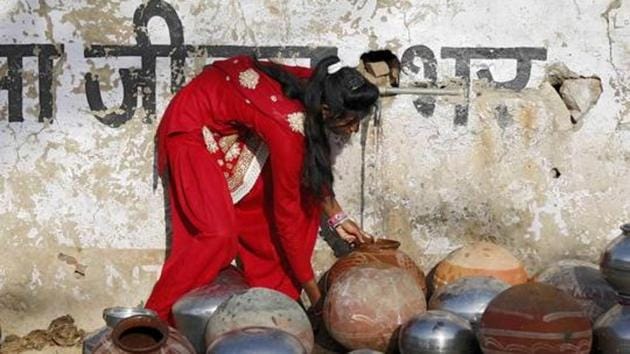
They are facing an acute fund crunch to buy sanitary napkins coupled with unhygienic and crowded washrooms and toilets in their tenements. There is also a perennial scarcity of water and a lack of awareness about menstrual hygiene products.
The contagion-induced economic crisis has led many young girls to abandon sanitary napkins for menstrual pads made of cloth, which has raised the spectre of a looming health hazard.
Teenager Babita Kumari (16), a resident of the Shaheed Bhagat Singh camp in Delhi, is the sole breadwinner for her family. She lives with her widowed mother and siblings.
“Earlier, we could ask our neighbours for sanitary pads or at times use the ones given to my sister from her school. We have stopped asking the neighbours because everyone is hard up for cash these days and schools are closed because of the Covid-19 pandemic. What I earn isn’t enough for us to even afford two square meals a day or buy my mother’s medicines. Sanitary pads are a luxury,” said Kumari, a domestic help.
Her switch to cloth as a poor substitute for sanitary pads has led to constant itches and painful rashes. “I can’t even move around freely in my home, because I am, too, worried about the blood stains. Other girls in our slum cluster are facing a similar problem,” she added.
{{/usCountry}}Her switch to cloth as a poor substitute for sanitary pads has led to constant itches and painful rashes. “I can’t even move around freely in my home, because I am, too, worried about the blood stains. Other girls in our slum cluster are facing a similar problem,” she added.
{{/usCountry}}Komal Kumari (15), another teenager and a resident of the Nehru camp in the national capital, said: “The biggest problem that we faced during the Covid-19 pandemic was during our menstrual cycles. We have to wash our dirty cloth pads, dry, and reuse them. Since all our family members were at home during the pandemic-induced lockdown restrictions, we had to hide the cloth pads and take it to the community toilet, where scarcity of water is a perennial problem.”
Lack of adequate toilets and washrooms are a commonplace problem across various slum clusters in Delhi for thousands of families living cheek by jowl in these tenements. Teenage girls, who have attained puberty, are the worst victims of the infrastructure woes and are finding it increasingly difficult to overcome the stigma of menstruation.
Gunja (15), who lives at a camp in west Delhi, said it was uncomfortable to even walk to the toilets in her slum cluster. “At times, blood stains remain, despite being careful. Once, local rowdies made lewd remarks against me while I was on my way back home,” she said.
Experts said that though the problem was prevalent earlier, the Covid-19 outbreak has aggravated the crisis.
“Young girls living on the streets are not even able to manage menstrual hygiene even during pre-Covid times. The viral outbreak has deepened their woes. The difficulty in obtaining old clothes from various sources, lack of water, growing job losses, privacy issues and myths are collectively responsible for the travails at hand,” said Sanjay Gupta, director at CHETNA, a non-governmental organisation (NGO).
The NGO has been distributing sanitary napkins among young girls living on the streets, night-shelters and slums across Delhi after their internal survey pointed out to this glaring need, he said.
Indu Prakash, a member of the Supreme Court (SC)-appointed monitoring committee for homeless shelters, said, “This is a major issue among underprivileged female children because there is no money or work. If food can be provided at these shelters, then why not sanitary napkins? The government can create programmes for distributing sanitary pads, preferably biodegradable, among such sections of the society to address this pressing need.”
Though the Central government has ensured that Suvidha sanitary napkins are available at Jan-Aushadhi Kendras under the Pradhan Mantri Jan-Aushadhi Yojana (PMJAY) across the country at Re.1 per pad, experts said lack of awareness remains a major deterrent. “The public doesn’t know about Jan Aushudi Kendras or there is no established link between the beneficiaries and the options available,” said Prakash.
Ranjana Prasad, a member of the Delhi Commission for Protection of Child Rights Act, 2005, said, “We distributed around 1.48 lakh sanitary pads on a priority basis to young girls in child care institutions, night-shelters and slum clusters during the Covid-19-induced lockdown in the city. The sanitary napkins were also added to ration kits because we were aware that this is an important issue among underprivileged families.”
Stay updated with all top Cities including, Bengaluru, Delhi, Mumbai and more across India. Stay informed on the latest happenings in World News along with Delhi Election 2025 and Delhi Election Result 2025 Live, New Delhi Election Result Live, Kalkaji Election Result Live at Hindustan Times.
Stay updated with all top Cities including, Bengaluru, Delhi, Mumbai and more across India. Stay informed on the latest happenings in World News along with Delhi Election 2025 and Delhi Election Result 2025 Live, New Delhi Election Result Live, Kalkaji Election Result Live at Hindustan Times.