
 E-Paper



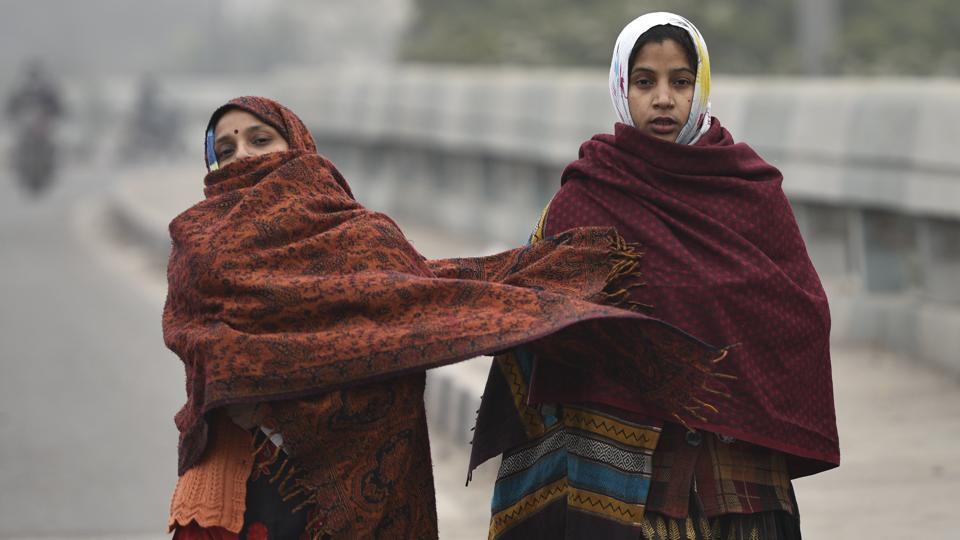
December may be second coldest for Delhi in 100 years
The mean maximum temperature this month till Thursday is 19.84°C. The lowest mean maximum temperature in the city was recorded in 1997 at 17.3°C.

 Prefer HTon Google


The national capital is likely to record the second coldest December in a century because of significantly low day temperatures, according to an analysis by the regional weather forecasting centre.
The mean maximum temperature this month till Thursday is 19.84°C. The lowest mean maximum temperature in the city was recorded in 1997 at 17.3°C.
The second lowest mean maximum temperature for December was recorded in 1919 at 19.8°C and again in 1929 at 19.8°C. In 1961, the mean maximum for the month was 20 degrees Celsius. Until December 26 this year, the mean maximum is almost the same as recorded in 1919 and 1929, but the weather office is expecting the mean for the entire month to be lower as Delhi since likely to see at least two to three more “severe” cold days.
Also Watch l North India continues to reel under severe cold, temperature may dip further
“We are expecting the mean maximum temperature this year to be in the range of 19.5 to 19.6 degrees Celsius. But we have to wait and see until December 31,” said Kuldeep Shrivastava, head of regional weather forecasting centre (RWFC).
There has been a cold spell in Delhi for the past 13 days, if data from all weather stations except Safdarjung is considered. In 1997, there was a cold spell for 13 days in December, but data from Safdarjung station was considered for it.
On Thursday, another “severe” cold day was registered again in Delhi with the maximum temperature 13.4°C, seven degrees below normal, and minimum of 5.8°C, two degrees below normal.
A severe cold day is defined as one in which the maximum temperature is at least 6.4 degrees below normal and the minimum temperature is under 10ºC.
IMD’s Friday bulletin said that cold day to severe cold day conditions would continue in many pockets of north India due to the persistence of cold northwesterly winds in the lower levels over north-west India, and other localised meteorological conditions. Cold day conditions are likely to abate from December 31, the IMD bulletin said.
A fresh western disturbance is likely to affect the western Himalayan region from December 30, bringing widespread rain and hailstorm in many parts of northwest and central India on December 31 and January 1, according to IMD.
“We are expecting light rain to begin in Delhi and NCR (National Capital Region) from December 31. Wind speeds will also pick up significantly. Rains may continue till January 3, and a cold wave is likely to set in again as wind direction changes to northwesterly. We are not sure yet if there will be a cold spell also,” said Shrivastava.
A press release by IMD on Thursday said: “The most severity [of cold/severe cold day conditions] was observed on December 25 when majority of stations in the region were recorded seven to 12 degrees C below normal with actual maximum temperature of the day varying between nine to 15 degrees Celsius.” The lowest day maximum temperature in the northern plains, 9°C, was reported from Ganganagar and Chandigarh.
The main difference between a cold spell and a cold wave is that the former involves lower-than-normal maximum or day temperatures for 2-3 days in a row while the latter involves lower-than-expected minimum or night temperatures for more than one day. On December 29, we could see both in Delhi according to RWFC.
Air quality in the national capital continued to remain in the ‘very poor’ zone on Thursday, as winds slowed down and a moderate fog layer did not allow pollutants to disperse. The air quality is likely to plunge to ‘severe’ on December 28-29 after wind speed slows down and as there is an increase in dense fog.
The overall air quality index on Thursday, as recorded by the Central Pollution Control Board’s 4pm bulletin, was 349 in the ‘very poor’ zone.
Scientists at the India Meteorological Department said the average wind speed was 8-10kmph, which is not
favourable for dispersion of pollutants.


