
 E-Paper



As bodies pile up, private firms transport dead for last rites
Kashyap’s employers are contracted by city hospitals to shift bodies from the mortuaries to crematoriums and burial grounds.

 Prefer HTon Google


Standing under a tree on a hot Thursday afternoon at the Delhi Gate graveyard near ITO in Central Delhi, Ravi Kumar Kashyap, 24, is removing his personal protective equipment (PPE) suit, the fourth he had worn since morning.
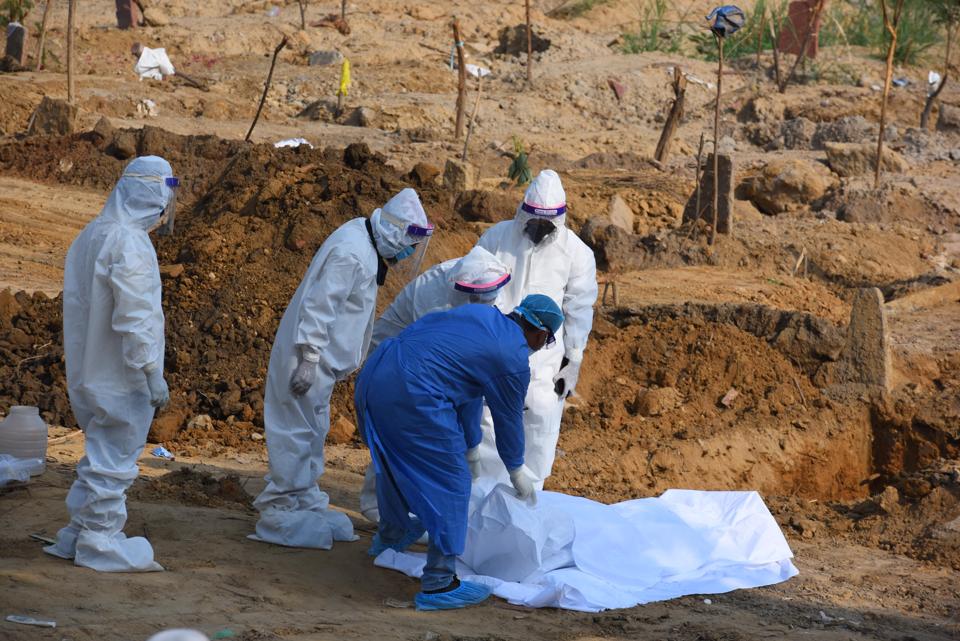
In similar suits, a group of people nearby were lowering a man’s body about 12 feet deep into the grave.
“Thank god the relatives came for the final rites in this case. We can rest for some time. Many times, when people die of Covid-19, their families refuse to touch their bodies. We then have to perform the final rites,” Kashyap said.
Kashyap’s employers are contracted by city hospitals to shift bodies from the mortuaries to crematoriums and burial grounds. Since the pandemic intensified in Delhi, bodies had begun piling up and the firms on an average move around six bodies a day, as against three earlier.
These workers are required to wear PPE kits at all times while handling the bodies, to prevent infection. Each time they are done handling a body, they would have to dispose it of.
But sometimes they would have additional obligations. When relatives shy away from touching the Covid-19 infected body, they would sit with it and perform the final rites according to the dead person’s religion.
“The priest tells us to keep some religious items on top of the body, or pour water next to it. Initially, it was weird. You do such things only if your relative or a close one dies, but now we are used to it,” said Rajesh Kishore, 36, who works with an ambulance service in central Delhi.
Kashyap said he is glad to have a “dangerous” job at a time when there are not many jobs around and many companies are deducting salaries. Besides him, 10 more people were hired by the firm he is working for in the past month alone.
The past few days had been the busiest.
Following media reports of bodies piling up in the city’s mortuaries due to delay in Covid-19 test results, relatives refusing to take custody of the body, among others, Union home minister Amit Shah on Sunday directed hospitals to dispose of them. On Monday and Tuesday, at least 380 funerals of Covid-19 suspected and confirmed cases were held at different crematoriums and burial grounds, reconciling the backlog of bodies waiting at the city mortuaries.
Although the government is yet to document cases when families refused bodies, workers say that in the last four days there were at least 30 such cases.
“Yesterday, we buried a body from Ram Manohar Lohia hospital that was kept there for 19 days. The family had left for West Bengal after leaving the body in the mortuary. We tell people that it is safe to handle the bodies after wearing PPE, but they do not want to take a chance. And here we are taking the risk because we have to earn a living. We are happy to work. We hope the government recognises this and helps us with some incentives,” said Tamim, 25, another worker who handles bodies.
Handlers at big hospitals and employed by big logistical firms earn about ₹22,000 a month on the job. The others get as little as ₹10,000 a month. As the cases rise in Delhi, these workers say they will demand life insurance cover.
According to Delhi government protocols, trained health care workers will have to handle and pack the body and provide a hearse van to carry the body to cremation or burial ground. After burial or cremation, the hearse van has to be properly disinfected.
“Ours is the most dangerous job at the moment. If we take a day off, we lose a day’s pay. We handle bodies from 7am to 10pm. The bigger firms have air-conditioned hearse vans while smaller ones, such as the one where I work for, do not. We are told that one company has also given life insurance to their employees. We will also ask for insurance too,” a man, who works with a private hospital in South Delhi, said while wishing not to be identified.
Danish S, 34, who works for an ambulance service at RML Hospital said his job was emotionally and physically draining. “We wear this suit from head to toe and stand in the sun the whole day. It is not comfortable at all, “ he said.
Most workers who HT spoke to said that in April many of their colleagues had left the job fearing they too would get the virus if they continued.
“People need work. With many deaths, the demand for people like us has increased. My friend’s company hired 10 such mortuary workers. Some of our friends who had initially left have also returned now. They have realised that we have to learn to live and work with the virus,” said Danish.
Until Thursday afternoon, according to the government, Delhi reported XX cases and XX confirmed deaths.


