
 E-Paper



Covid-19 testing crosses 60k in Delhi, but dip in RT-PCR method
Of the 60,580 tests conducted on the day, 4,266 people tested positive for the infectious disease — the second highest daily case spike ever in the city, after 4,308 new cases on Thursday.

 Prefer HTon Google


For the fourth consecutive day, the Capital breached its Covid-19 testing record, with more than 60,000 samples collected for the first time, as per the daily health bulletin released by the Delhi government on Friday.
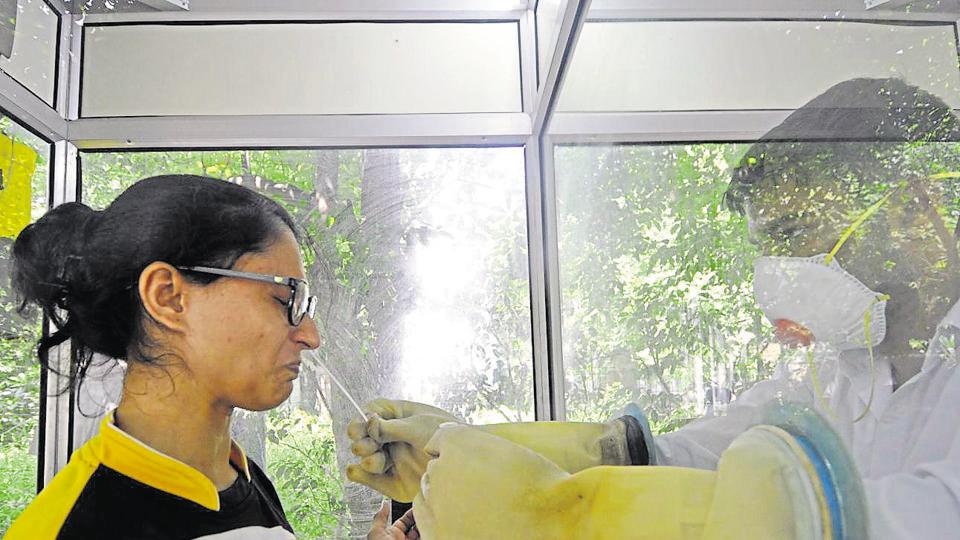
Of the 60,580 tests conducted on the day, 4,266 people tested positive for the infectious disease — the second highest daily case spike ever in the city, after 4,308 new cases on Thursday. However, with the increased tests, the case positivity rate fell from the previous day — from 7.38% on Thursday to 7.04% on Friday.

This is a decline from 9.55% recorded on September 1. The seven-day average positivity rate in Delhi stands at 7.92%, a decline from 8.98% the week before.
However, samples tested using the more reliable RT-PCR tests fell for the second straight day, with just 8,305, or 13.7%, tested using the gold standard diagnosis on Friday, as against 9,004 the previous day.
Also read: Covid-19 respite for Mumbai unlikely till New Year says BMC, it has a logic
The number of hospitalisations on Friday due to the coronavirus disease (Covid-19) in Delhi breached the 6,000-mark. The number of hospitalisations on Friday stood at 6,031, or 22.4% of total active cases. The last time it breached the 6,000-mark was on June 23 when 6,264 people were hospitalised in a single day.
Additionally, in order to scale up testing further, the Delhi government has directed its mohalla clinics to start conducting tests from Friday after daily consultations are over at 2pm. The clinics will function as testing centres between 2pm and 5pm every day in addition to the 300 dispensaries and Delhi government hospitals that already conduct tests.
HT was first to report on September 2 that the government plans to conduct tests at mohalla clinics to scale up testing to the 40,000 a day target.
“In order to augment Covid testing drive, it has been decided to initiate Covid testing at all AAMC (aam aadmi mohalla clinics) from 2 pm to 5 pm on all working days with immediate effect. All CDMOs cum mission directors are requested to ensure AAMC empanelled staff is trained for testing procedure, including training for doffing/ donning,” read the communication by Dr Shelley Kamra, state nodal officer, Mohalla Clinic cell.
There are 450 mohalla clinics in the city.
Unlike government hospitals and dispensaries, where the staff are either government employees or hired as ad-hoc, mohalla clinics are run by private empanelled doctors and staff paid on a per patient basis.
Similar incentives will be given to the staff running the testing centres. According to the communication by Dr Kamra, a copy of which is with the HT, a doctor will be paid ₹30 per person tested and entered in the ICMR portal. An assistant will be paid ₹30, a pharmacists ₹15, a multi-task worker ₹15, and a data-entry operator will be paid ₹10 per patient.
The CDMOs will be responsible for ensuring availability of PPE kits, support for disposal of bio-medical waste, and thorough sanitisation of each centre after testing to prevent the infection from spreading next day during consultations.
“When there is an increase in the number of Covid-19 cases, there could be two scenarios. One, we are detecting more cases because we are simply testing more and two, because the positivity rate is on the increase. Whatever be the scenario, we are getting more and more cases and the resources to treat them remain finite and that is a cause of concern. The government has been saying that we have enough beds, but I have heard of people who struggled to get one. The only encouraging thing is that the positivity rate is slowly going down, meaning we are likely to see fewer cases in the future,” said Dr Lalit Kant, former head of the department of epidemiology and infectious diseases at the Indian Council of Medical Research.


