India’s first non-Congress politician to last a full term as prime minister was Atal Bihari Vajpayee; just preceding that five year stint, 1999-2004, he had led two short-lived governments, for 13 days, and then 13 months. In a country where, until then, neither non-Congress prime ministers nor coalitions had lasted, he, and his National Democratic Alliance were an advertisement for the alternative. Silver-tongued orator whose pauses said as much as his words, old-world gentleman who cared about friends and political foes alike, unlikely reformer, poet and bon vivant, Vajpayee will be remembered by history for three reasons.
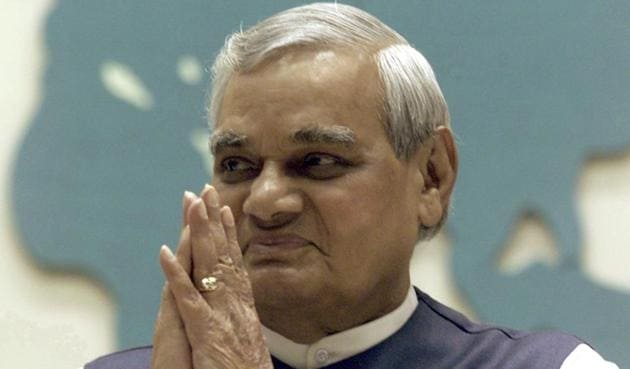
The first is what he did for the Indian economy. Sure, it was another one of India’s prime ministers, Manmohan Singh who, as finance minister, opened up the Indian economy, but it was during Vajpayee’s term as prime minister that the building blocks of the rapid economic expansion that India saw between 2004 and 2008 came together. Indeed, Vajpayee’s National Democratic Alliance will go down in history as the most reformist (and also the most economically right-of-centre) government the country has seen so far. Sops to the real estate sector and homebuyers, lower interest rates, and a grand highway-building programme engendered a construction and real estate boom. This also created jobs (construction is the biggest employer of non-skilled workers in India). Vajpayee also created the department of disinvestment and started selling non-strategic state-owned companies, including profit-making ones such as VSNL (which then enjoyed a monopoly over long-distance telephony). Indeed, had his government returned to power in 2004, it is likely that Air India and BSNL (and MTNL) would have been in private hands now.
The second is what he did for the Bharatiya Janata Party. Swept away by the tidal wave of sympathy that followed Indira Gandhi’s killing in 1984, the BJP had reinvented and rebuilt itself as a muscular party with a strong Hindutva focus under the stewardship of Vajpayee’s Gemini twin Lal Krishna Advani. Yet, it was unclear whether India of the 1990s, strongly polarised between Mandal (the reservation for other backward classes that had created a storm) and Mandir (the demand for a Ram temple at Ayodhya championed by the Advani-led BJP), was ready to accept the party. Vajpayee, long seen as a moderate despite his own deep belief in many of the core tenets of the Hindutva philosophy, was perhaps more acceptable – not just to coalition partners but also to the wider electorate. Without him, it is debatable whether the BJP would be in the pole position it is in across India today. And maybe his surprise loss in 2004, seen as a backlash against his government’s India Shining campaign, also helped the party understand the importance of not being seen as too right-of-centre economically. Prime Minister Narendra Modi’s Independence Day speech, delivered a day before Vajpayee’s passing, was clearly aimed at avoiding the India Shining trap.
{{/usCountry}}The second is what he did for the Bharatiya Janata Party. Swept away by the tidal wave of sympathy that followed Indira Gandhi’s killing in 1984, the BJP had reinvented and rebuilt itself as a muscular party with a strong Hindutva focus under the stewardship of Vajpayee’s Gemini twin Lal Krishna Advani. Yet, it was unclear whether India of the 1990s, strongly polarised between Mandal (the reservation for other backward classes that had created a storm) and Mandir (the demand for a Ram temple at Ayodhya championed by the Advani-led BJP), was ready to accept the party. Vajpayee, long seen as a moderate despite his own deep belief in many of the core tenets of the Hindutva philosophy, was perhaps more acceptable – not just to coalition partners but also to the wider electorate. Without him, it is debatable whether the BJP would be in the pole position it is in across India today. And maybe his surprise loss in 2004, seen as a backlash against his government’s India Shining campaign, also helped the party understand the importance of not being seen as too right-of-centre economically. Prime Minister Narendra Modi’s Independence Day speech, delivered a day before Vajpayee’s passing, was clearly aimed at avoiding the India Shining trap.
{{/usCountry}}The third is the man himself. Vajpayee’s term coincided with the emergence of round-the-clock news television and new media, but perhaps because these media were yet to become all pervasive (and invasive), he benefited from coverage minus the constant scrutiny that today’s leaders face in daily debates on TV and interactions on social media (not to forget the pillorying memes they have to tolerate). Vajpayee himself made no effort to hide his flaws and foibles – he was what he was, and didn’t particularly seem to care what others made of that. With his oratorical skills in the language most Indians spoke and were familiar with, and literary street-cred, Vajpayee was also the consummate “Hindi” politician. There had been other “Hindi” politicians before him, but none had his way with words, nor indeed, would go on to serve a full term as prime minister. There are countless anecdotes that speak of his relationships across the aisle – of how he grieved at the passing of Jawaharlal Nehru; or how Sonia Gandhi visited him to pay her respects after the death of his longtime companion Mrs Kaul. He was a great unifier but also among the last of his breed. At a time when India’s polity is deeply polarised, one can only think wistfully of statesmen such as Vajpayee with the ability to take everyone along. Then, there’s the sheer statistics of his parliamentary record; 10-time member of Parliament of the Lok Sabha; twice member of the Rajya Sabha; three time prime minister.
Atal Bihari Vajpayee, who was born in Gwalior on Christmas Day 1924, and who died a day after India’s 72nd Independence Day, was a believer in Parliament, democracy, and India. When his second government fell in 1999, after losing a no-confidence motion by a solitary vote, he said: “Political games will continue. Governments will form and fall, parties will be made and destroyed. But this country must remain and its democracy must remain.”