West Bengal chief minister Mamata Banerjee has been at the heart of political action in Delhi this week. She has met a range of opposition leaders. The discussions have had a common thread: forging a common understanding against the Bharatiya Janata Party (BJP) for the 2019 Lok Sabha polls. The initiative is significant not because it is new, but because of the context. With the Samajwadi Party and the Bahujan Samaj Party coming together in Uttar Pradesh, the BJP faced a severe setback in the bypolls; the Rashtriya Janata Dal, with Congress support, did well in the Bihar bypolls. And there is a sense in the opposition that if they can prevent a fragmentation of the anti-BJP votes, the saffron juggernaut can be stopped. The Congress has declared that it is open to “pragmatic alliances” at its plenary, but it has not been aggressive by claiming leadership yet. This is the backdrop in which Ms Banerjee has stepped up her efforts. West Bengal sends 42 MPs to the Lok Sabha and she is all set to win a majority of them in 2019. Unlike the Congress, which is in a straight contest with some regional parties in specific states — whether it is the Telugu Desam Party (TDP) in Andhra Pradesh or the Telangana Rashtra Samithi (TRS) in Telangana or the AAP in Delhi — Ms Banerjee can talk to everyone. The efforts help buttress her credentials as the strongest leader in the anti-BJP camp in West Bengal and position her as a potential Prime Ministerial candidate of the alliance in 2019.
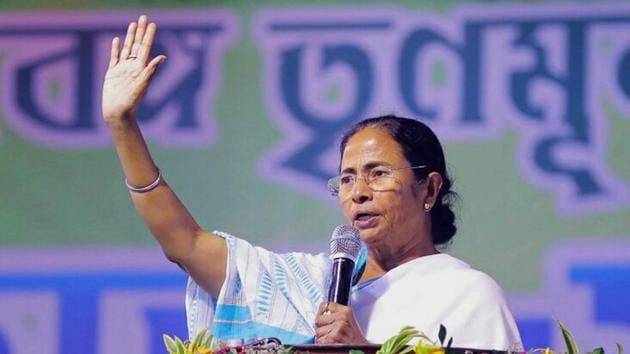
But it would be premature to leap to any conclusions just yet, for the pitfalls are greater than the possibilities of such a front. For one, there is a sharp contradiction between the constituents of any such front on the question of leadership. Will the Congress accept Banerjee? Will Banerjee accept the Congress? Will Ms Banerjee accept a Mayawati or vice versa? Will they be able to arrive at a common leader before polls — and, if not, would this faceless alliance be able to take on Narendra Modi at all? Two, there is no common narrative here. The TDP or the YSR Congress Party have Andhra Pradesh-specific concerns; the DMK or the TRS have interests specific to their states; the Shiv Sena, the leaders of which Ms Banerjee met, have far more in common ideologically with the BJP even now.
To be able to stitch together this coalition is a tall order. Besides, there are contradictions in each state among non-BJP parties. Take Bengal itself. Can Ms Banerjee ally with her arch rival, the CPM, as well as the Congress, to take on the BJP? All three parties want a common front in Delhi, but are battling each other in Kolkata. Unless the issues of leadership, narrative, and actual contradictions on the ground are sorted out, Ms Banerjee’s efforts to forge a grand alliance may falter.
{{/usCountry}}To be able to stitch together this coalition is a tall order. Besides, there are contradictions in each state among non-BJP parties. Take Bengal itself. Can Ms Banerjee ally with her arch rival, the CPM, as well as the Congress, to take on the BJP? All three parties want a common front in Delhi, but are battling each other in Kolkata. Unless the issues of leadership, narrative, and actual contradictions on the ground are sorted out, Ms Banerjee’s efforts to forge a grand alliance may falter.
{{/usCountry}}