The fall of the Berlin Wall in 1989 and the 9/11 Twin Tower attacks in 2001 are events in recent history that have changed the trajectory of world politics. While the former brought hope and jubilation for a better world, the latter was a wake-up call to the reality that ‘terrorism anywhere is terrorism everywhere’. The Arab Spring — a wave of demonstrations that broke out across West Asia and North Africa, which saw regime changes in Tunisia, Libya, Egypt and Yemen, and protests in more than a dozen other countries — was expected to have a similar impact. Egypt, where thousands of people gathered on the streets of Cairo on January 25, 2011, chanting ‘El-sha’ab, yureed, isqat el-musheer’ (the people want the fall of the regime), eventually saw a regime change. The elections held later saw the Islamist Muslim Brotherhood win but its government was ousted in 2013 after a coup by former general and current President Abdel Fattah el-Sisi. The hope that resonated from Tahrir Square to other places in the region ended in an anti-climax.
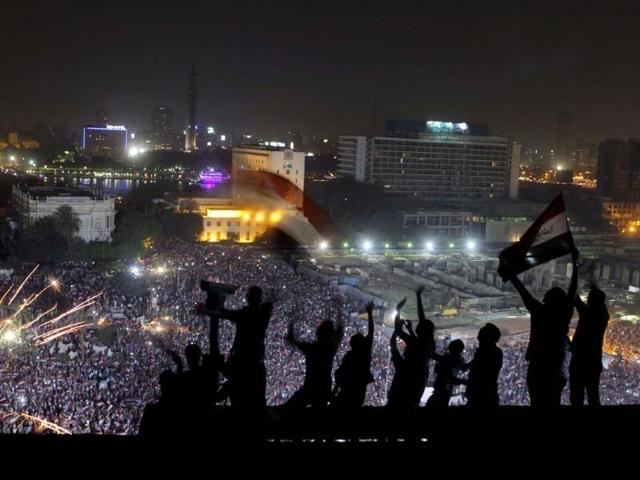
Ahead of the fifth anniversary of the uprising, Mr Sisi’s regime has arrested activists, accusing them of inciting anti-State activities. His regime has come down heavily on the media in ways reminiscent of the rule of his predecessor Hosni Mubarak. Egypt, which was the poster boy of the revolution, is back to square one. Mohamed Bouazizi, the fruit-seller from Tunisia who set himself ablaze protesting police corruption, and Wael Ghonim, the Google executive who rallied protesters at Tahrir Square, have become symbols of the uprising — unfortunately, today it’s only the symbols that remain. The Spring has left behind a winter of despair. These developments make it appear that Arab exceptionalism — that West Asia cannot embrace democracy — is not just a biased theory.
The past five years have not only failed to address the existing problems but have also seen new troubles erupting. Shia-Sunni sectarian differences have sharpened, Riyadh-Tehran animosity has heightened and short-sighted geopolitical considerations have meant that nations are fighting terror at cross purposes. Not much progress has been made in addressing human rights concerns and corruption is still rampant. Add to this the effect falling crude oil prices will have on the region. Tunisia, with its earnest efforts to establish democratic institutions, is a silver lining. The challenge for policymakers is to address immediate concerns, like the Islamic State, while not losing sight of the democratisation agenda of the region.
{{/usCountry}}The past five years have not only failed to address the existing problems but have also seen new troubles erupting. Shia-Sunni sectarian differences have sharpened, Riyadh-Tehran animosity has heightened and short-sighted geopolitical considerations have meant that nations are fighting terror at cross purposes. Not much progress has been made in addressing human rights concerns and corruption is still rampant. Add to this the effect falling crude oil prices will have on the region. Tunisia, with its earnest efforts to establish democratic institutions, is a silver lining. The challenge for policymakers is to address immediate concerns, like the Islamic State, while not losing sight of the democratisation agenda of the region.
{{/usCountry}}