Long before modern researchers began charting happiness scores or well-being indices, many cultures, including India’s, grappled with the deeper question of what it means to live well. Aristotle called this eudaimonia, a life shaped by purpose, character, health, and community. Similar ideas run through Indian traditions. The emphasis on dharma as right living, the pursuit of wisdom and compassion in Buddhism, and the understanding in the Upanishads all indicate that a meaningful life is one aligned with one’s true nature.
This broader understanding has gained traction across disciplines. The Global Flourishing Study by Harvard University and Baylor University is one such effort to understand flourishing within a few countries, including India, and in a manner that permits cross-country comparisons and understanding. The study defines flourishing as a multidimensional state of well-being that includes happiness, physical and mental health, meaning and purpose, character and virtue, supportive relationships, and financial stability. Happiness is just one part of this calculus; flourishing depends on the deeper foundation of moral integrity, social connection, and material stability. A person may feel momentarily happy yet still not be flourishing if these foundational attributes are weak or absent.
The findings of the first wave of this study, which were published recently in the journal Nature Mental Health offer an unexpected portrait of India — one that both aligns with global patterns and sharply diverges from them in some respects. While the headlines tend to focus on economic growth or political sentiment, these data reveal something more intimate: How we feel about the quality of our lives, our relationships, our sense of purpose, and our moral stability.
Let’s begin with age. In many countries — including the United States, Brazil, and Sweden — well-being climbs steadily after midlife, indicating that people mellow into contentment. In India, however, flourishing traces a U-shape, dipping in midlife before rising again in older age. Pressures of middle adulthood — work, caregiving, financial strain — seem to weigh more heavily in India than in countries where social protections are stronger.
{{/usCountry}}Let’s begin with age. In many countries — including the United States, Brazil, and Sweden — well-being climbs steadily after midlife, indicating that people mellow into contentment. In India, however, flourishing traces a U-shape, dipping in midlife before rising again in older age. Pressures of middle adulthood — work, caregiving, financial strain — seem to weigh more heavily in India than in countries where social protections are stronger.
{{/usCountry}}Marriage brings another surprise. Across much of the world, married adults report higher well-being than those who are single. In India, however, married adults report lower flourishing than singles, a finding that runs counter to the global norm. This hints at the social, economic, even emotional burdens that marriage can impose, particularly on women, though the study does not disaggregate by gender here. It is striking that the institution so central to Indian society may not be reliably delivering personal well-being.
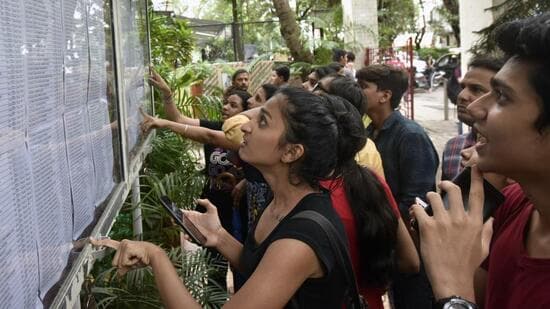
Students in India report higher flourishing than those who are employed, a pattern shared with Japan, Kenya, and some other countries. At a moment when job markets are tightening and aspirations rising, the transition from education to employment appears to be associated with a drop in well-being, perhaps an indicator of economic and social pressures on India’s young adults.
Religion, too, influences flourishing differently in India. In many countries, attending religious services is strongly linked to higher well-being. In India, the benefit is small and statistically weak, suggesting that either that formal religious practices capture only a sliver of India’s spiritual life, or that other social structures carry this load.
Perhaps the most unexpected finding lies in character. In most countries, people feel more anchored in their moral lives as they age. In India, those self-ratings decline with age. Older adults feel less able to act with purpose or promote the good, an unusual pattern when compared to other countries.
These are findings from just one study, but they do invite a deeper question. As India modernizes, are the structures that traditionally sustained well-being keeping pace with the aspirations and pressures of contemporary life? And what might explain some of these observations?
One reason may be India’s extraordinary pace of change. The country has undergone changes in financial mobility, technological connectivity, shifts in family structure, the collapse of traditional career ladders, and the rise of competitive pressure from school to workplace in a single generation. Flourishing requires inner scaffolding: habits of integrity, self-regulation, a sense of agency. But these characteristics don’t grow automatically when external change is relentless. They must be cultivated through education that values grit and empathy, workplaces that reward fairness as much as output, and communities that hold individuals accountable through shared norms.
In the journey to a Viksit Bharat, we are far more focused on the external indicators than the internal, and we can observe what happened in other countries when that was the case. China’s spectacular rise lifted millions from poverty, yet mental health burdens grew, and work pressures eroded well-being. Brazil’s commodity boom expanded the middle class but left people feeling unsafe and disillusioned as violence, corruption, and declining happiness undercut gains. Russia’s early-2000s growth similarly bypassed everyday life. Life expectancy stagnated, alcohol-related deaths remained high, and weak institutions sapped meaning and security. There is a consistent pattern. When social cohesion, mental health, and trust do not grow alongside GDP, prosperity becomes unsustainable. Countries like Singapore that focused on social cohesion were more able to grow consistently in the long run than countries that ignored this core aspect of development. The findings of this study reiterate that wealth alone does not guarantee flourishing.
In a country where the median age is under 30, flourishing is not an academic ideal; it is a national asset and a desirable goal of development. If we can combine our rich cultural reservoirs of meaning with the institutional foundations that sustain character and health, India will not only grow economically, it will grow stronger, more humane, and more capable of realizing the promise of a truly Viksit Bharat for its 1.4 billion people.
Ramanan Laxminarayan is president, One Health Trust. The views expressed are personal