On Monday, the Indian Meteorological Department (IMD), the government’s principal agency for weather forecasting and rainfall monitoring, predicted “near normal” southwest monsoon rainfall this year, even as it downplayed the impact of the El Nino weather phenomenon. The IMD said monsoon rainfall (June-September) is likely to be 96% of the Long Period Average (LPA) received during the monsoon months between 1951 and 2000 (LPA is the average rainfall received by the country during the south-west monsoon for a 50-year period). The current LPA is 887 mm, based on the average rainfall over years 1951 and 2000. It acts as a benchmark against which the rainfall in any monsoon season is measured. The IMD’s forecast deviates from that of private forecasting company, Skymet Weather, which, on April 5, predicted a “below normal” monsoon — about 93% of the LPA.
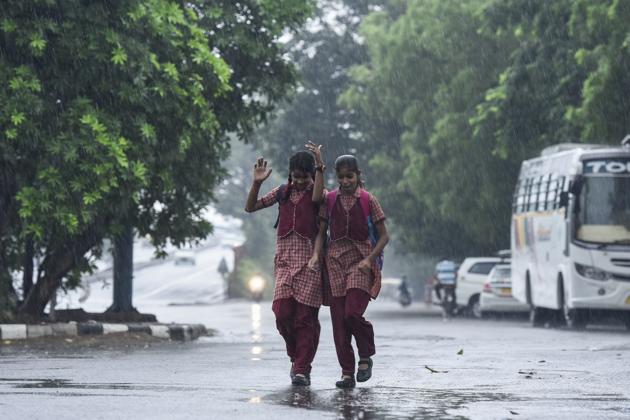
While the IMD’s prediction — a near-normal and well-distributed monsoon — should have made the country happy, its new categorisation (“near normal”) has led to disquiet in some quarters. While senior weather officials downplayed the issue, saying there is not much difference between near normal and normal monsoon, two important questions are being raised. First, if there is no difference, why did the IMD come up with a new category (especially in an election year) and create this confusion? Secondly, is the agency trying leave itself with wriggle room in case its prediction goes wrong? Adding to the confusion is another aspect of the prediction: “There is a moderate chance of a below normal monsoon.” These fears are understandable because forecasting the monsoon remains a fantastically difficult job, especially as four in every 10 monsoons are classified as abnormal. In view of the fact that t he monsoon is an important factor in India’s economic and social life, the IMD should have kept the categorisation straightforward.
While everyone in India is obsessed with the movement of the monsoon, the most complex of global weather phenomena, what often gets overlooked is how best to harvest this gift of nature. In a country where two-thirds of the fields lack irrigation, and groundwater is fast depleting, there is hardly much being done to, as the late environmentalist, Anil Agarwal, often said, “catch water where it falls”. Along with focusing our energies on prediction, time and effort must be invested in conserving the bounty. In their manifestos, the Bharatiya Janata Party (BJP), as well as the Congress, have promised to invest heavily in water conservation. Regardless of who comes to power, this promise needs to be remembered. The new Indian government must also invest in India’s weather prediction capabilities, which will remain poor without investments on three fronts: frequent supercomputing upgrades; an increase in weather observation data; and a significant boost in scientific manpower. After all, as a scientist at the National Centre for Medium-Range Weather Forecasting told the Mint newspaper last year, “Seven billion people are changing the climate. It is hard for a few hundred scientists to keep pace with it.”
{{/usCountry}}While everyone in India is obsessed with the movement of the monsoon, the most complex of global weather phenomena, what often gets overlooked is how best to harvest this gift of nature. In a country where two-thirds of the fields lack irrigation, and groundwater is fast depleting, there is hardly much being done to, as the late environmentalist, Anil Agarwal, often said, “catch water where it falls”. Along with focusing our energies on prediction, time and effort must be invested in conserving the bounty. In their manifestos, the Bharatiya Janata Party (BJP), as well as the Congress, have promised to invest heavily in water conservation. Regardless of who comes to power, this promise needs to be remembered. The new Indian government must also invest in India’s weather prediction capabilities, which will remain poor without investments on three fronts: frequent supercomputing upgrades; an increase in weather observation data; and a significant boost in scientific manpower. After all, as a scientist at the National Centre for Medium-Range Weather Forecasting told the Mint newspaper last year, “Seven billion people are changing the climate. It is hard for a few hundred scientists to keep pace with it.”
{{/usCountry}}