
 E-Paper



Speaking for Jharkhand
Shibu Soren was a rare Adivasi leader who, over his six decade long public life, mobilised and won a state for his followers.

 Prefer HTon Google


Not always do people who emerge as leaders from the grassroots successfully translate their popularity into electoral success. This is especially the case when the leaders belong to marginalised communities that lack the economic resources and legacy advantage to build and sustain a political party. Shibu Soren was an exception. His public life, which spanned over six decades, saw many ups and downs, but it stands for his remarkable endurance as a politician who straddled the complex worlds of Adivasi identity in Jharkhand and coalition politics at the Centre. He was thrice the chief minister of Jharkhand and multiple times a Union minister. But his political legacy extends beyond the short tenures he had in office: In fact, his political biography is synonymous with the history of the rise of the Jharkhandi identity and the Jharkhand state.
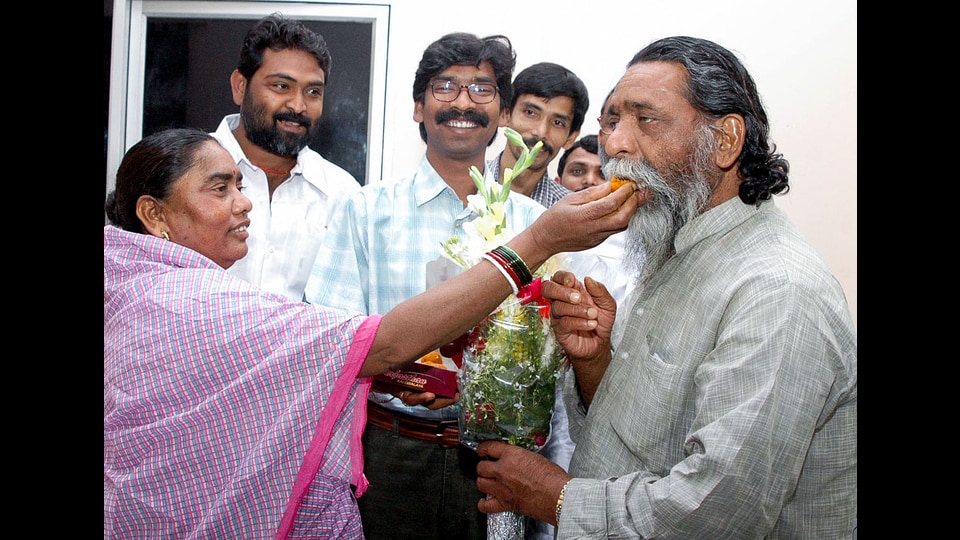
The movement for a separate state for the native residents of the Chhotta Nagpur plateau, divided into many tribes and speaking numerous tongues, goes back to the 1950s. But the early decades after Independence, a period that marked the consolidation of an umbrella Indian identity, sought to delegitimise the identity concerns of marginalised communities. Leaders such as Soren challenged this narrative and fearlessly organised at the grassroots on social and economic agendas. The Jharkhand Mukti Morcha (JMM), established in the 1970s with Soren as one of the founders, brought together identity concerns and working-class agendas, which enabled the movement to build solidarities beyond Adivasis. It fought the liquor mafia, instituted direct action to end land alienation among locals, ran literacy campaigns and advocated the establishment of schools, and worked to create parallel credit networks. The statehood demand was revived in the 1980s, which culminated in the formation of a separate state in 2000.
The JMM in office embraced the vices of the establishment and abandoned the lofty ideals of the movement. This is perhaps the fate of all movement-centric outfits — the Congress, CPI and CPI-M, the Dravidian parties, Bahujan Samaj Party, among others — as they transition to parties of office. That said, Soren will be remembered as a leader from an underprivileged community who fought for his people, established their political agency, and enabled the founding of a state centred on the Jharkhandi identity. The allegations that continued to dog Soren through the course of his political career — they ranged from murder to corruption — are a reflection of the political economy of the resource-rich region he emerged from. His party may have failed in transforming how politics is played, but the very fact that it was a player made it, and him, unique among tribal mobilisations.


