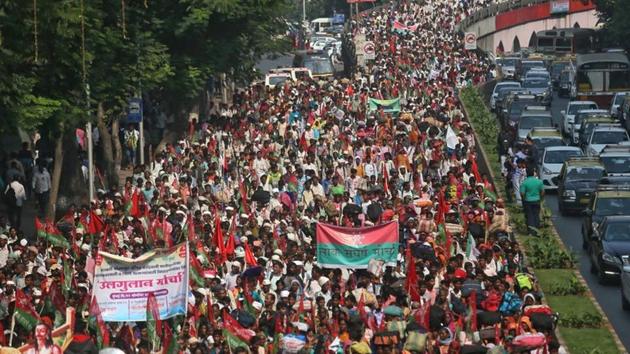
Delhi will witness yet another farmers’ protest on November 29 and 30. However, this protest is very different from the others in terms of the nature of demands. Farmers’ groups are demanding a special session of parliament to discuss two private member bills, namely The Farmers’ Freedom from Indebtedness Bill, 2018, and The Farmers’ Right to Guaranteed Remunerative Minimum Support Prices (MSP) for Agricultural Commodities Bill, 2018. The bills focus on two keys demands — loan waivers and higher MSPs — farmers have been making under this government.
To be sure, these demands are not new. The first United Progressive Alliance (UPA) government announced a pan-India farm loan waiver just before the 2009 elections. MSPs also grew at a higher rate under the UPA government. However, the pro-farmer policies were not without a cost. Food inflation went up drastically under the second UPA government. The clamour for a farm loan waiver has intensified in less than a decade after the UPA I did it.
Higher MSPs that lead to food inflation and repeated demands for farm loan waivers are not a sustainable policy path for a country like India. A spike in food prices can force people to cut down on other essential expenditure. The latest National Sample Survey Office (NSSO) data shows that food consumption accounts for more than 40% of total consumption of households in India. Given the scarcity of fiscal resources, diversion of funds for loan waivers eats into other important spending, especially capital expenditure. This can be detrimental for long-term growth. However, it will be unfair to blame the farmers for making such demands. All major political parties make such promises before elections to woo the farming community. This kind of agrarian populism has emerged as an apology for the larger failure of the Indian State to address the systemic crisis in Indian agriculture.
The legislative arm of the government has not had a good track record in holding the executive accountable for this piecemeal approach. Rhetoric, rather than substantive debate, has become the hallmark of political posturing on agriculture in India. This is why the demand for holding a special session on the agrarian crisis makes sense. Political parties should come clear on what they think is the best way to address the farm crisis from inside the Parliament. Farmers have a right to know whether this is any different from what is said in election rallies.
{{/usCountry}}The legislative arm of the government has not had a good track record in holding the executive accountable for this piecemeal approach. Rhetoric, rather than substantive debate, has become the hallmark of political posturing on agriculture in India. This is why the demand for holding a special session on the agrarian crisis makes sense. Political parties should come clear on what they think is the best way to address the farm crisis from inside the Parliament. Farmers have a right to know whether this is any different from what is said in election rallies.
{{/usCountry}}