India-Pakistan hostilities may have de-escalated but New Delhi’s is sticking to a tough stand in Jammu and Kashmir. Last week’s ban on the state chapter of the Jamaat-e-Islami for five years for allegedly indulging in activities “prejudicial to internal security and public order” fits the pattern of the Centre’s new strategy of dealing with the internal dimensions of the state’s troubles.
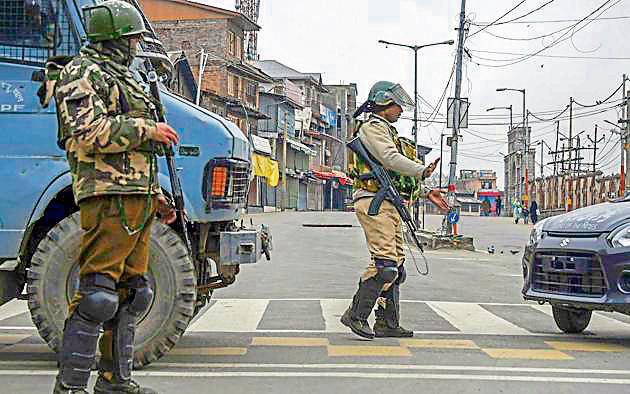
The crackdown on Jamaat, soon after detention of hundreds of its leaders and the withdrawal of security cover for top rung separatists, is the most significant and potentially controversial step rolled out to stabilise the security scenario. With its pro-Pakistan leanings, Jamaat has long been the ideological fountainhead of the decades-long armed militancy in the Valley. Since its Kashmir unit was founded in 1942, the public face of Jamaat has been that of an education-cum-religious organisation that runs schools and mosques across the state. A cadre-based organisation with thousands of workers, it holds considerable sway, particularly in South Kashmir, the hub of new age militancy.
The government ban focuses on Jamaat’s insidious agenda of supporting extremism in J&K. This stems as much from Jamaat’s close affiliation with its counterpart in Pakistan as from its long-standing ties with the pro-Pakistan Hizb-ul-Mujahideen, a predominantly Kashmiri militant outfit that was floated by Pakistan to edge out the pro-azadi Jammu and Kashmir Liberation Front . Since then, Hizb, allegedly at the instance of Jamaat, has killed hundreds of pro-India political workers. Most of the top separatist leaders, including Syed Ali Shah Geelani, owe their allegiance to Jamaat which has a long running feud with the National Conference in Kashmir.
Turning the heat on Jamaat is a part of the Centre’s newly crafted push to choke home-bred militancy which forms the lifeline of Jaish and Lashkar. The main objective is to create a conducive security environment in the Valley that will inspire political activities ahead of the general elections. However, considering Jamaat’s sway in Kashmir, the crackdown carries the risk of stoking public anger and making political outreach of mainstream parties that much harder. This was evident from the irate reaction that the ban provoked in the Valley with the National Conference and the Peoples Democratic Party deploring it. The ban may not pay the dividends that the Centre hopes it will.
{{/usCountry}}Turning the heat on Jamaat is a part of the Centre’s newly crafted push to choke home-bred militancy which forms the lifeline of Jaish and Lashkar. The main objective is to create a conducive security environment in the Valley that will inspire political activities ahead of the general elections. However, considering Jamaat’s sway in Kashmir, the crackdown carries the risk of stoking public anger and making political outreach of mainstream parties that much harder. This was evident from the irate reaction that the ban provoked in the Valley with the National Conference and the Peoples Democratic Party deploring it. The ban may not pay the dividends that the Centre hopes it will.
{{/usCountry}}