
 E-Paper



The jolt that UP gave to the BJP
Mandal 2.0 and anger over jobs cost the party seats, scuttling its hopes of a simple majority

 Prefer HTon Google


Uttar Pradesh (UP) has been key to the rise of the Bharatiya Janata Party (BJP) in national politics. The Ayodhya Movement in the late 1980s and the demolition of the Babri Masjid in 1992 created the momentum for the BJP to become a party of office in UP and India in the 1990s, although the Mandal wave checked its progress and growth. But it wasn’t long before the BJP’s welfare-plus-Hindutva appeal attracted Hindu backward castes and classes. In 2014, the BJP won 71 seats from UP on its way to a simple majority in the Lok Sabha. An alliance including the Samajwadi Party (SP), Bahujan Samaj Party and Rashtriya Lok Dal reduced the BJP tally to 62 in 2019, but the party still won 303 seats in the Lok Sabha. But this year, the party’s tally has fallen to 240, with massive losses in UP, where its tally fell to 33 seats, a loss of 29. Besides, the party lost in Faizabad, the constituency within which the new Ram Mandir is located. Clearly, UP has given a jolt to the BJP, sabotaging its plans for a grand “400 paar” win: The state accounted for nearly half of the party’s losses.
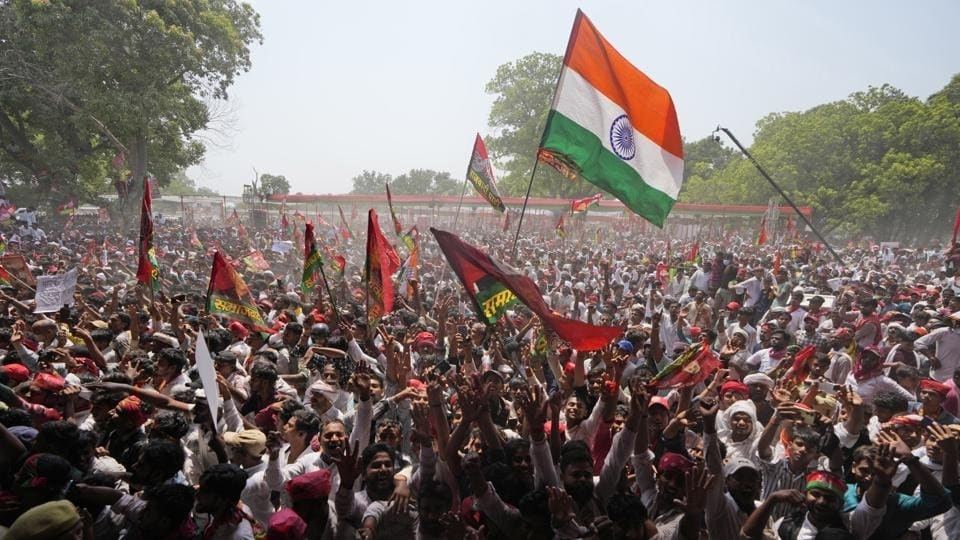
So, what explains this reversal of fortunes? On the one hand, it was an ideologically polarised election, where the BJP offered a shrill Hindutva message, with a sharp anti-Muslim edge. The messaging came in the backdrop of the consecration of the Ram Mandir in Ayodhya in January, an event that was expected to provide ballast to the BJP’s electoral plans. The INDIA bloc stayed quiet on both the Mandir and the anti-Muslim rhetoric but embraced a new version of the Mandal that combined a demand for a caste census as well as protection of the Constitution and its social vision, including reservations, which the Opposition alleged was under threat if the NDA crossed 400 seats. In this Mandal versus Kamandal (Hindutva) battle, the former seems to have triumphed.
This “triumph” was possible also because the Samajwadi Party (SP), the Mandal legatee in UP, crafted a new slogan, Pichhde, Dalit and Alpasankhyak (PDA; backwards, Dalits and minorities), and then walked the talk in candidate selection. For instance, 42% of the SP candidates were from the non-Yadav OBC castes and Scheduled Castes made up 24.2% of the nominees, which enabled the party to appeal successfully to Dalit voters. The alliance with the Congress consolidated the INDIA bloc’s support among Muslims as well as Mandal beneficiaries. In contrast, the BJP stuck to its jaded sitting MPs and Hindutva and banked on the Modi guarantee to tide over anti-incumbency. The third pole in UP politics, the BSP was inconsequential in what became a bipolar contest, although it did play a spoiler for the INDIA bloc in some seats.
Another factor that worked against the BJP was the angst of young people over the lack of employment. Viksit Bharat in 2047 was too distant a promise for these voters who want quality jobs now. Coupled with high food inflation, a new constituency of angry voters seems to have emerged, especially in the rural hinterland. The Modi regime has unleashed aspirations, which means that the labharthi (beneficiary) has become more demanding. She is deeply religious, appreciative of the improvement in law and order and grateful for State largesse. However, she expects the State to speak a civic language of governance, focus on providing jobs that match her qualifications and aspirations, and address the concerns of farmers. The UP numbers perhaps point to the arrival of a new voter, who is aware of the world and refuses to be a prisoner of polemics around faith or welfare. There is no guarantee about her vote if the State fails to keep its promises and address her aspirations.


