The Rashtriya Swayamsevak Sangh (RSS), the ideological parent of the ruling Bharatiya Janata Party (BJP), had advised the party -- soon after it won a resounding mandate in the Lok Sabha elections -- to expand its outreach and focus on Dalits, minorities and women. The advice comes in the backdrop of a steady increase in support for the BJP among two of the three groups, Dalits and women, over the past five years. It is now widely recognised that the BJP is no longer primarily an urban, upper caste, middle class, north India-centric force. Getting 220 million votes, and 303 seats, would only have been possible by embracing newer social groups.
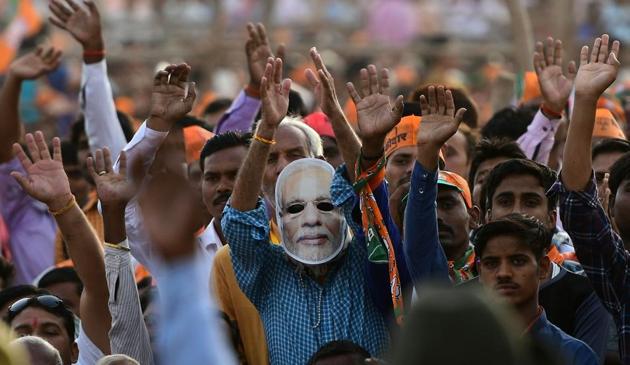
While critics often label it as an anti-Dalit force, the fact remains that under Narendra Modi, the BJP has consciously sought to cultivate the Dalit vote. This has taken many forms. Symbolically, Mr Modi often invokes BR Ambedkar, and his government has recognised five sites associated with Ambedkar’s life. Substantively, the government’s welfare schemes -- gas cylinders, toilets, rural housing -- have benefited Dalits. Last year, after protests, the government brought in an ordinance to restore the strong provisions of the Prevention of Atrocities Act. And by appointing Thawar Chand Gehlot as its leader in the Rajya Sabha, the BJP is signalling to the community that it will find a place at leadership levels too. This has coincided with the Sangh’s own ‘one well, one temple, one crematorium’ campaign. All of it yielded electoral dividends. But here is the challenge. As more Dalits enter the party, they will assert themselves; they will seek greater representation and power; there will also, inevitably, be conflicts between Dalits and OBCs, and Dalits and upper castes. How the party manages this will determine whether a substantial number of Dalits stay on or desert it. The BJP has also recognised the power of the votes of women, who are exercising independent choices. Once again, welfare benefits played a key role in mobilising this segment.
The real challenge, however, will remain the minorities. While Mr Modi has spoken of winning their trust, and allaying their fears, there remains deep apprehension among Muslims, in particular, that the BJP is out to exclude them politically. The Sangh’s stated objective of organising and uniting Hindu society; the BJP’s electoral tactic of deepening Hindu-Muslim polarisation to consolidate the Hindu vote; and the violent rhetoric and actions of Hindutva fringe groups add to this insecurity. If the RSS and BJP do indeed, genuinely, want to reach out to minorities, it is laudable. But it will require a revision in their ideological worldview, political tactics and actions on the ground.
{{/usCountry}}The real challenge, however, will remain the minorities. While Mr Modi has spoken of winning their trust, and allaying their fears, there remains deep apprehension among Muslims, in particular, that the BJP is out to exclude them politically. The Sangh’s stated objective of organising and uniting Hindu society; the BJP’s electoral tactic of deepening Hindu-Muslim polarisation to consolidate the Hindu vote; and the violent rhetoric and actions of Hindutva fringe groups add to this insecurity. If the RSS and BJP do indeed, genuinely, want to reach out to minorities, it is laudable. But it will require a revision in their ideological worldview, political tactics and actions on the ground.
{{/usCountry}}