It is not everyday that a sitting Supreme Court judge calls for the immediate transfer of the acting chief justice of a high court, accusing him of corruption, nepotism, favouritism, misuse of roster powers and administrative decisions that benefitted influential litigants and lawyers. In three damning letters to Chief Justice of India (CJI) Surya Kant this month, apex court judge justice Sandeep Mehta urged the top court’s collegium to appoint a chief justice from another high court to Rajasthan “with
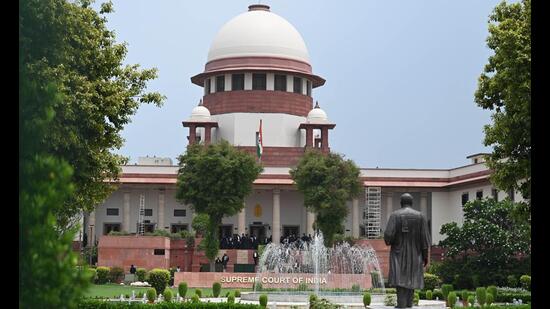
It is not everyday that a sitting Supreme Court judge calls for the immediate transfer of the acting chief justice of a high court, accusing him of corruption, nepotism, favouritism, misuse of roster powers and administrative decisions that benefitted influential litigants and lawyers. In three damning letters to Chief Justice of India (CJI) Surya Kant this month, apex court judge justice Sandeep Mehta urged the top court’s collegium to appoint a chief justice from another high court to Rajasthan “with immediate effect” to replace acting chief justice Sanjeev Prakash Sharma, warning that continued inaction was causing serious damage to the institution and that it was imperative “to save the institution from further carnage”. Mehta — who hails from the Rajasthan High Court — also said he earlier brought several such instances to the CJI’s notice but was told that there was no need to put the allegations in writing and that “suitable action” would be taken. In response, the CJI said he, along with other senior judges of the collegium, had taken note of the complaints but cautioned that the allegations had to dealt with established internal mechanism.
The controversy hints at a possible lack of transparency in collegium proceedings and administrative decision-making in the apex court. This newspaper has repeatedly pointed out that while judicial independence should be top priority, the top court cannot ignore the importance of transparency in communicating key decisions of the collegium and the reasons behind them. Unfortunately, these changes have been adopted haltingly, with the court lurching from publishing a full statement and some reasoning behind its decision-making, to shorter statements, to no statement at all. Justice Mehta’s intervention requires a transparent inquiry with the facts laid before the public. Such a course of action — and greater urgency in instituting reforms — will not hurt the court’s standing, but only bolster public faith in the apex court.
One Subscription.
Get 360° coverage—from daily headlines
to 100 year archives.
Archives
HT App & Website