The National Capital Region, including Delhi and neighbouring districts of Uttar Pradesh, was flooded on Wednesday after a spell of unrelenting and intense rainfall. The millennium city of Gururgram (Haryana) and the National Capital of Delhi were the worst-affected. Entire stretches of roads and underpasses were flooded; homes were inundated; and commuters were caught in traffic snarls that took hours to untangle. The appalling state of affairs showed, yet again, the result of poorly thought-out urban planning and design, weak urban storm water infrastructures, and lack of monsoon preparedness (desilting and unclogging of drains).
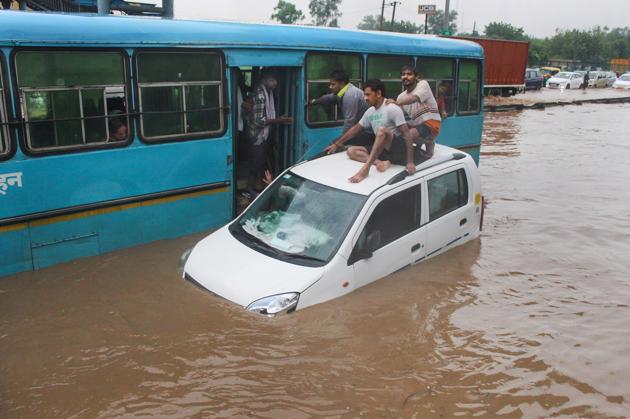
As episodes of short duration-but intense rainfall increase due to the climate crisis, urban flooding incidents will rise. A 2018 study by the Indian Institute of Technology (Gandhinagar) show that cities face an additional challenge: The urban heat island effect (when a city experiences much warmer temperatures than rural areas due to built up areas), which is modifying the rainfall pattern in these areas.
To tackle these challenges, city governments have to rethink the development paradigm. Instead of investing only in inflexible grey infrastructure (drains, pumps, and outfalls), they must invest heavily in flexible green infrastructure (lakes, floodplains or parks, forests), which absorb stormwater, reduce runoff volume and speed, thus, reducing flood risk.
Preliminary findings of an ongoing research by WRI-India indicate that 35% (428 sq.km) of new development within 20 km of the city centre (2000-15) in the nation’s 10 top cities — Ahmedabad, Bengaluru, Chennai, Delhi, Hyderabad, Jaipur, Kolkata, Mumbai, Pune, Surat — has been on low-lying and high recharge potential zones. Unsurprisingly, these cities have seen multiple flood events in the last five years.
India’s cities are its political, economic, and cultural nerve centres. They cannot afford to break down every monsoon; each flood episode leads to losses of lives and livelihood and erodes huge investments. To improve resilience, planners must prioritise water-sensitive urban design and planning, prepare drainage master plans, identify high-risk areas, and invest in green infrastructure. Otherwise, the future of India’s cities, as NCR showed on Wednesday, is dark and bleak.
{{/usCountry}}India’s cities are its political, economic, and cultural nerve centres. They cannot afford to break down every monsoon; each flood episode leads to losses of lives and livelihood and erodes huge investments. To improve resilience, planners must prioritise water-sensitive urban design and planning, prepare drainage master plans, identify high-risk areas, and invest in green infrastructure. Otherwise, the future of India’s cities, as NCR showed on Wednesday, is dark and bleak.
{{/usCountry}}