
 E-Paper



HT@100 | 1970-1979: Democracy vs Democracy
Large-scale social unrest brings first non-Congress government to power, but the Centre doesn’t hold

 Prefer HTon Google


The 1970s was a decade when competing ideas of democracy clashed — for Indira Gandhi, a strong India was one where the State led by the Congress party had more control over currency and capital; for the Janata Party, it was one where the people had more control over the State. Crony capitalism and government corruption were both hot-button issues— and all this barely three decades into Independence.
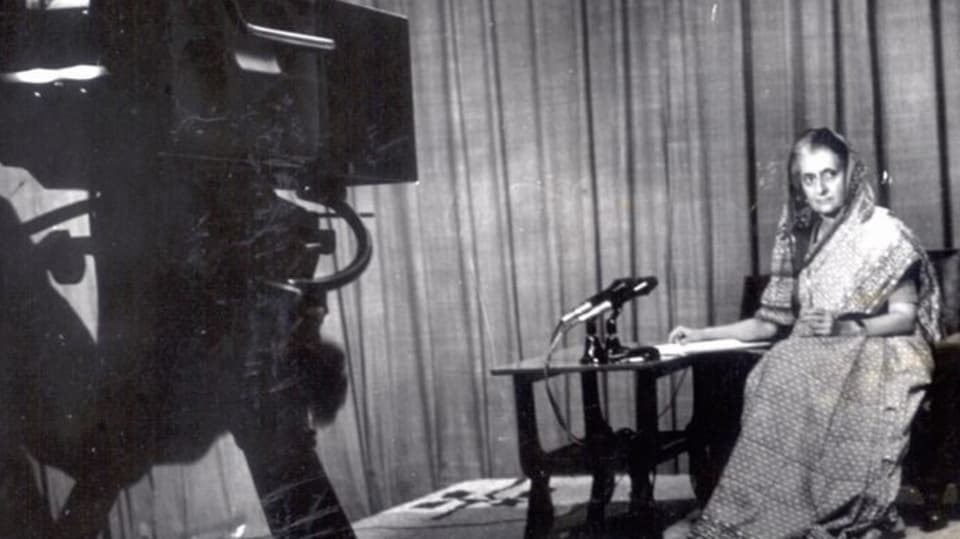
Women in rural Maharashtra led an anti-price rise agitation. Up north, in Raini, a small village in what is today Uttarakhand, Gaura Devi led other women to protect the trees in their Alaknanda forest, immortalising the Chipko Movement that completed 50 years in 2024.
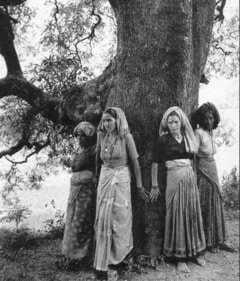
In Gujarat, a large-scale self-employment movement of women led to the formation of SEWA, an institution that stands to this day.
The decade began on a high note with Indira Gandhi calling for elections 14 months in advance, eager for a popular mandate.
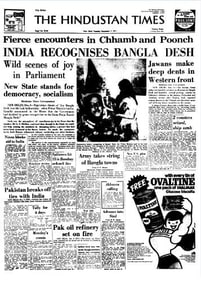
Her party, Congress (R) put together a socialist manifesto that focused on uplift of minorities, small farmers and landless labourers, with the slogan, “Garibi Hatao” (remove poverty). In March 1971, she swept the polls winning 352 of the 531 seats. Gandhi flexed her muscle as a military commander, a master strategist, and protector of democracy after she liberated East Pakistan and helped form a new nation, Bangladesh in 1971, winning the third Indo-Pak war. Under Field Marshal Sam Manekshaw’s command, the Indian forces beat Pakistani troops into withdrawal and ensured that Chinese infiltrators did not open another warfront in northeast India.

On May 18, 1974, India tested its first nuclear device in Pokhran. A day later, the Hindustan Times edit read, “The explosion implies that India has developed fissile material presumably free of safeguards and that its scientists are in possession of the technology for triggering a nuclear explosion. That this same technology offers the route to the nuclear weapons does not detract from the reiteration of the country’s peaceful resolve.”
But disillusionment simmered beneath the surface.
Though the Indian economy had grown, and the Green Revolution had increased the yield of cereals and crops, it benefited only a part of the population.
The unrest didn’t take long to snowball into something larger. In January 1974, a students’ movement in Ahmedabad, Gujarat, against Chimman Lal Patel, the chief minister accused of corruption, led to his resignation. This inspired the students of Bihar to agitate on similar lines in their state. When violence erupted between the mobs and the police, noted Gandhian activist Jayaprakash Narayan, who was 71 at the time, stepped in. This was March 1974. In May, a railway strike led by George Fernandes brought the nation to a halt.
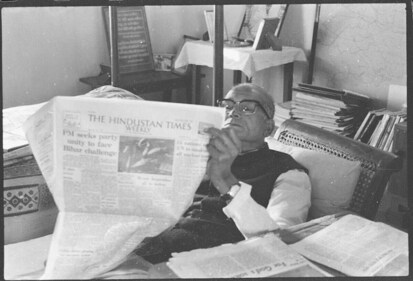
JP, as he was called, became the lightning rod for all discontents — students, trade unionists, housewives, socialists, Right-wing Hindu groups and Left-wing Communists flocked to his side.
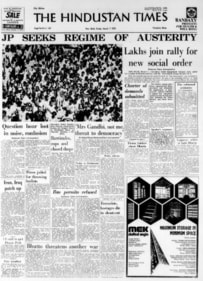
On March 7, 1975, Hindustan Times ran a full page on the People’s March to Parliament, led by Narayan and attended by over 700,000 people, with the headline, “JP seeks regime of austerity”. The same day, the paper ran an edit, titled “A charter for reform”, and said, “All said and done, the charter is a package composed of items to which the Congress cannot have any serious objections.”
Trouble was brewing in another corner for Gandhi, as the Allahabad high court gave its verdict on a petition filed against her that accused her of winning the 1971 election through corrupt practice.
As the Opposition rallied for her resignation, and some in her own party suggested she step down, Gandhi declared a state of internal Emergency, which was swiftly signed off on by President Fakhruddin Ali Ahmad, on June 25, 1975.
Hindustan Times and other newspapers were unable to publish their edition the next day as the supply of electricity to all paper offices was turned off.
On June 28, a six-page edition of the paper announced, “President declares Emergency.”
Narayan, Desai and other Opposition leaders were arrested the night of the Emergency, and the number would hit thousands by the time it ended two years later, including at least 253 journalists. HT, aligned as always with the country’s needs, diligently reported on the goings on, from the detentions under the draconian MISA (Maintenance of Internal Security Act) to the curbs on fundamental rights.
KK Birla, who began to head the board of directors in 1970, wrote in his autobiography, “I have never been an admirer of the Emergency. No one likes suppression of civil liberties and excessive restrictions imposed on society. However, considering the way the law and order situation in the country was deteriorating, Indira-ji was perhaps left with no choice.”
He noted that while things seemed fine at first, “...after some time, reports started coming of excesses being conducted in certain areas. There were reports of vasectomies having been forcibly performed to check population growth… I met Indira-ji a number of times and apprised her of the excesses. Unfortunately, no action was taken to put a stop to them.”
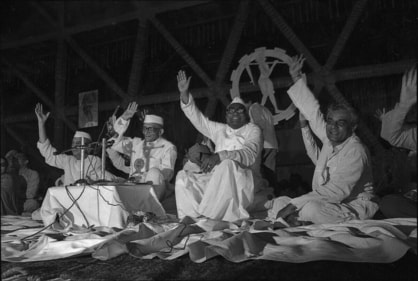
By 1977, the vast difference between Gandhi and her father, Jawaharlal Nehru, was a subject of international headlines and stern edits, eventually leading Gandhi to lift the Emergency and call for elections.
For the first time in its independent history, India voted a non-Congress party to power, proving that it was possible for competing ideologies to set aside their differences — even if only for a short while. The Janata Party comprised the Hindu-Right Jana Sangh, the pro-agriculture Bharatiya Lok Dal (led by farmer leader Charan Singh), the Socialist Party, and Morarji Desai’s breakaway faction, the Congress (O). They found support in Babu Jagjivan Ram’s newly formed party Congress for Democracy (CFD).
On March 23, 1977, the Hindustan Times ran full-page coverage of the landmark election with the headline – “Mrs Indira Gandhi resigns” – and on Page 7, a hopeful edit on the dance of democracy titled, “A new phase begins”, which read, “...out of the trauma of the Emergency and the heat and dust of the hustings has emerged what many unhesitatingly recognise as a national alternative to the Congress — the Janata Party in alliance with the Congress for Democracy. And, along with the two has emerged, for the first time, the promise of a genuine two-party democracy in India.”
Unfortunately, the Centre couldn’t hold.
The Janata Party was marked by factionalism and infighting between its heavyweights, and ultimately torn apart by opposing ideologies. The Janata Party’s disintegration meant it couldn’t even finish the term, and Indira Gandhi returned to power in 1980, all excesses of the Emergency ostensibly forgiven, but not forgotten.


