
 E-Paper



Number Theory: Railways needs to make a clear policy choice
.
Published on: Feb 19, 2025, 08:16:41 IST

 Prefer HTon Google
Share via


Copy link

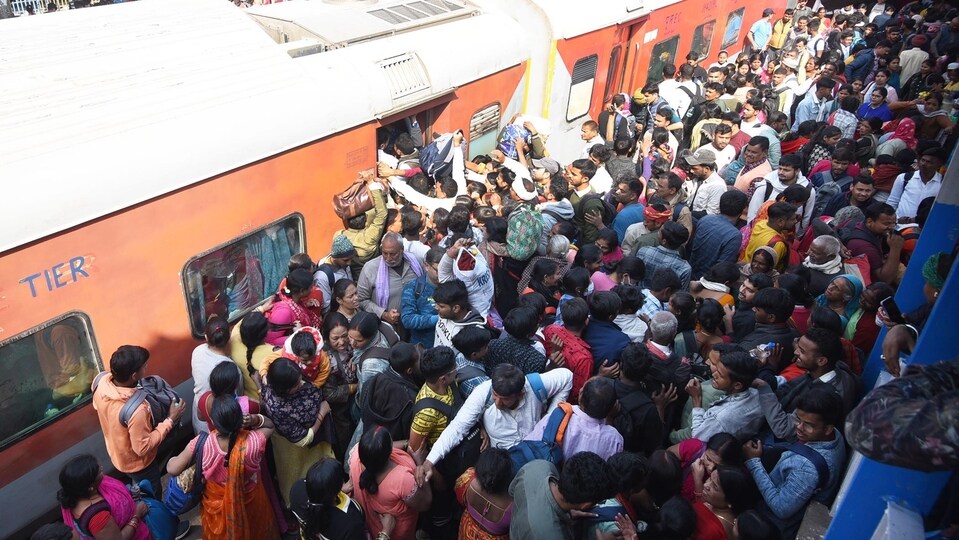
The death of 18 passengers in a stampede at New Delhi railway station on 15 February has triggered the usual cycle of politicking and cliched official responses. But the accident has also highlighted what is perhaps the most macabre aspect of the structural crisis which faces the Indian Railways. Here are four charts that describe this crisis in detail.
Railways needs to make a clear policy choice
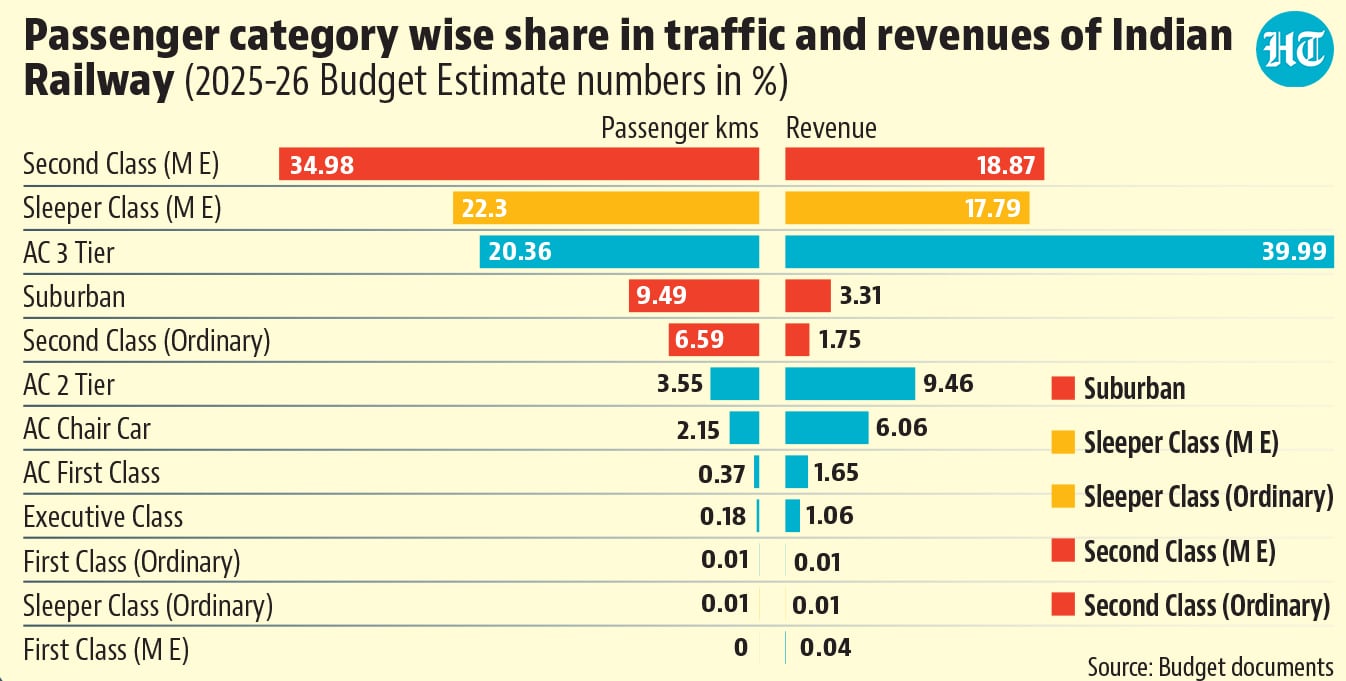
 Unreserved travellers have the highest share by passengers but the lowest by revenueThe expenditure profile of the budget gives a detailed break-up of the passenger volumes and earnings for railways across categories. A look at the 2025-26 Budget Estimate (BE) numbers shows that total unreserved (technically second class) passengers – combined for mail/express and ordinary trains – accounted for more than 40% of total passenger kilometres. Their share in revenue, however, was just about 20%. It was the overcrowding from unreserved passengers that triggered the stampede on Saturday. This is the only part of a train that can, legally, be operated beyond capacity. Seen from a purely economic perspective (the obvious caveat being that there also has to be a human perspective), this cohort is a drain on the railway’s infrastructure and operations.
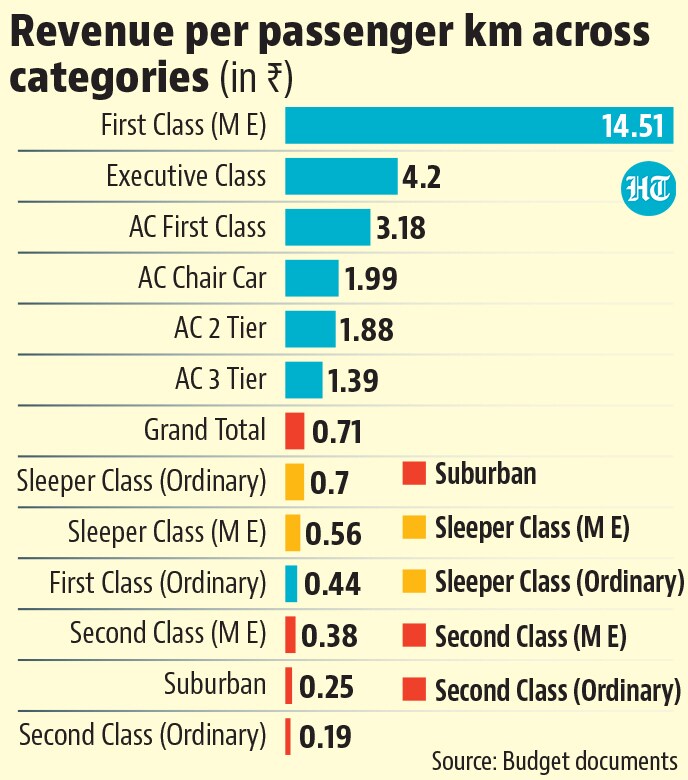
- Rail travel is the cheapest mode of long-distance travel in IndiaIf one were to calculate railway’s revenue per passenger kilometre, one can see how cheap railways are as a mode of long-distance transport in India. This number is just ₹0.19 and 0.38 for ordinary and mail/express unreserved travel. While comparative data is difficult to find because such travel categories do not exist in many countries, it is likely to be the cheapest in the world. In advanced countries, train travel is often more expensive than air travel. Cheap transport by railways provides a huge cushion to poor travellers who travel long distances in India. Minus this cheap rail travel, the unskilled migrant workforce would find it prohibitively expensive to travel in India.
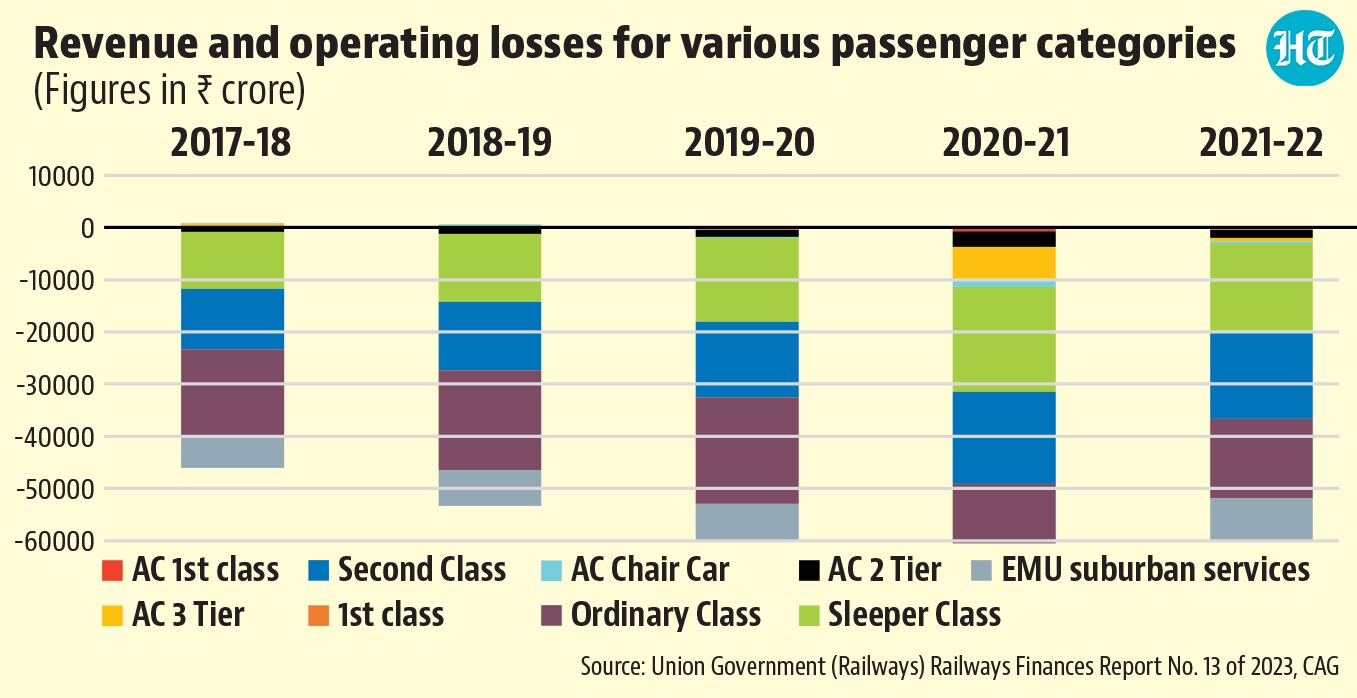
- Indian Railways makes losses across passenger categories and zonesA CAG report published in 2023 found that Indian Railways made operational losses across all categories of passenger travel. The total operational losses on passenger travel in 2021-22 (the latest period for which this data is available) were more than 1.5 times the total passenger revenue of Indian Railway. While the categories used in the CAG report are slightly different from the ones in the budget statements described above, it seems that operating losses were more than four times the revenue earnings in unreserved category. Loss on passenger operations is spread across all railway zones in the country. “MoR (ministry of Railways) was unable to meet its operational cost of passenger services and other coaching services. The data available in the latest report of the MoR has been analysed. It indicates that there was cross subsidization from freight earnings to passenger and other coaching earnings”, the CAG report says.
- InferenceExpecting Railways to provide adequate facilities to unreserved passengers is asking it to throw good money after bad. But the ongoing practice of allowing overcrowded train travel is bound to lead to sub-human travel conditions all the time and accidents and deaths sometimes. Logically, there can be only two solutions to this problem: either fares increase significantly to erase losses, but also crowd out a very large share of train travellers, or provide Railways with more budgetary resources to make travel conditions much better and safer. The latter would require the fiscal honesty to accept that India needs an additional and large subsidy head in its budget called rail passenger subsidy rather than chasing the elusive goal of rail operations breaking even. As is obvious, this is a political rather than an operational or technocratic choice.


Unlock a world of Benefits with HT! From insightful newsletters to real-time news alerts and a personalized news feed – it's all here, just a click away! -Login Now!


