
 E-Paper



Social burden of West Bengal’s regional exceptionalism: Part 2 | Number Theory
As far as the TMC is concerned, it is extremely important that it is able to arrest the Hindu anti-incumbency attrition from its ranks to the BJP.
Published on: Apr 28, 2026, 08:57:29 IST

 Prefer HTon Google
Share via


Copy link

The first part of this series underlined the historically entrenched social inequality in West Bengal’s political leadership. Is this social inequality in politics a result of cultural factors such as the precocious emergence of a largely upper caste middle class in the state or material factors rooted in the state’s larger political economy. Here are four charts which examine the feasibility of the latter proposition.
Social burden of West Bengal’s regional exceptionalism
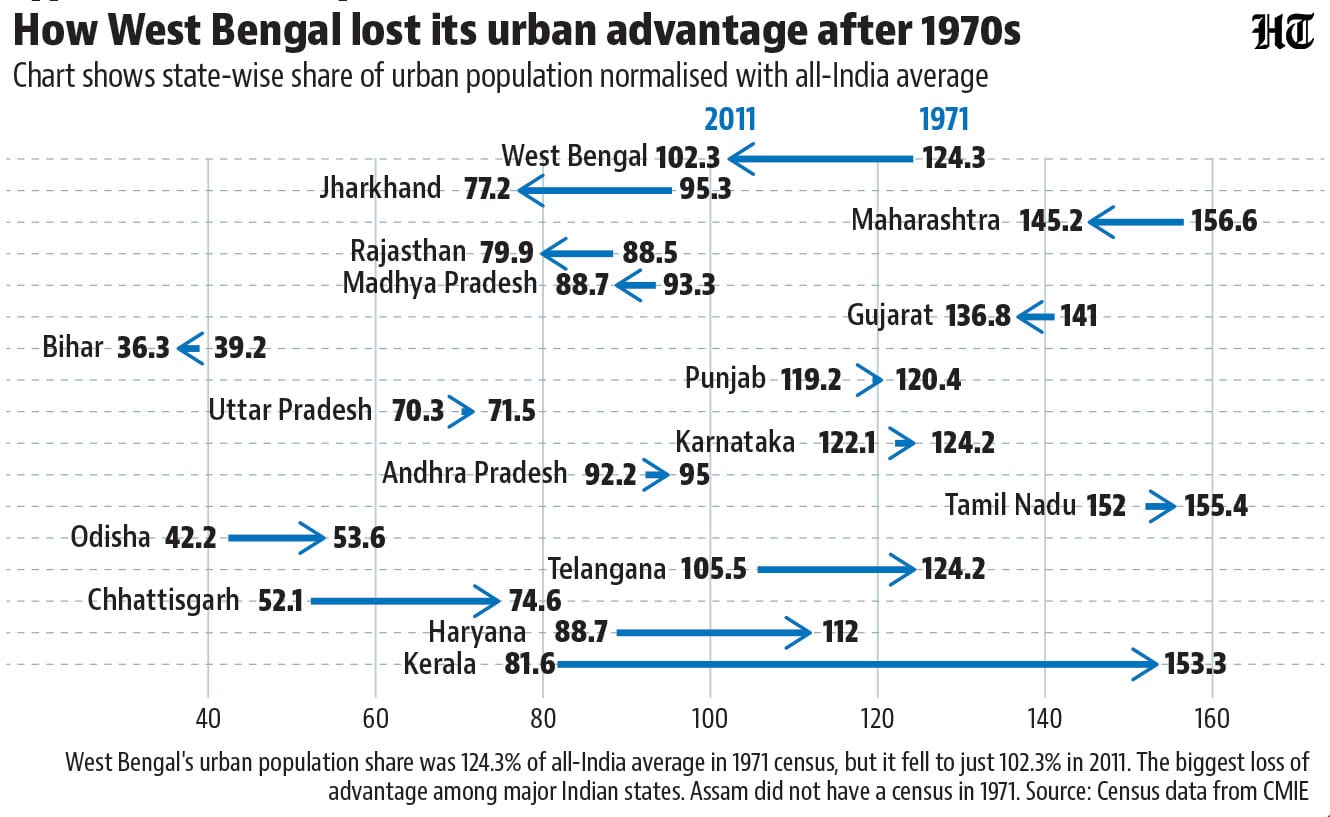
 The urban skew and stalled urbanisation in West BengalBecause the latest available census data is now 15-years-old, these figures ought to be taken with a degree of skepticism. Even then, they are quite damning for West Bengal. Between 1971 and 2011, West Bengal went from being an urban-plus state to just an urban neutral if one were to compare the share of its urban population relative to all-India levels. The loss of the urbanisation advantage in West Bengal over the four decades – about 22 percentage points – is the most among large Indian states. This, when read with the fact that the urban population in the state is extremely skewed -- Kolkata and nearby districs still have a much bigger urban share than the rest of the state – means that the old political elite did not really face any significant material challenge from a new economic one. This makes West Bengal different from many other states where “new capitalist” castes have stormed the gates of old-school upper caste dominated politics.
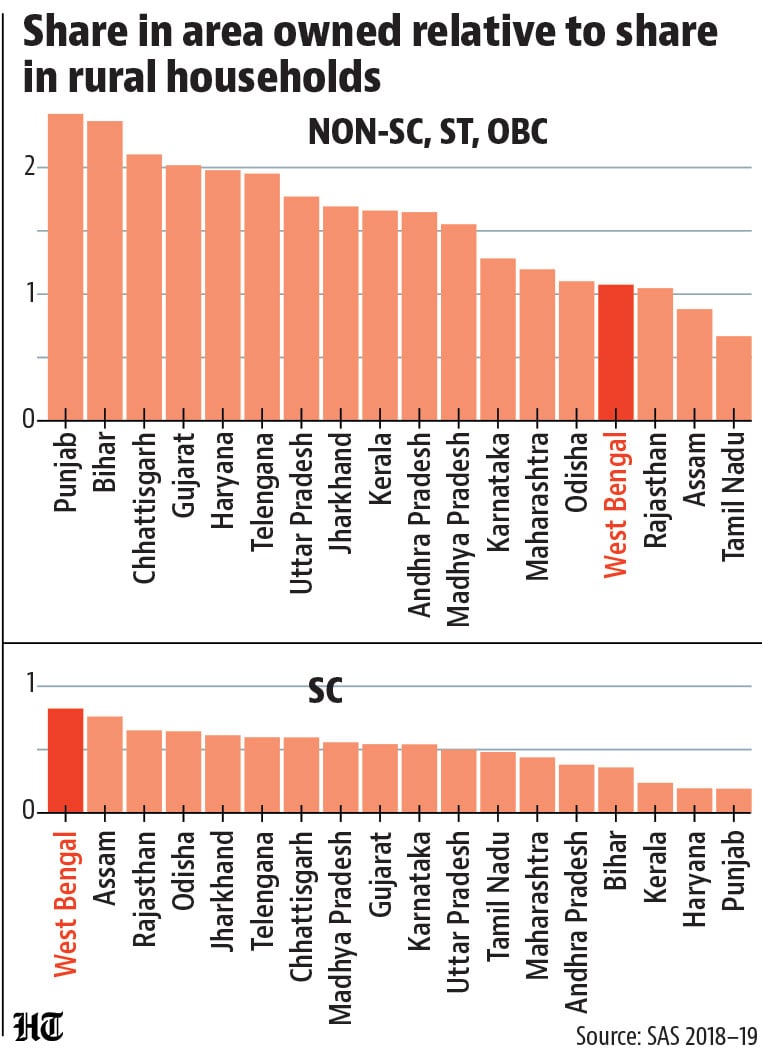
- Left’s land reforms have made the agrarian economy at least more socially equalThe 34-year uninterrupted rule of the Left in West Bengal is often blamed for its larger economic decline. However, one thing the communists should be given credit for is an egalitarian redistribution of land in the state. Latest data suggests that some of these gains have been undone, and West Bengal now features among the states with relatively higher land ownership inequality. However, one thing where West Bengal still fares better that every major Indian state is better land ownership among Scheduled Castes (SCs) and a muted advantage for the proverbial upper castes or those who do not belong to either SC, Scheduled Tribe (ST) or Other Backward Classes (OBC) in the state. It can be argued that the roots of this social equality go back to the land redistribution under the left regime. This has also meant that West Bengal is less prone to a caste-based politics against rural inequality.
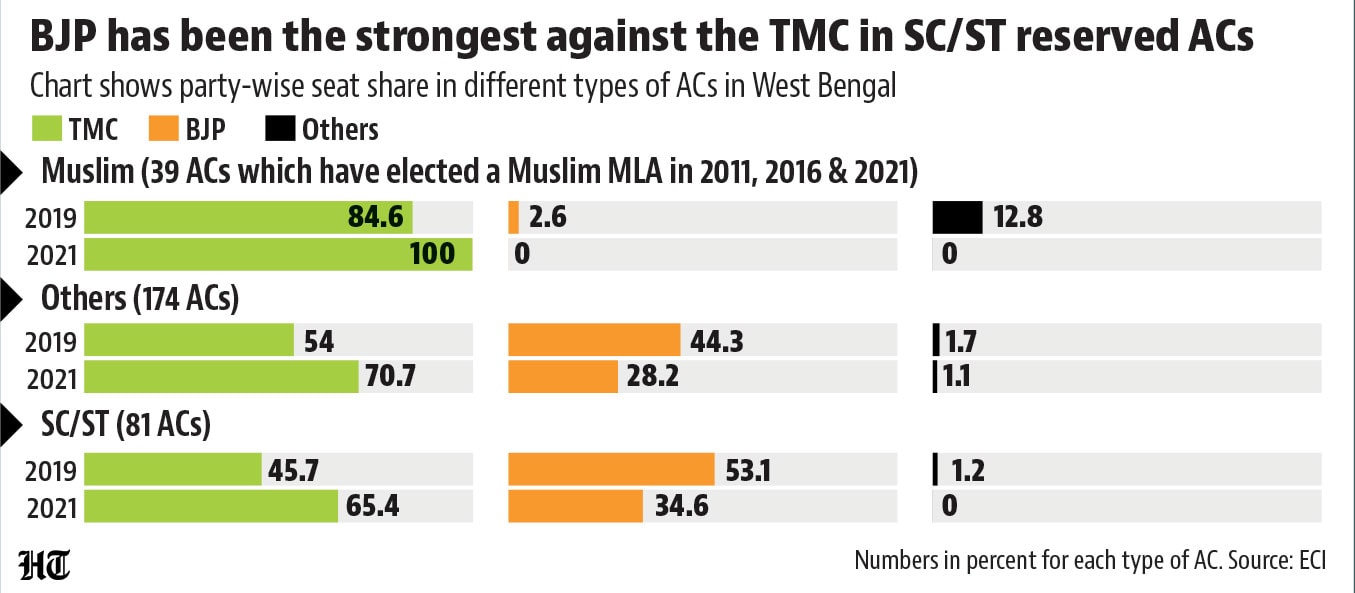
- Better socio-economic equality means BJP's outreach among socially weaker Hindus is built on fighting other caste groupsThis is where the data is the most interesting. If one were to divide the 294 ACs in West Bengal assembly into three categories – 39 ACs which have elected a Muslim MLA in 2011, 2016 and 2021 election, 81 SC/ST reserved ACs and the remaining 174 – then it can be seen that the BJP has fared the best against the TMC in the SC/ST reserved ACs and actually won this segment in 2019. While there is not even a semblance of a contest between the two parties in the 39 Muslim ACs, the TMC leads by a much larger margin against the BJP in the remaining 174 ACs. India’s delimitation laws identify constituencies as SC/ST reserved in places where the population of these social groups is likely to be the highest and therefore a greater success in such constituencies should be taken as a proxy for greater support among these communities.
- ConclusionWhat makes politics in West Bengal more interesting and different from the rest of the country is the fact that the BJP’s electoral outreach among the socially weaker Hindus has been built, not by othering other caste groups as it has been in Uttar Pradesh and Bihar, or even states such as Gujarat and Karnataka where the BJP came into being fighting against Congress’s social coalitions such as KHAM (Kshatriya, Harijan (Dalit), Adivasi (Tribal), and Muslim) and AHINDA (Alpasankhyataru (Minorities), Hindulidavaru (Backward Classes), and Dalitaru (Dalits)), but portraying the TMC as a party of Muslims and misgovernance. As far as the TMC is concerned, it is extremely important that it is able to arrest the Hindu anti-incumbency attrition from its ranks to the BJP if it wants another term in power.




Unlock a world of Benefits with HT! From insightful newsletters to real-time news alerts and a personalized news feed – it's all here, just a click away! -Login Now!


