The International Energy Agency (IEA) released its monthly Oil Market Report on Thursday. The opening line of the report states the gravity of the current energy crisis in unequivocal terms: “The war in the Middle East is creating the largest supply disruption in the history of the global oil market.”
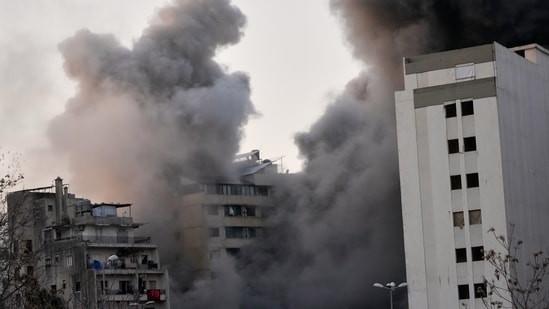
Statements from the political leadership of Iran and US – the two countries which matter the most as far as ending the conflict is concerned – do not serve up
- IEA estimates the global oil supply shock on account of the war in March in the ballpark of 10%“With crude and oil product flows through the Strait of Hormuz plunging from around 20 million barrels per day (mb/d) before the war to a trickle currently, limited capacity available to bypass the crucial waterway, and storage filling up, Gulf countries have cut total oil production by at least 10 mb/d. In the absence of a rapid resumption of shipping flows, supply losses are set to increase”, the IEA report says. “Global supply in March is projected to fall by 8 mb/d to 98.8 mb/d,” it adds. IEA’s estimates are on the side of optimism because it assumes that “options to bypass the Strait (of Hormuz) are fully utilised from early March and seaborne flows gradually normalise from late March”. In fact, the report itself admits this. “With no signs of a de-escalation in hostilities or a clear timeline for a recovery in flows through the Strait at the time of writing, we note that the March forecast and beyond carry a high level of uncertainty”, it says.
- It is early days, but a comparison with past oil shocks is instructive hereIf the war is prolonged and the Strait of Hormuz remains closed, the world will face nothing short of an economic apocalypse. A Bloomberg Economics estimate says that one month of closure of the Strait will drive Brent crude toward $105, peak price would approach $164 with a three-month closure, after which prices will start coming down due to demand destruction. How big have past oil shocks been in terms of supply shock? Long-term data on oil production from The Energy Institute – a global orgnaisation of energy sector professionals – shows that the worst the world faced in terms of fall in production of oil (excluding the pandemic year) was 1981 – the end of the Iranian revolution and the beginning of the Iran-Iraq war – when there was an annual contraction of 5.5%. Oil production has contracted in only 12 out of past 59 years for which this data is available. Global GDP growth fell sharply in 1980, 1981 and 1982.
- Global oil demand has evolved in a way which makes it difficult to substituteThe Economist’s leader on the current crisis articulates it well. “The world depends less on oil than it did in 1973, when an Arab embargo caused crude prices to quadruple, or 1979-80, when the Iranian revolution and the Iran-Iraq war hit supply. Then, it was still common to burn oil to produce electricity. Today it is used less widely, mainly to power transport and make petrochemicals. Yet this evolution is double-edged. Today’s oil demand is stubborn, so prices have to rise more for a given disruption of supply”, it says. An HT analysis of data from the IEA corroborates the line of reasoning. In 1971, transport used 37% of total petroleum supplies. This number increased to 58% by 2023.
- To summarise, three points can be made. The immediate impact of the oil shock on account of the war is the biggest ever. History teaches us that even smaller supply shocks, if prolonged, have inflicted severe economic pain. And, barring a wholesale shift to renewables away from ICE-driven transport – which Trump killed before he launched the war – the world might find it very difficult to bring down its oil consumption without inflicting economic pain.
Roshan Kishore is the Data and Political Economy Editor at Hindustan Times. He heads the newsroom's data journalism team, which produces Number Theory, a daily data-driven feature for the print edition and the HT app. Number Theory uses data analysis and story-telling based on it to add value to the newsroom’s daily coverage by putting stories in a larger context on a range of issues, including politics, macroeconomy, markets, global affairs and climate. Under his leadership HT’s data journalism work has established itself as a niche product in Indian journalism and pushed the boundaries of marrying academic rigour with news sense and speed. Along with writing and editing data stories, he has also been writing a weekly political economy column called Terms of Trade for HT Premium. A trained economist with an MPhil degree from Jawaharlal Nehru University, Kishore has also been a visiting fellow at the Centre for Advanced Studies of India (CASI) at the University of Pennsylvania. Along with his journalistic work, his writings have also appeared in journals such as the Economic and Political Weekly and working papers for CASI and UNESCAP.
Abhishek Jha is Assistant Editor-Data at Hindustan Times. He uses statistical programming to generate newsworthy insights from large datasets. He is part of the team that produces Number Theory, a daily data story feature of the paper’s print edition. Since March 2024, he has been writing Weather Bee, a weekly column for the Hindustan Times website. He is a chemical engineer by training, who specialises in stories related to weather, climate, and the environment. Jha has been at HT since 2018, where he offers data-driven perspective and analysis on politics, environment, weather, climate, economy and society. His work includes data coverage of elections in India and abroad, including the 2019 and 2024 Lok Sabha elections; the disasters and extreme weather resulting from changing climate, such as floods, droughts, heat waves, cold waves, and dwindling snow cap in the Himalayas; the factors that drive poor air quality in northern India; the changing patterns of land use; the Covid-19 pandemic and its impact on labour market conditions; the changing pattern of consumer spending seen in the new consumer spending surveys; and social norms seen in the surveys such as the National Family Health Survey.
Sreedev Krishnakumar is a data journalist who specialises in stories at the intersection of the economy, geopolitics, politics and finance. His work combines data analysis, reporting and visual storytelling to explain complex issues through evidence-based journalism, with a focus on making public data accessible and meaningful for readers. He joined the Data and Political Economy team at Hindustan Times in 2024 after working as a correspondent/data journalist at Moneycontrol, where he covered macroeconomics, markets, public finance and business. Over the course of his career, he has developed expertise in analysing large datasets, building interactive visualisations and using computational methods to uncover trends and patterns that inform public debate. Sreedev holds a Postgraduate Diploma in Integrated Multimedia Journalism from the Asian College of Journalism. His reporting interests include finance, economics, geopolitics, trade, technology and development.