
 E-Paper



Three key takeaways from Bihar results | Number Theory
What do the Bihar results mean for politics, not just in the state, but the country at large? Here are four charts which explain this in detail
Updated on: Nov 15, 2025, 06:38:22 IST

 Prefer HTon Google
Share via


Copy link

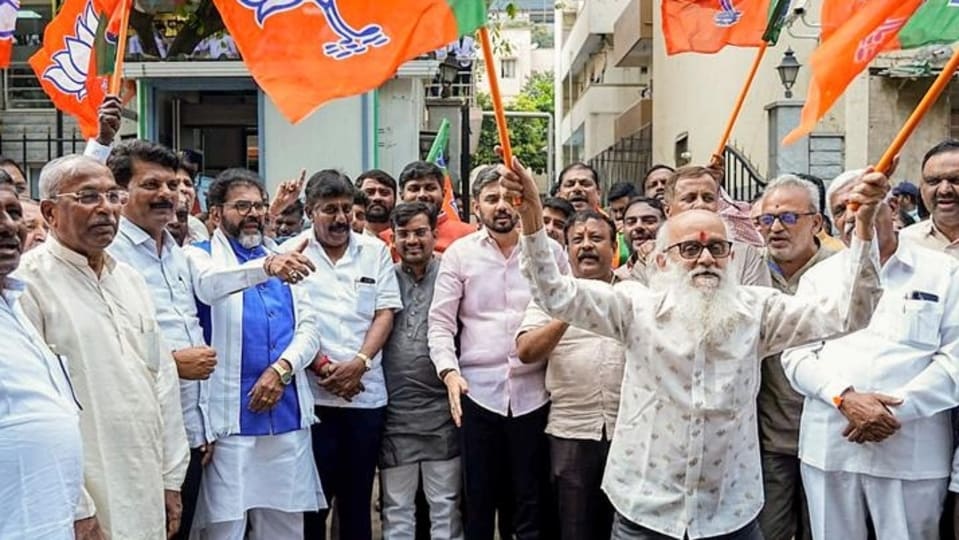
The National Democratic Alliance (NDA) has secured a landslide victory in Bihar with 46.6% of vote share and 202 out of the 243 assembly constituencies (ACs) in the state. What do the Bihar results mean for politics, not just in the state, but the country at large? Here are four charts which explain this in detail.
 BJP has buried the ghosts of 2024 Lok Sabha electionsAfter two back-to-back parliamentary majorities in 2014 and 2019, the Bharatiya Janata Party (BJP) slipped below the halfway mark in the Lok Sabha in 2024 elections. This was dubbed as the beginning of the BJP’s, and more importantly, Narendra Modi’s decline by many commentators. The results of five assembly elections held after the 2024 Lok Sabha elections (and the four held simultaneously with the Lok Sabha elections) should put an end to such delusions. The BJP has, on its own or with allies, won all but two of the post-2024 Lok Sabha elections and also improved on its seat share in all of them except Jharkhand. BJP’s share in total MLAs in India, after the Bihar results, is the highest it has ever been. To be sure, what it also shows is that the BJP has course-corrected for 2024 and made populist handouts an integral part of its electoral strategy.
- Bihar’s politics has seen a consolidation but the NDA has gained the most from itThe NDA has a vote share of 47.8% in these elections, almost 10 percentage points more than the Mahagathbandhan (MGB) or Grand Alliance led by the Rashtriya Janata Dal. The scale of victory, in terms of vote share of the winning party/alliance is unprecedented in Bihar. The reason the NDA’s seat share is still close to its 2010 performance when it won 206 ACs is because of a larger process of political consolidation in both camps. Just one statistic makes the importance of this consolidation clear: in the 2010 elections, the NDA polled almost the same vote share as the MGB did this this time, but won a massive 206 ACs compared to just 202 for the MGB in 2025. The median effective number of parties (ENOP) in the 2025 Bihar elections is just 2.55, the lowest ever in the history of the state. ENOP is the reciprocal of the sum of squares of the vote share of each candidate in a constituency and decreases with decreasing fragmentation. For example, if three parties’ poll 40%, 35%, and 25% votes, the ENOP in the AC is 2.9. If this distribution changes to 80%, 15%, and 5%, the ENOP is 1.5. What it entails, as far as political strategy is concerned, is that the opposition will have to take away a part of the NDA’s vote in the state rather than ally with smaller fence sitters, who are not more marginalized than ever in Bihar.
- Bihar could trigger a big churning in Muslim politics in IndiaWhat might probably get lost in the NDA’s “coalition of extremes” vanquishing MGB’s Muslim-Yadav social coalition is a deeper message from Bihar as far as Muslim politics is concerned. The All India Majlis-e-Ittehadul Muslimeen (AIMIM) will be the party with the highest number of Muslim MLAs in the state. This makes Bihar the first state after Telangana where the AIMIM will have the highest number of Muslim MLAs. All of AIMIM’s Muslim MLAs have won from the Seemanchal sub-region of the state which has a Muslim population share of 42% and is home to 30% of Bihar’s Muslims. AIMIM’s success has come in an election where the overall number of Muslim MLAs in Bihar has dropped to a historic low of just 11 and share of MLAs from Seemchancal has reached an all-time high of 64%. These statistics send a clear message as far as Muslim politics is concerned in Bihar: The representation of Muslims is increasingly becoming ghettoised as they are failing to get elected from areas where they do not have a sizeable presence and in a region where they have the numbers to get their peers elected, they are gravitating towards a party which is exclusively Muslim than the traditional anti-BJP political parties. While this deserves a larger explanation -- some of it could well be a result of NDA’s growing dominance in Bihar -- it is important to read this data in the context in which these Bihar elections were held. Despite being the single largest demographic which is seen as a core support base of the RJD in the state, the Muslims may have been upset when MGB declared Mukesh Sahni of the Vikassheel Insaan Party (VIP) -- it claims the support of the Mallah sub-caste with a share of just 2.6% in the state’s population -- but made no effort to project any Muslim leader from the MGB constituents. Many anti-BJP parties have sought to tactically downplay their Muslim support base in order to counter the BJP’s Hindutva campaign while trying to woo smaller Hindu sub-castes. Bihar is a message that this strategy might work to their detriment.





Unlock a world of Benefits with HT! From insightful newsletters to real-time news alerts and a personalized news feed – it's all here, just a click away! -Login Now!


