The Centre on Wednesday unveiled an ambitious roadmap to overhaul Tribal Research Institutes (TRIs) across the country, with the adoption of the Bhubaneswar Declaration at the end of a two-day national workshop that sought to reposition the institutions as hubs of research, innovation, cultural preservation and evidence-based policymaking.
The declaration, adopted at the National Workshop on Strengthening Tribal Research Institutes in Bhubaneswar, lays out a comprehensive framework for modernising TRIs through institutional reforms, technology integration, enhanced research standards and stronger community participation, aligning them with the government’s broader vision of Viksit Bharat@2047.
Organised by the Union ministry of tribal affairs in collaboration with the Odisha government, the workshop brought together nearly 200 participants, including representatives from Tribal Research Institutes, state tribal welfare departments, academia, research organisations, technology institutions, industry and civil society.
The declaration proposes the adoption of a Model TRI Framework 2030 to standardise governance, staffing and research quality across states, alongside a National TRI Research Agenda (2027-2032) to identify priority areas for tribal research. It also calls for greater use of artificial intelligence, geographic information systems (GIS) and digital platforms to improve research, planning and service delivery.
The roadmap recommends establishing Tribal Research Institutes as centres of excellence capable of leading specialised research and mentoring newer institutions through a revived nodal TRI system. It also proposes a performance-based ranking framework, development of accessible policy briefs and dashboards, documentation of tribal languages and indigenous knowledge, and creation of shared technology infrastructure to reduce duplication of resources.
{{/usCountry}}The roadmap recommends establishing Tribal Research Institutes as centres of excellence capable of leading specialised research and mentoring newer institutions through a revived nodal TRI system. It also proposes a performance-based ranking framework, development of accessible policy briefs and dashboards, documentation of tribal languages and indigenous knowledge, and creation of shared technology infrastructure to reduce duplication of resources.
{{/usCountry}}Addressing the concluding session, tribal affairs secretary Ranjana Chopra said Tribal Research Institutes must evolve into globally recognised institutions rooted in community realities.
“TRIs are the voices of tribal communities. They must evolve into globally recognised centres of excellence built on high-quality research and rooted in community realities. They need greater institutional and financial autonomy and must bridge the gap between research, policy and the people they serve,” Chopra said, describing the Bhubaneswar Declaration as a significant step towards strengthening tribal development.
Participants also stressed the need to improve governance structures, strengthen institutional capacities, standardise research methodologies and build stronger partnerships with universities, technology institutions and development organisations. Discussions highlighted the importance of creating a national ecosystem that enables TRIs to function as repositories of tribal knowledge while generating timely policy inputs for government programmes.
Joint secretary in the ministry of tribal affairs Anant Prakash Pandey said the recommendations emerging from the workshop offered a clear roadmap for enhancing institutional capacities, promoting research excellence, embracing technology and fostering collaboration with states and other stakeholders.
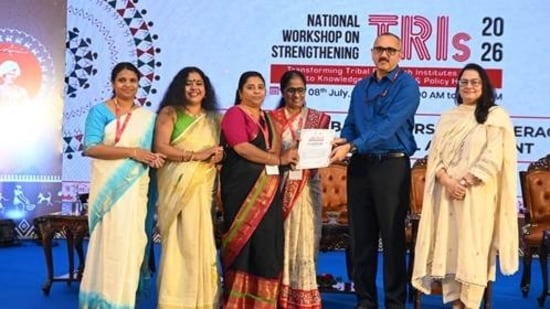
The ministry also recognised seven best-performing Tribal Research Institutes for their contributions to research, documentation and preservation of tribal heritage. The awardees included institutions from Chhattisgarh, Odisha, Tripura, Maharashtra, Kerala, Telangana and Jharkhand.
The Bhubaneswar Declaration commits participating institutions and state governments to work collaboratively towards building a future-ready tribal research ecosystem that preserves India’s indigenous heritage while supporting evidence-based policymaking and inclusive development.