
 E-Paper



Karnataka Election '23: Rebellion is a calculated move
As aspirants denied party tickets quit the BJP and join the Opposition's ranks, the race to win the May 13 polls has only become more complex

 Prefer HTon Google


In Indian electoral history, rebellion by aspirants who fail to get a party ticket is not unusual. But, rarely have a former chief minister and a former deputy chief minister quit their political party to join the opposition ranks barely days before the elections. Earlier this month, former CM Jagadish Shettar and former deputy CM Laxam Savadi resigned from the Bharatiya Janata Party (BJP) to join the Congress.
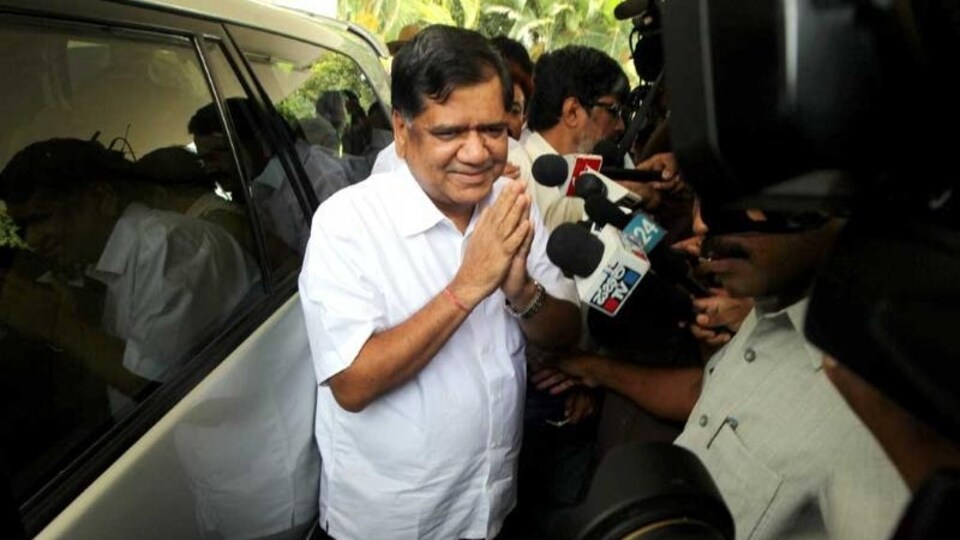
Of the 18 MLAs to whom the BJP has denied tickets so far, six have resigned and announced their intention to fight against the official candidate. At least two MLAs have decided not to campaign for the BJP. The extent of rebellion would be gauged after April 24, the last day of withdrawal of nomination. The BJP has announced candidates for 222 seats of the 224 it is contesting for the May 10 assembly polls. Votes will be counted on May 13.
At least three MLAs who quit the BJP belong to the Lingayat community, the backbone of the BJP, and are significantly responsible for its rise and expansion in Karnataka. To wit: in the 2018 assembly polls, the BJP won 51 of the 87 assembly seats in Lingayat-dominated Bombay Karnataka and Central Karnataka regions; this formed almost half of the 104 seats the party won that year.
Most experts believed that was the most the BJP could win from the Lingayat-dominated constituencies of the state. The BJP was able to win the seats as the party declared B S Yediyurappa as the chief minister candidate and promised to increase reservation for the community, which the party delivered just before the 2023 assembly polls in March 2023. The two factors plus the anti-incumbency for the ruling Congress in 2018 helped the BJP win that year's election. One should also take note of the 84 swing seats in Karnataka (the seats that have changed parties every five years since 2008), the maximum are in the Lingayat-dominated assembly constituencies.
This context is important considering that both Shettar and Savadi are prominent Lingayat leaders from the Mumbai-Karnataka region, where the BJP performed the best after Coastal Karnataka. Yet, political analysts believe that the duo's influence is limited to a couple of districts and Yediyurappa continues to be the biggest Lingayat vote catcher for the BJP even though chief minister Basvaraj Bommai is from the same community.
“Yediyurappa no more a CM candidate and the BJP not allowing his son B S Yadvendra to take his position will negate Yediyurappa's advantage in this election,” said A Narayana, professor of political science in Azim Premji University. Shettar was considered second tallest Lingayat leader after Yediyurappa.
The BJP this time tried to create an impression that its list of candidates would be full of surprises with many new faces, breaking the status quo. However, when the much-awaited list was announced on April 11, it belied initial expectations. There were only a few new faces and less than 20% of the sitting MLAs were denied tickets unlike in Gujarat where 40% of the MLAs were denied tickets to beat anti-incumbency. Among the new faces are two candidates who faced serious criminal cases, and a former bureaucrat who was arrested in a multi-crore financial scam. The party has justified their inclusion on the ground of ‘caste balance’ in the list.
The entire ‘bold new experiment’ of 62 new faces in the candidate list of 222 and denying tickets to non-performing MLAs has largely fallen flat on account of the scale and intensity of the rebellion that the party had faced this time. Before the 2013 assembly polls, the BJP had seen an exodus of several leaders when Yediyuruppa left the BJP to float his own party after he was replaced by Shettar as the CM. Yediyuruppa’s party got 7.5% of the total votes polled in 2013 assembly polls and became a prime reason for the BJP's humiliating loss (it could win only 40 seats, down from 110 in 2008).
Like 2013, the saga of resignations, defections, and threats to contest as rebel candidates continues to rattle the party leadership. Supporters of some of the disgruntled leaders went to the extent of pulling down Prime Minister Narendra Modi’s portraits and burning the party flags at several places. The rebellion has once again exposed a serious contradiction in the way that the BJP has expanded in Karnataka accepting disgruntled, power-hungry leaders from the Congress and the Janata Dal over the years. Naryana said that while the impact of the rebellion in the BJP this time would not be like 2013, the spirit of BJP workers has been dampened.
The BJP list showed that the party is dependent on B S Yediyurappa without whom it cannot count on the support of the dominant Lingayat community. Old-horse Yediyurappa with his own network of leaders and workers, not to speak of his kith and kin, bargained hard to ensure sufficient representation of his supporters in the candidates’ list.
The Opposition turn-coats who had joined the BJP under ‘Operation Kamala’ in 2019 emerged as a strong bargaining group within the BJP, who wanted the ticket for themselves and a few of their supporters. The strongest voice in this group was that of Ramesh Jarkiholi from Belgaum district in Northern Karnataka, who secured ticket for his supporters in at least three assembly constituencies. Jarkiholi had to resign as a minister after a sleaze CD of him was released on social media, but his influence led to the exit of Lakshman Savadi. In 2018, Jarkiholi had won on the Congress ticket and Savadi was the BJP’s losing candidate. In 2019, Jarkiholi joined the BJP and resigned from the assembly along with 18 other MLAs, resulting in the fall of Congress-JD(S) government. He was made a minister and subsequently won the by-poll. He had to resign when a sleaze CD of his was released to the public in 2021.
Also, many in the party believe that the influence of ‘outsiders’ have increased in the BJP so much so that leaders with a clean record such as Jagadish Shettar are not getting a party ticket.
The Congress is also facing a rebellion in some areas but not on the same scale as the BJP. It is more on account of accommodating leaders who have joined the party in the recent past from the BJP and the Janata Dal (Secular). The Congress' bigger problem is the rivalry between former chief minister and senior party leader Siddaramaiah and Karnataka Congress chief D K Shivakumar.
Siddaramaiah and Shivakumar have been jostling over who will be the chief ministerial face of the party with both staking claim to the post even before the party has won the elections. Both took separate bus tours in northern and southern parts of the state in February reigniting rumours that all was still not well within the party. However, the two decided to have a joint bus tour after the party high command intervened, and appear to have buried their hatchet at least for now.
The importance of rebellion in electoral politics can be gauged from the margins of electoral wins. In 2018, the winning margin in 30 assembly seats in Karnataka was less than 5,000 votes, which is about one per cent of the total votes in the constituencies. On average, each assembly constituency has close to 200,000 voters. In such a scenario, rebellion will surely have an adverse electoral impact on the BJP. By how much would be known only on May 13.
 ABOUT THE AUTHORChetan Chauhan
Chetan Chauhan is the National Affairs Editor looking into all aspects of news and features from across India. A Chevening scholar with over three decades of experience in reporting and news management, Chetan has extensively covered all important aspects of the social sector, political economy, environment and climate change nationally and internationally. He did a journalism course at the Reuters Institute of Journalism in Oxford and Digital Media training at Nanyang Technological University in Singapore. He started as a reporter with The Statesman in 1996 and joined the Hindustan Times in 2000 in the metro bureau covering environment, crime and Delhi politics. He covered hot local news, from the Jessica Lal murder case to the rebellion of Delhi Congress MLAs against then Chief Minister Sheila Dikshit, to the replacement of toxic vehicle fuel with cleaner compressed natural gas (CNG) in the national capital. Some of his stories on air pollution became part of the Supreme Court’s landmark MC Mehta versus Government of India case in the National Capital Region (NCR), forcing the government to take corrective measures. As part of the national political bureau since 2004, he covered important central sectors such as environment, education, social justice, labour, rural development, water resources, renewable energy, agriculture, broadcasting and the Planning Commission for more than a decade producing several exclusive and investigative breaking stories. His specialisation is the environment, having covered at least a dozen United Nations global conferences on climate change, biodiversity and wildlife including climate summits in Paris, Copenhagen and Bali. He also covered India’s two five-year plans ---11th and 12th and reported on drafting and execution of right based laws such as Right to Education, Right to Information and rural job guarantee law, MG-NREGA, now being introduced in new format as VG-RAM-G Act. He has in-depth knowledge of social sector issues. He was one of the first to report on tigers vanishing from Sariska and Panna wildlife reserves in 2004 and 2008, respectively, leading to the setting up of the National Tiger Conservation Authority (NTCA) and the introduction of stringent penal provisions for poaching. He has written extensively on the rising human-animal conflict in India and the degradation of India’s biodiversity hotspots because of mining and other activities. Since 2004, Chetan has covered Parliament comprehensively and participated in training on the nuanced coverage of Parliament proceedings. He has travelled extensively across India to cover national and provincial elections since 1998, especially in the Hindi heartland states, considered India’s road to power. He writes a regular column for Hindustan Times, Ecostani, on important national politics, economy, Himalayan ecology and environmental issues. His other responsibilities include providing inputs for edits and edit page articles for the publication, apart from managing news flow from across India.Read More


