On July 9, 2025, the centenary of his birth, we celebrate the legacy of actor and filmmaker Guru Dutt. He was born in 1925 and only produced a great deal of work over a single decade, yet that decade was unparalleled. With a distinctive combination of stylised images, sad poetry, and sharp narration, his films reflected on art, love, loneliness, societal hypocrisy, and the human condition, going beyond mere celluloid storytelling.
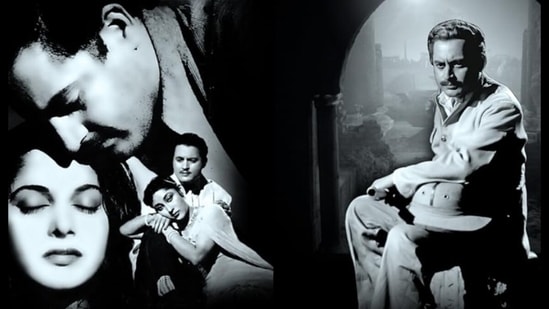
Even if some of his films were box office hits and others weren't appreciated until after he died, we should revisit them because they are timely, significant, and emotionally powerful. On the occasion of Guru Dutt's 100th birth anniversary, we take a deeper look at seven of his films that have forever altered Indian cinema and explain why you should watch them again and again.
Guru Dutt classics to stream on OTT
Pyaasa (1957)
Vijay, the protagonist, is a poet who remains unrecognised by publishers and the general public until his death, when an unexpected turn of events propels his poetry back into the spotlight. Vijay's disappointment is reflected in the film, which criticises a society that prioritises celebrity over honesty and materialism over empathy. The story becomes emotionally charged through the melancholy melody by S.D. Burman, the lyrics by Sahir Ludhianvi, and Dutt's performance.
{{/usCountry}}Vijay, the protagonist, is a poet who remains unrecognised by publishers and the general public until his death, when an unexpected turn of events propels his poetry back into the spotlight. Vijay's disappointment is reflected in the film, which criticises a society that prioritises celebrity over honesty and materialism over empathy. The story becomes emotionally charged through the melancholy melody by S.D. Burman, the lyrics by Sahir Ludhianvi, and Dutt's performance.
{{/usCountry}}Pyaasa is a watershed moment in Indian cinema and Guru Dutt's career. This film captures the essence of an artist fighting for recognition in a materialistic, status-obsessed culture.
Sahib Bibi Aur Ghulam (1962)
Bhootnath, a lowly servant in a decaying Bengali haveli in the nineteenth century, sees the suicide of Chhoti Bahu, a lonely wife whose loveless marriage has imprisoned her in an endless cycle of self-destruction. The film, which was headed by Abrar Alvi and produced by Guru Dutt, was India's official Oscar entry that year and went on to win the National Award.
This film, with a depth uncommon for its era, explores gender relations during the decline of feudal India. The film's intricate plot and Meena Kumari's performance offer a melancholic commentary on loneliness and longing.
Kaagaz Ke Phool (1959)
Suresh Sinha, played by Dutt, is a director whose career takes a nosedive following a controversy. The film's agonising introspection is a reflection of Guru Dutt's personal life and professional solitude. Film experts have studied it extensively for its aesthetic qualities, such as its use of shadows and negative space.
If you're intrigued by the price of fame and the transient nature of public adulation, you must watch Kaagaz Ke Phool, India's inaugural CinemaScope film. Over time, its grandeur has increased, and it is a profoundly personal work.
Anita, played by Madhubala, is a contemporary woman who receives an inheritance contingent upon her marriage. Then there's Preetam (Dutt), a cartoonist who was recruited to wed her. What follows is an ironic and humorous critique of societal norms. Because of the way it deals with issues faced by India's urban middle class after independence, it is still considered relevant today.
This romantic comedy offers a welcome diversion from Dutt's more serious writing while simultaneously exploring weighty issues like tradition vs. modernisation and women's empowerment.
Chaudhvin Ka Chand (1960)
In this story about mistaken identity and unrequited love, Dutt plays one of two friends who fall in love with the same woman. Within the context of Lucknow's nawabi tradition, the film depicts the majesty and lyrical agony of love. Even though Mohammed Sadiq was the director, Dutt's artistic input influenced the final product.
This film was a smashing success, profitably showcasing Guru Dutt's skill in conventionally balancing love and sadness. There is no better example of Hindi romance than the title song.
Bahurani (1963)
The protagonist, a male, pretends to lack education so he may show his backward family how they regard women and modern values. Dutt's performance gives the film more weight, as it subtly criticises patriarchy and blind tradition.
Bahurani isn't as famous as Dutt's previous features, but its liberal perspective on reform and education amid conservative households makes it stand out. It further showcases the versatility of his acting.
Aar Paar (1954)
Kalu, a cab driver trapped in the middle of two feuding gangs in Bombay's criminal underworld, is the protagonist of the film. O.P. Nayyar's infectious score and eccentric characters helped launch Dutt's career as a mainstream storyteller.
Aar Paar expertly blends crime, humour, and romance elements; showcases his mastery of narrative and visual language.
Though he was only 39 years old when he died in 1964, Guru Dutt's films have resonated with audiences for decades. From the melancholy poetry of Pyaasa to the complex love story of Chaudhvin Ka Chand, these seven films showcase his lasting impact. They pay homage to him on his 100th birthday and serve as a reminder that great art is timeless.
Get more updates from Bollywood, Hollywood, Music and Web Series along with Latest Entertainment News at Hindustan Times.
Get more updates from Bollywood, Hollywood, Music and Web Series along with Latest Entertainment News at Hindustan Times.