E-Paper



Sting Like a Bee review: A fascinating film-within-a-film study of Italian youth
Sting Like a Bee review: Reality merges with fiction in this experimental, intriguing documentary on the dreams and voices of Italian youth.

 Prefer HTon Google


In suburbian Italy, the boys spend money on a vehicle of their own, the Piaggio Ape, a small version of a motor truck: its front portion protruding out out a bird's forehead, with the back that can be used to carry goods (or in this case, unassuming dead people). These are kids who will take up centrestage in Sting Like a Bee, the new documentary by Leone that premiered at the Copenhagen International Documentary Film Festival. (Also read: Motherboard review: Portrait of single parent's decades-long journey with her son is an absolute gem)
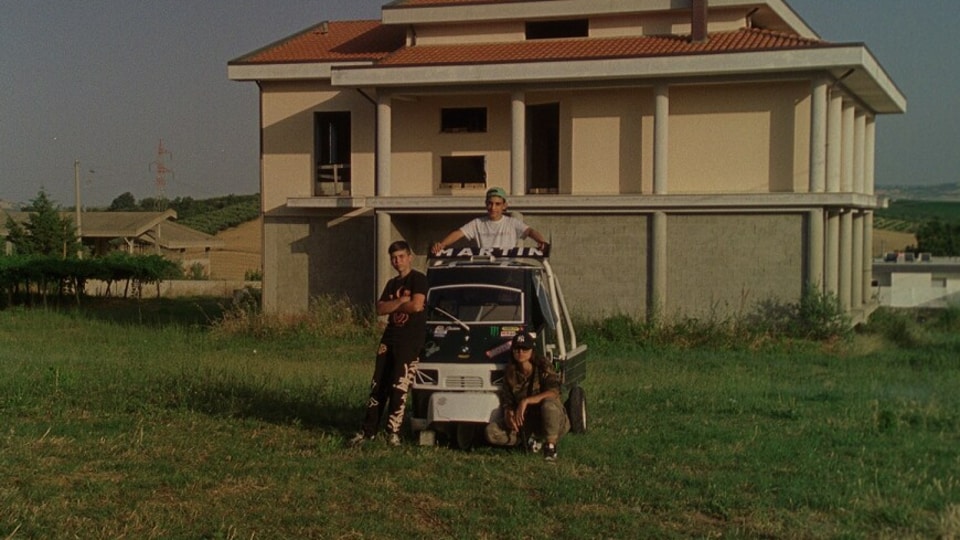
The premise
In Italian, ape means a bee. Before you know it, these adolescents are talking directly to the camera, answering the director's questions, and eagerly contributing to the making of their own film within this film. It all comes together in a startling, hyper-realist experiment of a film that refuses to follow any genre.
Divided into chapters that begin with the prologue, making way for 'the casting' where the young protagonists follow directions within the framework of the documentation, this is a playful imagination of reality and fantasy, reflecting a specificity of culture and place in the process. The protagonists here are Nicola Antonini, Matilde Talia, Alessio Basilico, Nicola Dolce and Giuliano Cilli- many to whom the director asks whether they would be interested in starring as a protagonist in the film. Yet do they know what's in store?
Not much, but a creative reimagination of their adolescent aspirations. They drive their Apes, talk about the renovations that can be done to them, and go about their days as usual. The camera follows them along the way, often capturing their interactions with their family members. Questions about love, sexuality and identity are thrown at them, and they answer as much as they know.
At several points, the director enquires whether they know what is AIDS. Some say yes, while the others say no. A few of them say that it is an electronic cigarette. Sure enough, the camera follows them to buy such a cigarette, only to be corrected about its taste and name at the store. The gaze of the camera is careful and affectionate, never resorting to any sort of judgement and preconceived notions of reflection behind them. The inventiveness of the form might seem puzzling at first, but its effect grows in the process. The spark of fictional creation provides this group of characters with an autonomy outside of their daily, comforting realities.
Final thoughts
In this process, the format makes way to form awkward relationships, and funnier situations involving a dead body. Where does reality end here? Where does this imagination place these individuals? In truth, they are all protagonists of their own story, outlining their thoughts and opinions with depth.
Perhaps one of the areas where the subtext of this documentation could have been slightly more fleshed out is the history of the place itself- its people and main forms of employment; details of the existing socio-economic norms and the relevance in the present generation. A bit about the factory workers are only shown in passing, and one wonders why the second half feels so rushed in juxtaposition of a few details about the place.
Sting Like a Bee is an experiment that playfully argues in favour of its protagonists and their shared aspirations. It is brave, unapologetically playful and quietly thought-provoking.
Santanu Das is covering CPH: DOCX as part of the accredited press.